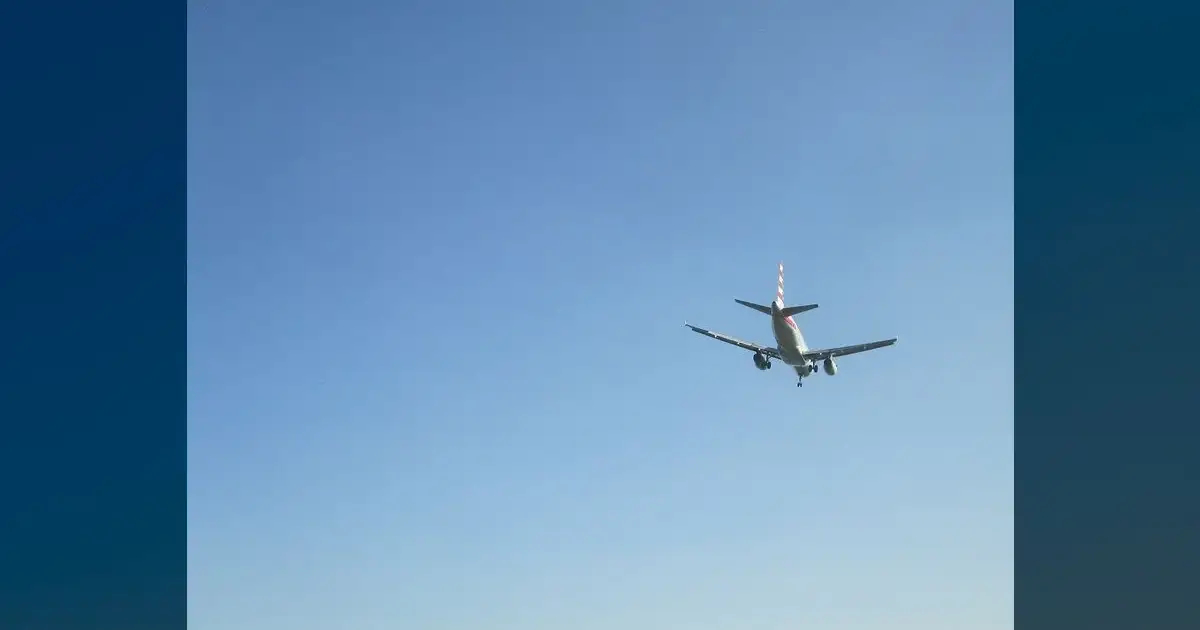

American Airlines faced a brutal public outcry after an incredibly dangerous call sign mistake nearly caused two of its planes to collide in mid-air. This terrifying incident has shaken confidence in aviation safety to its core.
The near-catastrophe involved two American Airlines flights. An air traffic control error, specifically a call sign mix-up, put both aircraft on a collision course. This critical error happened during a busy operational period, pushing safety limits.
The exact moment of the near-miss remains a chilling thought. Pilots averted disaster at the last second.
This was not a minor oversight; it was a grave breach of fundamental aviation protocols. The airline is now under intense scrutiny.
The Anatomy of a Near Miss
A call sign mistake is a basic, yet incredibly dangerous, error. Each aircraft has a unique identifier.
Mixing these up can send planes into the wrong airspace. It can direct them to incorrect altitudes or headings.
This kind of error bypasses multiple layers of safety. Air traffic controllers rely on these call signs. Pilots confirm them constantly.
The system is built on clear, unambiguous communication. When that breaks down, lives are at stake.
Aviation safety expert, Dr. Evelyn Reed, commented on the gravity of such an event.
“A call sign error is a foundational failure. It suggests a breakdown in basic communication and verification. The systems are designed to prevent this, making its occurrence deeply concerning.”
The potential for catastrophe was immense. Two large passenger jets, carrying hundreds of lives, were moments from impact. This wasn’t just a close call; it was a wake-up call for the entire industry.
Who is Accountable for This Blunder?
The immediate question is clear: How could this possibly happen? Air traffic control is a highly regulated environment.
Controllers undergo rigorous training. Protocols are painstakingly detailed.
Was it human error? Was it a systemic issue? Or did overworked staff make a fatal mistake?
American Airlines must provide immediate, transparent answers. The flying public deserves nothing less than full accountability.
The incident highlights the immense pressure on air traffic controllers. They manage complex skies every day.
One small lapse can have devastating consequences. This mistake, however, goes beyond a simple lapse.
It points to potential gaps in training or oversight. It raises concerns about communication redundancies.
Every single step must be foolproof. This incident proves that it is not.
Impact on Passenger Confidence and Mental Health
Such a near-collision erodes public trust in air travel. Passengers board planes expecting safety.
They rely on airlines and air traffic control for their lives. This incident shatters that implicit contract.
The psychological toll on those involved is also significant. Pilots and air traffic controllers who experienced the event will carry it.
Passengers who learn of it will feel increased anxiety. Fear of flying can become a real phobia.
From a public health perspective, such events cause widespread stress. People question the safety of a mode of transport they depend on. This can lead to broader unease and distrust in critical infrastructure.
Dr. Kenji Tanaka, Health Editor at DailyNewsEdit, noted the wider implications.
“When foundational safety systems fail, it impacts more than just the immediate flight. It can create a ripple effect of anxiety across the entire traveling public. Trust is difficult to rebuild once broken.”
Aviation safety is paramount for global health and commerce. Any threat to it is a threat to everyone.
The Road Ahead for American Airlines
American Airlines must act decisively. They need to launch a full, independent investigation.
The findings must be made public. Then, they must implement every recommended change.
This includes reviewing all communication protocols. It means retraining staff if necessary.
It demands an overhaul of any system that allowed this error to occur. No stone should be left unturned.
Regulators like the FAA must also step up. They need to ensure that American Airlines addresses these issues.
This incident cannot be swept under the rug. It demands immediate and robust action.
The safety of millions depends on it. The airline’s reputation hangs in the balance. This is their moment to prove their commitment to passenger safety.
This near-collision was a terrifying reminder of aviation’s razor-thin margins. American Airlines must now show the world how they will prevent another, far worse, disaster.
Source: Google News