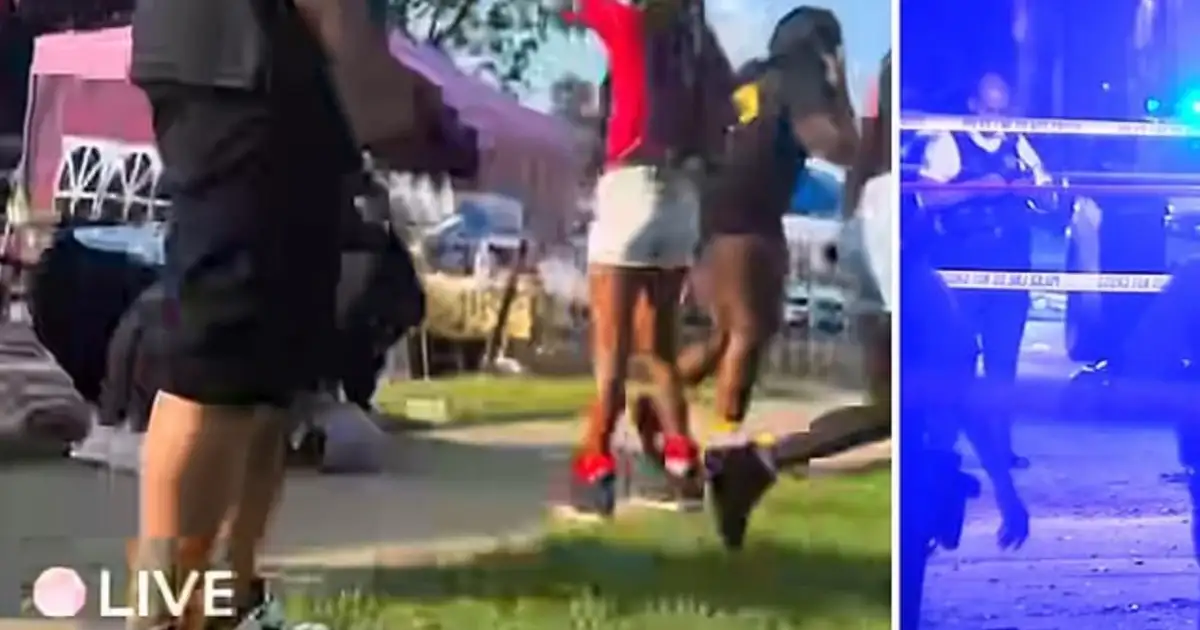

Kentucky just bled. Five people shot, one killed, in a packed downtown bar district on August 15, 2026. This wasn’t an isolated incident; it was the third mass shooting to rip through the state in a mere 24 hours. The political class, ever predictable, will offer their hollow prayers, issue their carefully worded statements, and then, inevitably, do little else. This is not a tragedy; it is a recurring national humiliation, a testament to Washington’s abject failure.
Gunfire erupted in a Kentucky city’s vibrant nightlife at 11:30 PM EDT, shattering the illusion of safety. Five innocent lives were instantly plunged into chaos, one extinguished on the spot. Four others clung to life in local hospitals, their injuries ranging from critical to stable. This horrific scene unfolded just hours after two other mass shootings had already stained the state, their specifics still being pieced together by overwhelmed authorities. The pattern, however, is sickeningly clear: Kentucky is not merely enduring a bloody weekend; it is bleeding out, a casualty of political paralysis and a broken system.

Local police and state patrol descended upon the scene, locking down the area with a grim efficiency born of too much practice. They sift through surveillance footage, interview traumatized witnesses, and chase down leads. Yet, for the downtown shooting, no arrests have been publicly announced. The silence from Washington, D.C., in the face of such relentless carnage, is not just deafening; it’s an indictment of a political establishment more concerned with posture than with protecting its citizens. It is the sound of a nation giving up.
The Washington D.C. Illusion of Action
The immediate aftermath of any mass shooting in America follows a script written in the blood of its victims. Kentucky’s Governor, predictably, offered condolences and vowed “full investigations.” This is the standard operating procedure, the well-worn playbook for politicians across the nation. But let’s be clear: the real question isn’t about local law enforcement’s diligent work; it’s about the systemic, federal paralysis that ensures these tragedies repeat with horrifying regularity.
Ordinary Americans, those who actually bear the brunt of this violence, are asking a brutally simple question: given this relentless drumbeat of shootings, what are the chances of meaningful new federal gun control legislation actually passing? The answer, for anyone paying attention, is not just “slim to none”; it’s an outright impossibility. Washington is not merely a swamp of gridlock; it’s a carefully constructed fortress designed to resist change, where nothing moves because too many powerful players profit from the stagnation. The gears of government grind to a halt when confronted with the gun lobby’s influence, leaving citizens exposed.
Congress remains a battleground, deeply and perhaps irrevocably divided. The Senate, in particular, has become a graveyard for any legislation that dares to challenge the status quo on firearms. The infamous 60-vote filibuster rule isn’t just a procedural hurdle; it’s a legislative guillotine, killing bills before they even have a chance to breathe. Republicans and a significant bloc of Democrats alike refuse to budge, clinging to ideological purity or political expediency. They hide behind procedure, they hide behind rhetoric, and all the while, the body count mounts, a grim tally of their collective inaction.
Why Federal Reform is a Pipe Dream, Not a Possibility
The reasons for this entrenched inaction are not secret; they are the same old excuses, the same tired power plays, costing taxpayers their peace of mind, their safety, and ultimately, their lives. To call it a “pipe dream” is to grant it too much hope; it is, in reality, a political impossibility, a cruel joke played on a grieving public.
- Persistent Congressional Gridlock: Decades of mass shootings offer irrefutable proof. Comprehensive federal gun control legislation consistently fails, not due to lack of public support, but because partisan divisions are intentionally weaponized to ensure its demise. The political will simply does not exist in the halls of power.
- Split Control of Congress: As of August 2026, Congress is a dysfunctional mess. With one party controlling one chamber and the other holding sway in the other, bipartisan agreement on an issue as contentious as gun control is not merely difficult; it is a fantasy. Each side views compromise as political suicide, ensuring legislative paralysis.
- Judicial Scrutiny: The Supreme Court, with its current conservative majority, has aggressively expanded Second Amendment protections, fundamentally reshaping the legal landscape. Any new federal gun laws face immediate, well-funded legal challenges and are frequently struck down, effectively pre-empting legislative efforts. The courts have become the ultimate arbiter, and they have spoken loudly in favor of expansive gun rights.
- Election Year Pressures: The next election cycle is not merely looming; it’s a constant, suffocating presence in Washington. Politicians, particularly those in swing districts or states, fear alienating their base by taking “risky” votes on gun control. Their careers, their fundraising prospects, and their grip on power consistently matter more than the safety of the constituents they purportedly serve.
- Focus on Enforcement vs. Legislation: Many lawmakers, particularly those aligned with the gun lobby, relentlessly push for stricter enforcement of existing laws, increased mental health services, or prosecution of “straw purchasers.” These are often presented as solutions, but they are, in reality, diversions – carefully crafted talking points designed to avoid any new restrictions on gun ownership at all costs. It’s a strategy of deflection, not a genuine attempt at reform.
This isn’t about solving a problem; it’s about maintaining political power, placating wealthy donors, and keeping the insidious gravy train of campaign contributions rolling. The average American, caught in the crossfire, is simply collateral damage in this cynical game.
The Lobbyist’s Grip and Trump’s Unyielding Stance
The gun lobby’s grip on Washington is not merely immense; it is pervasive, an insidious force that shapes policy and stifles dissent. Groups like the National Rifle Association (NRA) and Gun Owners of America (GOA) are relentless in their advocacy, pouring vast sums of money into elections, lobbying efforts, and public relations campaigns. They promise to be the unwavering defenders of Second Amendment rights, framing any proposed restriction as an existential threat to liberty. Their well-funded opponents, such as Everytown for Gun Safety, fight valiantly, but in Washington, money doesn’t just talk; it roars, drowning out the cries for change.
These organizations expertly craft a narrative centered on self-defense, arguing that criminals will always acquire weapons, regardless of the law. Their proposed “solutions” invariably involve more police, tougher prosecution of violent offenders, and a steadfast avoidance of any discussion regarding gun restrictions. This narrative, amplified by sympathetic media and politicians, dominates the conversation, effectively suffocating calls for meaningful legislative reform. It’s a powerful, well-oiled machine designed to protect profits and political influence, not public safety.
President Donald Trump’s past rhetoric on gun rights is not merely well-known; it is a foundational pillar of his political brand. He has consistently championed gun ownership, often framing it as a sacred right and a necessary bulwark against crime. His pronouncements frequently pivot to getting “tough on crime” or blaming mental health issues, steadfastly avoiding any support for stricter gun laws. This stance resonates deeply with his base, and his influence, even out of office, remains immense. He will undoubtedly seize upon Kentucky’s tragedy to echo these sentiments, using the bloodshed to reinforce his own platform and rally his supporters.
“What’s happening in Kentucky is a tragedy, and it’s happening all over the country. We need strong leadership, not weak policies that disarm good people. We need to get tough on crime, very tough. The Second Amendment is under attack, and we will defend it.”
– A likely statement from President Donald Trump, per CNN analysis
This is the unvarnished political reality. Trump will not advocate for federal gun control. Instead, he will galvanize his supporters against it, exploiting the raw emotion of the moment to score political points and further entrench the very divisions that perpetuate this cycle of violence. The public, once again, pays the ultimate price.
Kentucky’s Bleeding Streets and D.C.’s Deaf Ears
Kentucky, like many states grappling with escalating gun violence, operates under notably permissive gun laws. The state does not require permits for firearm purchases, nor does it impose waiting periods. Both open and concealed carry are permitted without a license, creating an environment where firearms are readily accessible. This is the legislative backdrop against which three mass shootings erupted in 24 hours. The connection, for any rational observer, is not merely hard to make; it is glaringly obvious, a direct line from policy to preventable carnage.
The Centers for Disease Control and Prevention (CDC) consistently publishes data illustrating the stark reality: the United States suffers from dramatically higher rates of gun violence compared to other developed nations. This isn’t a secret or a matter of debate; it is a cold, hard fact. Yet, facts, particularly inconvenient ones, rarely sway politicians when powerful financial interests are on the line. The data screams for intervention, but Washington remains willfully blind.
The ripple effects of such violence extend far beyond the immediate casualties. Local businesses in that downtown bar district will undoubtedly suffer, as fear and trauma deter patrons. The vibrant nightlife that once defined the area will dim, replaced by apprehension. The fundamental sense of community safety will erode, replaced by a pervasive anxiety. Residents will demand solutions, but what they will receive are empty words, platitudes, and the ever-present promise of “thoughts and prayers.” These offerings are cheap, costing politicians nothing, and achieving precisely nothing for the grieving and the terrified.
The “third mass shooting in 24 hours” is not just a statistic; it is a desperate, guttural scream for action, a moral imperative that should shake the foundations of governance. But Washington’s ears are plugged, deafened by the din of campaign donations, the clamor of election cycles, and the self-serving calculations of political careers. They are focused on anything and everything but the fresh blood staining the streets of Kentucky.
The political class, it is clear, is not just addicted to inaction; they are slaves to their donors, more concerned with their own careers and ideological purity than with the safety and lives of their constituents. New federal gun control legislation will not pass. The system is not merely resistant; it is rigged against it, a monument to political cowardice and corporate influence. This isn’t just a tragedy that keeps on giving; it’s a national disgrace. For the politicians, it’s just another news cycle, another crisis to manage with carefully crafted statements. For the rest of us, it is an unending nightmare, a testament to a nation that has simply given up on protecting its own.
Photo: Picasa
Source: Google News