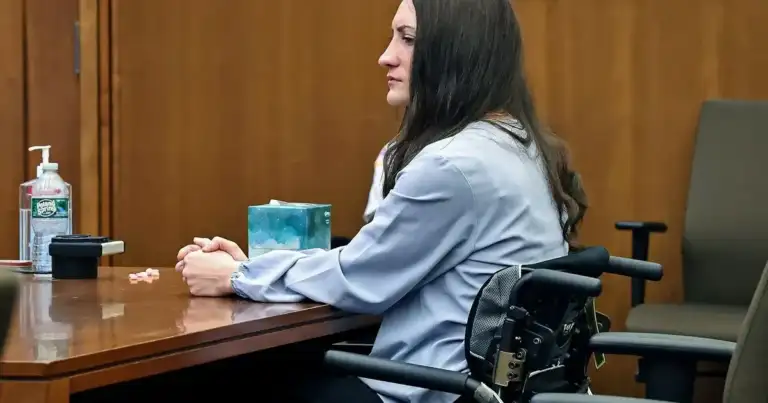

Another mother, another child, another preventable tragedy laid bare the brutal indifference of a system supposedly designed to protect its most vulnerable. An exhausted domestic abuse survivor, a nursing assistant battling her own demons, accidentally left her teething toddler to die in a sweltering car. Now, in a cruel twist of bureaucratic mercy, she is granted temporary release from jail for his funeral. This isn’t merely a personal nightmare; it’s a searing indictment, a flashing red light exposing the brutal, gaping cracks in a societal infrastructure that utterly fails its most desperate citizens.
This horrifying incident, while singular in its agony, is not an anomaly. It is a stark, public manifestation of the desperate reality facing countless women across this nation – a reality where systemic neglect and inadequate support push individuals to their absolute breaking point, often with catastrophic consequences.

The Crushing Weight of Systemic Failure: A National Disgrace
The facts are stark, chilling, and utterly unforgivable. A mother, already ravaged by the trauma of domestic abuse, pushed to the limits of human endurance by demanding work and the relentless demands of single parenthood, lost her child. Her toddler, suffering from teething pain, perished in a hot car – a tragedy that could, and should, have been prevented by a system truly committed to its people. Her temporary freedom for his funeral is less an act of compassion and more a grim concession to public outcry, a fleeting moment of grace in a life now irrevocably shattered.
This isn’t an isolated, unfortunate aberration. This is a symptom, a visible ulcer on the body politic, screaming about the immense, unbearable strain placed on individuals, particularly women, who are left to contend with a labyrinth of bureaucratic hurdles and societal indifference.
It exposes precisely how the system, in its cold, detached efficiency, abandons survivors to fend for themselves against odds that would crush even the most resilient among us.
Domestic violence is not merely a social ill; it is a profound national crisis, a silent epidemic that traps millions, especially mothers, in cycles of fear, poverty, and vulnerability long after they’ve summoned the Herculean courage to escape their abusers. The financial, psychological, and logistical toll is immense, often rendering them incapable of rebuilding their lives or adequately protecting their children.
They face homelessness, joblessness, legal battles, and the pervasive shadow of their past, all while grappling with the daily grind of survival. How can we, as a society, claim to uphold family values when we so consistently fail the very foundations of those families?
Washington’s Glacial Stirring: The “Survivor Economic Empowerment and Housing Act”
Finally, after untold suffering and countless preventable tragedies, Washington is stirring. A bipartisan coalition in Congress, perhaps sensing the shifting winds of public opinion or simply unable to ignore the mounting human cost any longer, is pushing new legislation: the “Survivor Economic Empowerment and Housing Act of 2026.”
It’s about time. For far too long, these critical issues have been relegated to the back burner, dismissed as “women’s issues” or niche concerns. Lawmakers are, at last, publicly recognizing the devastating human cost and the desperate need for tangible, systemic solutions. This legislative push, championed by both Democrats and Republicans, isn’t just about charity; it’s an acknowledgment of fundamental societal failures that trap individuals, deny them true independence, and perpetuate cycles of abuse and poverty.
But let’s not be naive. This “bipartisan consensus” didn’t materialize out of genuine foresight or proactive governance. It took a cascade of tragedies, a relentless drumbeat of advocacy from grassroots organizations, and the undeniable, visceral impact of stories like the one that opened this article to finally prod Congress into action. The political optics of ignoring such widespread suffering became too damaging to bear.
What the Bill Promises: A Glimmer of Hope, or More Empty Gestures?
The proposed legislation, while long overdue, aims to build upon and strengthen existing frameworks like the seminal Violence Against Women Act (VAWA). Crucially, it specifically targets the twin pillars of instability that often shackle survivors: financial insecurity and housing precarity. These are not minor inconveniences; they are existential barriers that frequently force survivors back into dangerous situations or onto the streets.
Key provisions under discussion are designed to dismantle these barriers:
- Expanding eligibility for emergency housing vouchers, recognizing that immediate, safe shelter is the absolute first step towards stability. Without a roof over their heads, true recovery is a fantasy.
- Increasing funding for transitional housing programs, providing a crucial bridge from crisis to long-term independence, allowing survivors time and space to heal and plan.
- Establishing a national expedited legal aid fund, a vital resource to help survivors manage the labyrinthine complexities of divorce, child custody, and protective order proceedings, which are often weaponized by abusers.
- Creating new grant programs for job training and placement services, specifically tailored for survivors whose careers have been derailed or sabotaged by abusive partners who often exert control through financial manipulation.
This bill, if passed and properly implemented, attempts to address these critical, often overlooked issues. It acknowledges that true freedom from abuse isn’t just about physical safety; it’s about economic autonomy and the ability to build a secure future, free from the shadow of financial coercion.
The Political Spin Versus Harsh Reality
Senator Maria Rodriguez (D-CA), a vocal co-sponsor, wasted no time in highlighting the profound human cost at a recent press briefing. Her words, while poignant, carry the weight of a truth too long ignored:
For too long, we’ve asked survivors, many of them mothers, to pull themselves up by their bootstraps while simultaneously denying them the boots. Leaving an abusive situation is incredibly brave, but without economic stability and a safe home, the cycle of vulnerability often continues. This bill is about giving them the foundational tools they need to truly break free and thrive.
Representative David Chen (R-TX), a key Republican voice, echoed her sentiment, stressing the “bipartisan” nature of the effort, a familiar refrain when Washington seeks to project unity on a pressing issue:
Protecting families and ensuring the safety of our communities transcends partisan lines. This legislation is a practical, common-sense approach to support individuals who have endured unimaginable trauma, allowing them to contribute fully to our society without the constant burden of fear and financial insecurity.
These are indeed nice words, polished and politically palatable. But let’s be brutally honest: Washington rarely moves with such synchronized purpose unless a problem becomes too gargantuan to ignore, or, more cynically, when the political optics demand it. This “bipartisan consensus” didn’t materialize overnight through some sudden awakening of conscience. It took countless tragedies like the one we just witnessed, countless lives shattered, and the relentless, often thankless, advocacy from groups on the ground to finally force this issue onto the legislative agenda.
The archetype of the “exhausted domestic abuse survivor mom” is finally resonating, a tragic figure policymakers can no longer dismiss. They are finally acknowledging the immense, unsustainable strain placed on these individuals. But the haunting question remains: how many more must suffer, how many more children must perish, before real, lasting, and proactive change truly takes root?
Beyond the Headlines: The Staggering Cost of Neglect
The legislative package also includes enhanced training for law enforcement and judicial personnel, specifically focusing on the insidious economic coercion tactics often employed by abusers. This is a critical, long-overdue step to improve the justice system’s response, recognizing that financial abuse is as potent a weapon as physical violence, often keeping victims trapped more effectively than any lock and key.
Furthermore, there’s a focus on improved data collection and research, aiming to understand the long-term economic impacts of domestic violence and refine future policy. Again, commendable intentions, but where was this foresight, this analytical rigor, before the body count began to mount and the societal costs became undeniable?
The cost of neglecting domestic violence is truly staggering, far beyond the immeasurable human suffering. Economic analyses and government reports consistently estimate the annual cost in the tens of billions of dollars. This isn’t just about human lives lost or families shattered; it’s about lost productivity, increased healthcare costs, the immense burden on social services, and the erosion of community stability. This bill, if passed, will undoubtedly cost taxpayers. But the cost of doing nothing—the price paid in blood, broken lives, and societal decay—has already been exacted, year after year, with devastating regularity.
This isn’t charity; it’s a strategic investment. It’s an investment in a stable, productive society. It’s an investment in preventing future tragedies, in fostering resilience, and in upholding the fundamental dignity of every citizen. Washington often throws money at problems, but this time, the problem isn’t just a policy gap; it’s a fundamental failure of support, a betrayal of the most basic social contract.
What Happens Next? The Real Fight Begins
The “Survivor Economic Empowerment and Housing Act of 2026” is currently making its way through the treacherous waters of congressional committee. Early indicators suggest strong bipartisan support, buoyed by relentless pressure from advocacy groups and a growing, albeit belated, recognition among lawmakers of domestic violence’s pervasive impact across all demographics. Yet, we know the legislative game: bills can die quietly in committee, be watered down to toothless shadows of their original intent, or become political footballs in the endless partisan squabble.
This bill must not merely pass; it must move swiftly and intact. These vital resources are not abstract policy points; they are lifelines that need to reach those in desperate need, now. As the discussions continue, advocates will, and must, demand action, not just rhetoric. The image of that mother, granted temporary leave from jail to bury her child, is not just a stark reminder; it’s a searing indictment. This isn’t abstract policy; it’s life and death, survival and despair.
Will this bill genuinely empower survivors, providing them with the foundational tools to truly break free and thrive? Or will it be another political band-aid on a gaping, festering wound, a performative gesture designed to quell public outrage rather than enact meaningful change? The real test, the ultimate measure of its worth, will be whether it provides true independence, allowing survivors to build secure futures, moving them beyond mere survival to genuine recovery and self-sufficiency. Anything less is not just a legislative failure; it is, unequivocally, a betrayal of the highest order, and one that Robert Sterling, for one, will not let Washington forget.
Source: Google News