
The Tragedy at Dodger Stadium: A Stark Wake-Up Call for a Broken System
When a man chooses to end his life amid the roar of a baseball stadium, it’s not just a personal tragedy—it exposes a society that refuses to confront its most urgent crisis: mental health neglect.
The Facts That Should Shock Every Angeleno
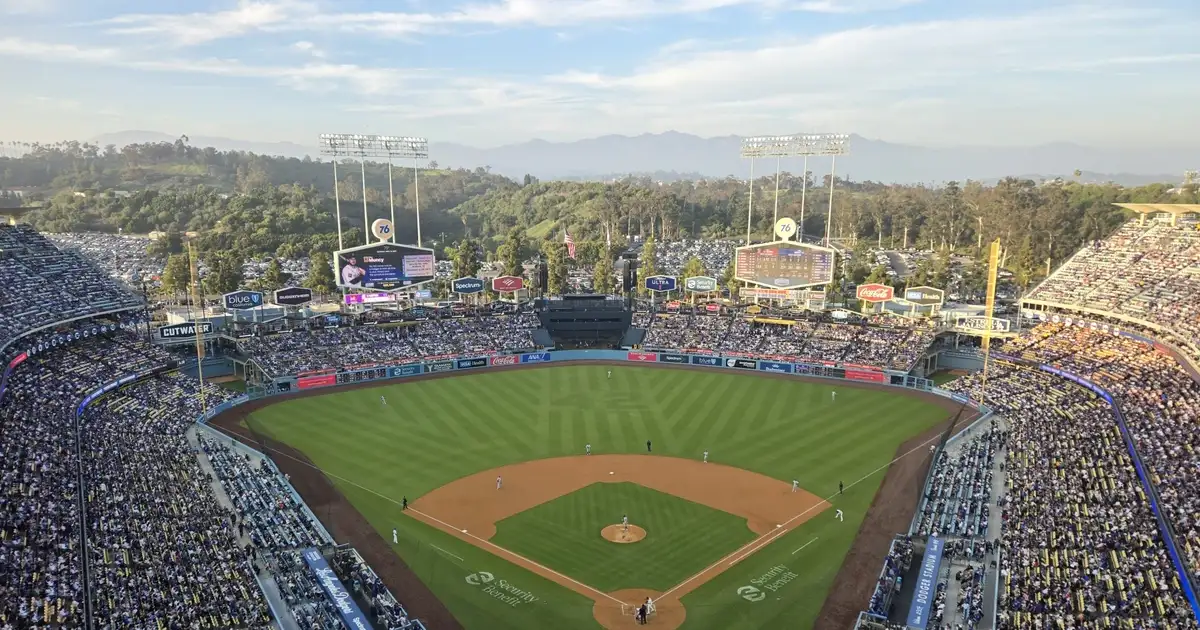
On September 2, 2026, during a game between the Los Angeles Dodgers and the San Francisco Giants, authorities found a man hanging from a tree near Dodger Stadium. The victim, 38-year-old David Ramirez, was dead when police arrived at 3:15 p.m.—a scene that should haunt us all.

He was suspended from a sturdy tree about 200 yards from the stadium’s main entrance—an area used for staff access, not public viewing. No signs of struggle, no foul play. Just a man, dead from hanging. The LAPD quickly labeled it a suicide, but lingering questions demand answers.
What We Know — And What We Don’t
- Ramirez was last seen entering the vicinity early that morning, captured on surveillance footage showing a man in distress.
- He had a documented history of depression, recent financial stress, and signs of despair on social media.
- No suspicious individuals or external threats appeared in the footage, only a man overwhelmed by circumstances.
- His family confirms mounting debts and ongoing mental health struggles—an image of a man pushed to his breaking point.
- Authorities have yet to release toxicology results, but all evidence suggests a tragic, self-inflicted death.
Why Did Ramirez Choose the Spot Near Dodger Stadium?
This question cuts deepest. Ramirez had no history of violence or threats; no signs he was targeted or stalked. So why that particular tree, in the heart of a bustling city, during a high-profile game?
The answer is brutal: millions of Americans are drowning in mental health crises, with nowhere to turn—left to feel invisible even amid crowds. Ramirez’s choice to end his life just outside a stadium packed with thousands underscores a societal failure: the indifference and inadequacy of mental health support.
What Were His Last Moments Telling Us?
Social media posts from Ramirez revealed a man sinking into hopelessness, overwhelmed by despair. Family members say he was buried under debts, battling mental illness with little help available. His final act was a plea for help that went unheard.
Isn’t it a national disgrace that someone with a documented history of depression, actively posting about feeling hopeless, was left to fall through the cracks? The system failed him—plain and simple.
Dodger Stadium and Los Angeles: A Reflection of a Broken System
Here’s where outrage should ignite: how did Ramirez slip through the cracks in a city teeming with security cameras, surveillance, and crowds? How did he vanish from the watchful eyes of those tasked with protection?
LA’s mental health services are an embarrassment. Despite high rates of depression and suicide, resources remain woefully inadequate. Ramirez’s case isn’t isolated; it’s a symptom of a society that ignores mental health until tragedy strikes with devastating finality.
The Role of Public Spaces and Mental Health
Public venues like Dodger Stadium should serve as safe spaces, but they’re unprepared for tragedies like this. Surveillance footage shows Ramirez entering early that morning, yet nothing captured what he was feeling or thinking—an ominous gap in our safety net.
Why aren’t stadiums, arenas, and public venues mandated to have mental health protocols? When a man chooses the outskirts of a stadium for his final moment, it’s not just individual despair—it’s a community failure.
The Villain? The System, Not Ramirez
The real villain here is a system that leaves vulnerable people hanging—literally and figuratively. We spend billions on stadiums, sports franchises, and luxury suites, yet neglect to fund the mental health programs that could save lives.
And let’s call out the Dodgers: their statement was polite, emphasizing “cooperation” and “support,” but where was that support before Ramirez’s final moments? Did they have mental health resources on-site? Of course not. They are a business, not a safety net.
Who Is Responsible?
It’s easy to point fingers at Ramirez, but the truth is, the entire system is designed to ignore mental health until it hits the headlines. Police, stadium management, local government—none have effective safeguards for these crises.
We’re content to profit from ticket sales, TV rights, and merchandise, while ignoring the human beings slipping through the cracks, invisible and unheard.
What’s Next? A Call for Action, Not Empty Words
Nothing will change if we continue hiding behind tired excuses like “mental health is complicated.” Ramirez’s death demands a serious response. Mental health services must be everywhere—schools, workplaces, stadiums, and community centers.
Will Los Angeles finally step up? Will the Dodgers—and every other sports franchise—invest in mental health support as part of their safety protocols? Or will Ramirez’s death become just another statistic in a long line of ignored crises?
We Need More Than Just Words
Stadiums need trained mental health professionals on-site. They need crisis intervention plans that actually work. They must stop treating mental health as an afterthought and start making it a priority.
Because the tragedy isn’t just Ramirez hanging from that tree. It’s the thousands more like him who walk past us every day—silent, unseen, unhelped.
Final Question: When Will We Wake Up?
Ramirez’s death isn’t just a tragic accident; it’s a mirror reflecting society’s deepest failures. We’re failing our own—our neighbors, our children, our friends. When will we finally acknowledge that mental health isn’t optional? It’s life or death.
Until then, more lives will be lost in parks, alleys, and stadiums—places where no one is watching, no one is listening, and no one is truly safe.
Source: Google News