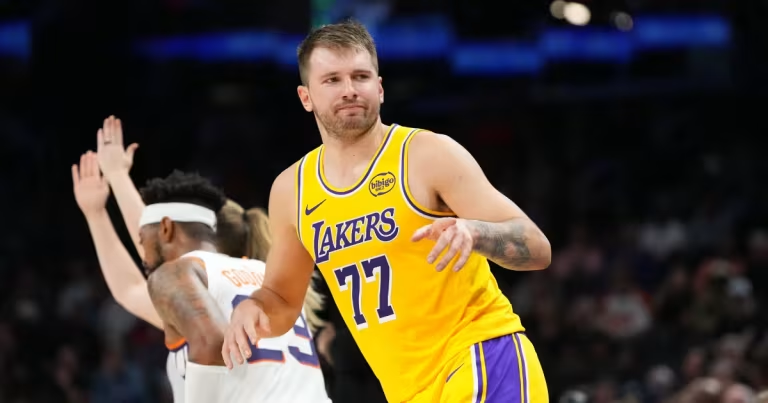
Eighty-three points. Let that sink in for a minute. Eighty-three goddamn points. A record-shattering performance, the kind of night that etches a player’s name into the history books forever. We’re talking about Bam Adebayo, who, just days ago, delivered a statistical anomaly that made the entire league stop and gawk. The kid was on fire, a one-man wrecking crew, and for a fleeting moment, it felt like we were watching the birth of a new legend. But then he opened his mouth, and the magic died.
Here’s the bitter pill that followed the sweet taste of victory: Adebayo, fresh off his historic night, dared to compare himself to Kobe Bryant. Not just compare, mind you, but to declare his intention to be “better.” Better than Kobe. The Black Mamba. The man who bled purple and gold, whose Mamba Mentality wasn’t a slogan, but a way of life that earned him five rings, an MVP, and a global army of devoted fans. Does anyone with a functioning brain cell actually believe that?
This isn’t just about one incredible game, no matter how monumental. This is about respect. This is about understanding the crushing weight of history. And frankly, this is about a young man, high on adrenaline and perhaps a little too much self-belief, pole-vaulting over a line that should remain sacred. This isn’t just a misstep for Adebayo’s public image; it’s a full-blown catastrophe, exposing a fundamental misunderstanding of what true stardom, what true legendary status, actually entails. It’s an insult to the legacy of a man whose shadow still looms large over the entire sport.
The Unbearable Weight of Kobe’s Crown: More Than Just Stats
Let’s cut through the noise, the saccharine platitudes, and the PR spin. Kobe Bryant wasn’t just a basketball player; he was an icon, a phenomenon, a force of nature. His career spanned two decades of relentless dedication, an unyielding, almost pathological pursuit of perfection that manifested in five NBA championships, 18 All-Star selections, an MVP award, and a scoring title that still sends shivers down opponents’ spines. He didn’t just play the game; he mastered it, pushing his body and mind to limits most athletes only dream of. His “Mamba Mentality” wasn’t a marketing gimmick cooked up in some corporate boardroom; it was a philosophy born from countless hours in the gym, a pathological desire to win, and an almost spiritual connection to the game itself.
Kobe built a legacy that transcends mere statistics. He inspired generations, not just with his jaw-dropping fadeaways and clutch shots, but with his work ethic, his unshakeable resilience, and his absolute refusal to back down from any challenge. His tragic passing only solidified his mythical status, elevating him from a sports hero to an almost deified figure in the collective consciousness of sports fans worldwide. You can’t put a price on that; you can’t replicate that with one big game. It’s built over a lifetime of blood, sweat, and tears.
So, when Bam Adebayo, after one single, albeit magnificent, 83-point game, puffs out his chest and declares his aim to surpass that man, it doesn’t come off as confidence. It screams hubris. It reeks of disrespect. Does Adebayo genuinely believe that a single record-breaking performance, no matter how spectacular, puts him in the same conversation as a man who built an empire of excellence over twenty grueling years? Does he truly grasp the difference between a fleeting flash of brilliance and sustained, generational greatness? The Mamba didn’t just have big games; he had big careers. Plural. He dominated for two decades. To compare one night to that kind of enduring legacy is not just audacious; it’s delusional.
And let’s be brutally honest here: 83 points is a phenomenal achievement, no doubt. But what were the stakes? Was it a Game 7 of the NBA Finals? Was it a pivotal moment in a championship run? Or was it an impressive regular-season outburst, however historic? Context matters. Kobe’s greatest scoring nights often came when his team needed him most, when the pressure was suffocating, and the opposition was elite. He didn’t just rack up points; he willed his team to victory against the best the league had to offer, time and time again. That’s the difference between a great scorer and a true legend.
The Roar of the Pissed-Off Fanbase: They See Through the Hype
You think the fans, the lifeblood of this sport, are taking this lying down? Think again. The internet, that glorious, unforgiving arbiter of public opinion, erupted with a collective groan, a digital wave of disgust and disbelief. Social media wasn’t just buzzing; it was seething. And who in their right mind can blame them? To disrespect Kobe is to disrespect the very essence of competitive basketball for millions.
I’ve been sifting through the digital rubble, and let me tell you, the sentiment is overwhelmingly negative. People are genuinely pissed, and rightfully so. Here’s a taste of what the faithful, the true believers, are saying, and it ain’t pretty:
“Bam had a great game, no doubt. But to compare himself to Kobe after ONE game? That’s just wild. He needs to earn that right, not declare it. The audacity is sickening.”
— @HoopsFanatic77
“Kobe played 20 years, won 5 rings, and was a global icon who literally died for the game. Bam needs to pump the brakes. Mamba’s legacy is untouchable, and any attempt to diminish it is a joke.”
— @LakerNationForever
“This is why humility matters. You earn comparisons to legends, you don’t declare them. Kobe literally bled purple and gold; Bam’s just talking after one good night. Show some damn respect!”
— @RealTalkSports
“He needs to focus on winning a championship before he even thinks about being ‘better’ than Kobe. Rings, not points, define greatness. Anything else is just noise.”
— @ChampionshipMindset
“Mamba Mentality is about work, not just talk. Show us the rings, Bam. Show us the sustained dominance, the decades of excellence. Then maybe, *maybe*, we can talk. Until then, shut up and play.”
— @BallIsLife_OG
The message is crystal clear: fans understand the chasm between raw potential and proven, enduring legacy. They appreciate a great performance, but they absolutely despise arrogance, especially when it targets a figure as revered, as almost sacred, as Kobe Bryant. They know that Kobe’s greatness wasn’t built on a single night of glory, but on a lifetime of grinding, of overcoming adversity, of earning every single accolade, every single ounce of respect. Adebayo’s comments, whether intended or not, come across as a profound lack of understanding, a slap in the face to a legacy that continues to inspire millions. It’s a “know your place” moment, delivered en masse by the very people who fuel the sport, the ones who pay to watch. And they’re not wrong.
Furthermore, this isn’t just about Kobe. It’s about the broader respect for the game’s history. Every generation stands on the shoulders of giants. To dismiss or diminish the achievements of those who came before, especially someone of Kobe’s stature, is to display a profound ignorance of the very foundations upon which today’s game is built. It’s a rookie mistake, a mental misfire that reveals a lack of maturity and perspective. It shows Adebayo is still a kid in a man’s game, chasing fleeting headlines instead of eternal glory.
The Quiet Strength of True Stardom: Let Your Game Do the Talking
Here’s what nobody is telling you about true legends, about the titans who truly shape their sport: they rarely declare their own greatness. They don’t need to. They let their game do the talking. They let the trophies, the championships, the sustained, undeniable brilliance speak for itself. Think about it. LeBron James, one of the greatest to ever lace ’em up, spent years deflecting comparisons to Jordan, acknowledging the impossible standard set before him. He understood the weight of that legacy. Michael Jordan himself, in his early career, spoke with reverence about the players who came before him. Tim Duncan, the ultimate silent assassin, a man whose five championships speak louder than any boast, never once beat his chest or declared himself superior to anyone. His quiet dominance, his consistent excellence, did all the talking, and it echoed across two decades.
Confidence is essential for any elite athlete. You have to believe in your abilities, in your capacity to win, to dominate. But there’s a razor-thin line between confidence and arrogance, and Adebayo just pole-vaulted right over it with the grace of a drunken elephant. The “Mamba Mentality” isn’t about bragging after a career night; it’s about getting back in the gym the next morning, regardless of what you accomplished. It’s about the relentless, almost obsessive pursuit of perfection, not the premature, self-serving declaration of it. It’s about the grind, the sacrifice, the unwavering commitment when no one is watching, not the post-game soundbite designed to inflate an ego.
What Adebayo failed to grasp in his post-game euphoria, in his moment of fleeting glory, is that comparisons to legends like Kobe are earned through a lifetime of dedication, through multiple championships, through becoming an undisputed, generational talent. They are bestowed by the fans, by the media, by the historical record – not self-proclaimed after one remarkable game. This isn’t a knock on his talent; the kid is phenomenal, no one is denying his raw ability. But talent alone doesn’t grant you the right to disrespect the giants whose shoulders you stand on. It doesn’t give you permission to spit on the legacy of a man who gave his entire life to the game.
This isn’t just about what he said, but the timing of it. To make such a claim after a single record-breaking performance, however incredible, shows a profound lack of perspective. It’s the equivalent of a promising young musician declaring they’re better than Mozart after one hit song. It’s absurd. It’s insulting. It reveals a fundamental misunderstanding of what truly constitutes greatness in any field, but especially in one as demanding and historically rich as professional basketball.
Where Does Bam Go From Here? A Long Road to Redemption
Adebayo has immense potential, no one disputes that. His 83-point explosion was a testament to his skill, his drive, and his capacity for greatness. But this incident should be a harsh, unforgiving lesson. True stardom isn’t just about what you do on the court; it’s about how you carry yourself off it, how you respect the game, and how you acknowledge the titans who paved the way. It’s about humility, even in victory.
The road to legendary status is long and arduous. It’s paved with sweat, sacrifice, and, crucially, humility. Adebayo needs to understand that Kobe Bryant’s legacy wasn’t built on one game, but on two decades of unwavering commitment to excellence, of pushing boundaries, of inspiring millions. If he truly wants to be “better,” he needs to put in the work, win the rings, and let his sustained, undeniable performance do the talking. He needs to earn the right to be mentioned in the same breath as Kobe, not demand it with an arrogant pronouncement. Because until then, he’s just a guy who had one hell of a night, making a claim that the entire basketball world knows is premature, disrespectful, and, frankly, a little bit delusional. He’s a blip on the radar, not a titan.
Will he learn from this monumental gaffe, or will this moment of unbridled hubris define him, forever marking him as the player who disrespected a legend? The ball, as they say, is in his court. But the court of public opinion, where legacies are truly forged, has already rendered its verdict: he’s got a hell of a lot of earning to do.
Source: Google News
Related Articles
- Warriors Sign Gui Santos to 3-Year, $15M Contract Deal
- Nikola Jokić Slams Lu Dort for Trip, Ejection in Thunder Win
- Rick Carlisle Denounces NBA Fine, Claims League Suggested