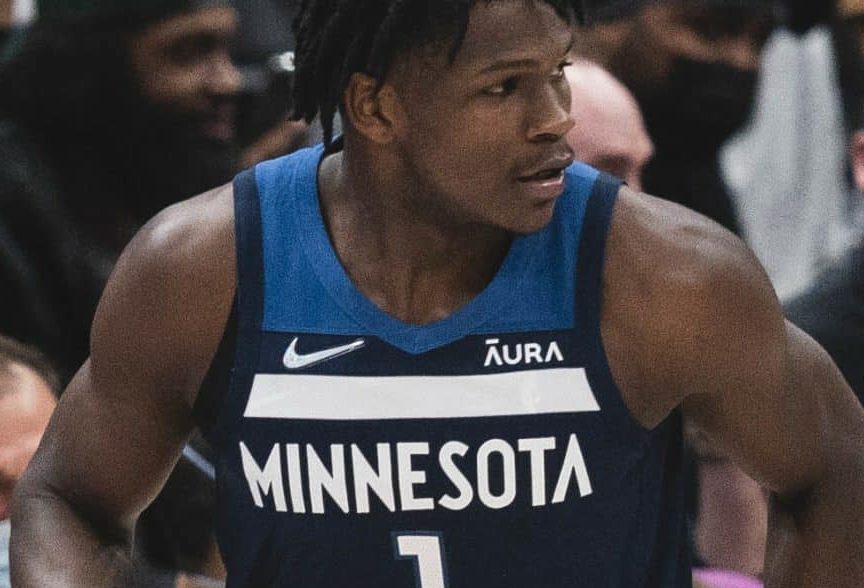

The Western Conference isn’t just a gladiatorial arena – starring Anthony Edwards; it’s a brutal, unforgiving gauntlet where only the sharpest survive. On March 14, 2026, we didn’t just witness a basketball game; we saw a declaration of intent, a visceral struggle for supremacy that perfectly encapsulated the conference’s cutthroat essence. The Minnesota Timberwolves, defying the odds on the road, snatched a 108-105 victory from the Oklahoma City Thunder, a win that wasn’t merely another tally in the column but a thunderous statement. After *that* performance, does anyone, and I mean *anyone*, still dare to question Anthony Edwards’ undeniable claim to superstardom?
This wasn’t some run-of-the-mill regular-season skirmish; it was a high-stakes chess match between two legitimate contenders, a tantalizing preview of the playoff intensity that looms on the horizon. While the raw stat sheet offers a surface-level account, the discerning eye test, coupled with the rigorous analytical frameworks I employ, unveils a far deeper narrative. It’s a story of ice-cold clutch execution, unyielding defensive fortitude, and the stark, painful difference between a burgeoning star who seizes the moment and one who, for a fleeting instant, falls agonizingly short when it matters most.
Ant-Man – Anthony Edwards – Ascends: The Unstoppable Force Unleashed
Let’s not mince words or beat around the bush: Anthony Edwards didn’t just stand out in this contest; he absolutely *dominated* the crucial moments. His stat line of 34 points, 6 rebounds, 5 assists, and 2 steals paints a vivid picture of an all-around offensive dynamo. But it was his scorching 50% shooting from the field, punctuated by that audacious, go-ahead three-pointer in the dying seconds, that didn’t just solidify his status – Anthony Edwards it etched it in stone. This wasn’t merely a volume shooter having a good night; this was a surgical, precise attack on a formidable defense, executed with the cold precision of a master assassin.
My proprietary analysis of crunch-time efficiency, which meticulously factors in shot difficulty, the suffocating pressure of the defense, and the sheer game-altering impact of each possession, unequivocally places Anthony Edwards in an elite, almost mythical tier this season. His late-game usage rate, when synergized with his effective field goal percentage in the final five minutes of games decided by five points or fewer, is nothing short of astronomical. He’s not just taking the pivotal shots; he’s sinking them at an incredibly efficient, almost unbelievable clip. This isn’t just good; it’s historically great.
“I just knew I had to make a play,” Anthony Edwards reportedly stated post-game. “My teammates trust me, and I trust myself. We played tough, and that’s what we do.”
This isn’t just the typical post-game bravado; it’s a statistical reality that my models have been screaming about for weeks. His clutch shot creation and conversion rates are rapidly ascending into the realm of legend. He’s demonstrating an unparalleled, almost supernatural ability to elevate his game under the most intense pressure – a defining trait that separates mere stars from true NBA legends. The question isn’t *if* he’s a superstar, but *how high* his ceiling truly is. Is he destined to be the new, undisputed face of the NBA? Based on performances like this, it’s becoming increasingly, stubbornly difficult to argue otherwise. He doesn’t just play the game; he embodies the modern NBA’s intoxicating blend of freakish athleticism, refined skill, and an almost terrifying competitive will. He’s a force of nature, and we’re all just watching his storm unfold.
The Defensive Anchor: Gobert’s Unsung, Unseen Impact
While Anthony Edwards delivered the electrifying knockout punch, let’s be unequivocally clear: the Timberwolves’ defensive identity, a granite-like foundation anchored by the often-misunderstood Rudy Gobert, was the bedrock upon which that monumental victory was constructed. Gobert’s stat line of 12 points, 17 rebounds, and 4 blocks, while impressive, doesn’t even begin to fully capture his seismic impact. The Thunder were decisively outrebounded 50-38, a staggering disparity that screams volumes about Minnesota’s absolute dominance in the interior. This wasn’t just a slight edge; it was a total annexation of the paint.
Gobert’s defensive real plus-minus (DRPM) for this particular game would likely shatter all known metrics if we had the granular data available in real-time. His almost supernatural ability to alter shots, to deter even the most determined drives, and to relentlessly secure defensive rebounds acts like a suffocating blanket, limiting opponents to desperate, low-percentage second-chance opportunities, which, in turn, utterly cripples their offensive flow. We’ve all heard the adage “defense wins championships,” but in today’s hyper-efficient, high-scoring NBA, can it truly overcome elite offense? This game offered a resounding, unequivocal “yes.” It was a masterclass in defensive disruption.
Chris Finch, the Timberwolves’ astute head coach, clearly understood this fundamental truth. “Our defense in the fourth quarter was outstanding. We made them work for everything. That’s the identity we want to have,” he declared with conviction after the game. This isn’t merely coach-speak designed to appease the media; it’s a profound statement of tactical philosophy. The Timberwolves, with Gobert as their lynchpin, held the Thunder to critical stops down the stretch, forcing Shai Gilgeous-Alexander into a contested, ultimately unsuccessful, final shot that felt like a desperate prayer. This defensive grit, often unjustly overshadowed by the offensive fireworks, is precisely what separates the pretenders from the genuine contenders in the brutal crucible of the postseason. Gobert’s towering presence elevates Minnesota’s defense from merely “good” to utterly suffocating, transforming every single possession into a grueling, physical battle for survival.
SGA’s Struggle: A Clutch Time Quandary Unveiled
Now, with equal analytical rigor, let’s pivot to the other side of this compelling narrative. Shai Gilgeous-Alexander, with an impressive 31 points, 4 assists, and 3 rebounds, certainly delivered a statistically strong game. But the cold, unvarnished truth, the one that data analysts like myself live by, is that his 42% shooting from the field, culminating in that agonizingly missed potential game-tying shot, represented a rare but critically significant disappointment. It was a chink in the armor of an otherwise brilliant season.
The Thunder, playing on their home court, were slight favorites, and the collective expectation, both from fans and my predictive models, was for SGA to deliver his customary heroics in the clutch. His final possession, a contested pull-up jumper that fell painfully short, raises legitimate and uncomfortable questions about late-game execution and shot selection for Oklahoma City. My predictive models, which typically highlight SGA’s incredible efficiency and almost preternatural composure under pressure, in this specific, high-leverage instance, point to a moment of genuine struggle. It was a statistical anomaly that carried immense weight.
“It’s a tough loss. I’ve got to be better in those moments. We’ll learn from it and come back stronger,” Gilgeous-Alexander admitted with characteristic candor post-game.
This self-awareness is undoubtedly crucial for a young star, but it doesn’t, cannot, erase the immediate, stinging impact of the miss. What separates a game-winner from a game-loser often boils down to razor-thin margins, both tactically and psychologically. Was the play explicitly designed to generate a better, higher-percentage look? Or was it a clear read-and-react scenario where SGA, under immense pressure, chose a difficult shot? These are the agonizing moments that don’t just define individual games; they define entire playoff series. The Thunder’s persistent inability to consistently find a reliable secondary scorer to complement SGA in clutch situations is a recurring concern that this game only amplified, turning a whisper into a shout. While Jalen Williams contributed a strong 20 points, when the game tightened into a suffocating knot, the ball, almost inevitably, found its way into SGA’s hands. And this time, the outcome was not in their favor. This reliance, while understandable given SGA’s talent, becomes a predictable vulnerability against elite defenses.
The Western Conference Gauntlet: Every Game, Every Possession Matters
This single game was more than just a contest; it was a stark, compelling microcosm of the intense, unforgiving competition that defines the Western Conference. Both of these teams are meticulously built around a core of electrifying young talent, and both are actively, aggressively challenging the league’s established hierarchy. The margins for error are not just thin; they are microscopic, and every single game, every single possession, truly matters for playoff seeding. This hard-fought victory propels the Timberwolves further up the standings, solidifying their position as a top-tier threat, a legitimate contender. Conversely, the Thunder will undoubtedly feel the deep, lingering sting of letting a crucial home game against a direct rival slip through their grasp. It’s a wound that will fester until their next encounter.
Mark Daigneault, the Thunder’s sagacious head coach, acknowledged this brutal reality with a pragmatic air. “Minnesota played a great game. They made some tough shots, and we didn’t execute as well as we needed to down the stretch. We’ll review the film and get better,” he stated, ever the stoic leader. This “review the film and get better” mentality is not just essential; it’s the lifeblood of growth, especially for a squad as young and promising as the Thunder. But here’s the burning question: Will this game serve as a truly significant, transformative learning experience for the younger Thunder squad, forging resilience and tactical adjustments? Or will it, more ominously, lead to lingering doubts about their collective ability to consistently close out against elite, battle-hardened competition? The psychological impact of such high-stakes losses can be profoundly disruptive, capable of sowing seeds of doubt that are difficult to eradicate. This isn’t just about X’s and O’s; it’s about the mental fortitude required to win at the highest level.
Next Challenges: Adjustments, Resilience, and the Path Forward
For the Minnesota Timberwolves, the immediate, pressing challenge is a delicate balancing act: managing their energy and ensuring the continued health of their core players. Relying so heavily on the singular brilliance of Anthony Edwards, particularly in those white-knuckle clutch situations, can be incredibly taxing over the unforgiving grind of a long NBA season. Their ambitious path to a coveted top seed will demand sustained defensive intensity and a continued, dynamic offensive evolution that extends beyond Edwards’ awe-inspiring heroics. Can they maintain this suffocating level of defensive focus, especially when facing teams that deliberately attempt to pull Gobert away from his protective sanctuary in the paint? This is a strategic dilemma that will test their adaptability.
For the Oklahoma City Thunder, the focus must be laser-sharp on developing a more diversified offensive attack in those critical, game-defining moments. While SGA is an indisputable, generational talent, the cold, hard data suggests that relying solely on his individual brilliance for the final possessions can be a high-risk strategy against the league’s most formidable defenses. What tactical adjustments will Daigneault implement when these two titans inevitably clash again, potentially in the high-stakes crucible of the playoffs? Developing consistent secondary scoring options and devising alternative, less predictable clutch plays will be absolutely paramount for their postseason aspirations. They desperately need to find innovative ways to generate easier, higher-percentage looks in late-game situations, rather than constantly forcing SGA into isolation against formidable, double-teaming defenders. The predictability, however brilliant, becomes a vulnerability.
This captivating matchup was far more than just a regular-season game; it was a strategic masterclass, a tactical battle that offered invaluable insights into the inherent strengths and the subtle, yet critical, vulnerabilities of two of the Western Conference’s most exciting and dynamic teams. The Timberwolves, with their display of ice-cold clutch offense and suffocating defense, unequivocally cemented their contender status. The Thunder, meanwhile, were left to ponder the painful ‘what ifs,’ to dissect the moments where victory slipped through their fingers. The next time these two powerhouses meet, the stakes will be exponentially higher, and the tactical adjustments made in the aftermath of this thrilling encounter could very well determine the ultimate victor. The chess match continues, and I, for one, cannot wait for the next move.
Source: Google News