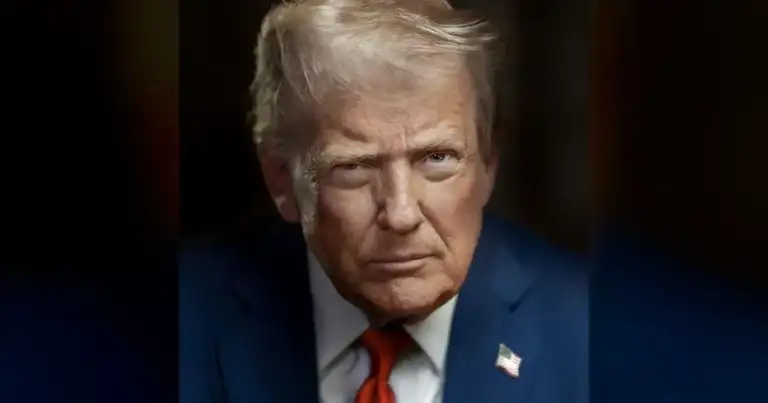

The Strait of Hormuz, that ancient, vital artery of global commerce, now finds itself at the precipice of a geopolitical earthquake. President Trump has hurled down an ultimatum: reopen the Strait, or “Hell will reign down on them.” This isn’t just rhetoric; this is a declaration of war, a line drawn in the sand with the fiery conviction of a man who believes he holds the fate of nations in his palm.
The President’s decree, delivered not from the hallowed halls of diplomacy but from the digital battlements of Truth Social, has set a new, terrifying clock ticking. We’ve seen these deadlines before, like ghosts haunting the geopolitical landscape, appearing and then fading into the ether. But this time, the air crackles with a different kind of electricity. The words are sharper, the stakes are higher, and the world holds its breath, wondering if this is the moment the dam finally breaks.

The Boy Who Cried Wolf: A Dangerous Game
Ah, the familiar refrain! This isn’t the first time President Trump has unleashed a torrent of fiery threats upon Iran. We, the weary spectators of this relentless geopolitical drama, have witnessed this play before. The public reaction? A collective, cynical groan, a sigh of exhaustion echoing across the digital town squares of Reddit, X, and 4chan. The internet, that sprawling, chaotic marketplace of ideas, is ablaze with sardonic calls of “Trump theater,” a weary acknowledgment of a pattern that has become all too predictable.
Yet, in the echo chambers of his most fervent supporters, a different narrative unfolds. They feast upon his pronouncements, devouring every word like manna from heaven. The digital battleground of r/The_Donald is awash with memes, declarations of “Glory to God!” and the fervent hope that “Iran BTFO soon.” But even the most devout among them, those who see him as a modern-day Cyrus, cannot entirely ignore the shifting sands of these ultimatums.
The “boy who cried wolf with nukes” has become a common, bitter jest. The 48-hour deadlines, once seemingly immutable, now dance like phantoms, first March 21, then a fleeting ten days, now April 6. How can a nation, let alone the world, take seriously a threat that constantly shifts its own goalposts, like a magician moving the pea under the cup? It breeds not fear, but a dangerous, corrosive cynicism.
Warmongering Grift or a Real, Chilling Threat?
Across the digital divide, on the hallowed grounds of r/politics and the bustling marketplace of X, critics are not mincing words. This isn’t statesmanship, they declare; it’s a “warmongering grift,” a cynical ploy to manipulate the global chessboard for personal gain. They draw a direct, damning line between the supposed “blocked Strait” and the inevitable spike in oil prices, whispering darkly of how such an escalation enriches the President’s inner circle, his cronies, his Mar-a-Lago benefactors. And the mainstream media, ever the cautious observer, has yet to definitively confirm a full, unequivocal closure of this vital waterway.
“He’s tanking the economy for Mar-a-Lago donors,” tweets @AntiEmpireWatch, a sentiment that has gone viral, a digital wildfire consuming the last vestiges of trust. The cynicism is not merely palpable; it is a thick, suffocating fog. People are weary, utterly exhausted by what they perceive as a relentless parade of manufactured crises, designed to distract, to divide, to conquer.
Is this a deep state psyop, a grand theatrical illusion orchestrated by unseen hands? Some whisper of a distraction, a diversion from pressing domestic woes. Others, with a darker humor, joke that it’s merely AI-generated fanfiction, a digital fever dream brought to life. The phrase “Glory be to GOD!” now rings with the hollow echoes of QAnon script-kiddies to many, a chilling reminder of past digital crusades. Even the notoriously irreverent /pol/ board on 4chan is roasting the timeline, their caustic wit cutting through the noise: “Trump’s been ’48 hours’ away from WW3 since 2017,” they quip, a stark reminder of the long, winding road of these repeated threats.
The Strait of Hormuz: A Beating Heart Under Siege
Let us not forget the geographical reality, the beating heart of this escalating crisis. The Strait of Hormuz is not merely a line on a map; it is a narrow, unforgiving waterway, a choke point of immense strategic significance. It is the umbilical cord connecting the vast, oil-rich Persian Gulf to the boundless expanse of the open ocean. Through its treacherous waters, roughly 20% of the world’s petroleum supply flows, a ceaseless river of black gold that fuels our modern world. Any disruption here, any ripple in its currents, sends not just shockwaves, but seismic tremors across the globe, threatening to destabilize economies and ignite conflicts far beyond its shores.
Iran, in its long and complex history, has, on numerous occasions, brandished the threat of closing this vital Strait. These threats, often a desperate response to crippling international sanctions, are not idle boasts; they are a stark reminder of its strategic leverage. To close this artery, to sever this global lifeline, would be an act of war, a declaration of intent that would plunge the world into an abyss of uncertainty and conflict.
President Trump’s recent declaration, therefore, is not merely another bluster; it is a game-changer, a seismic shift in the geopolitical landscape. It elevates a long-simmering tension, a constant hum of discord, to a critical, incandescent level. The world, a collective breath held captive, watches with bated breath, wondering if this particular deadline, unlike its predecessors, will truly be different. Will the floodgates of “Hell” truly open?
The Economic Tremors of Uncertainty
Even the mere whisper of conflict, the faintest tremor of war, sends markets reeling, a visceral reaction to the specter of instability. Oil prices, those volatile barometers of global anxiety, often spike with alarming rapidity. Shipping insurance premiums, those unseen costs of global trade, skyrocket, reflecting the heightened risks of traversing these now-perilous waters. Global trade, the intricate web that connects nations and economies, faces an immense, paralyzing uncertainty.
Businesses, those intricate engines of commerce reliant on this crucial shipping lane, are already teetering on the edge, their future hanging by a thread. Supply chains, those delicate, interconnected arteries of global production, are notoriously fragile, easily fractured by disruption. A full closure of the Strait would not merely disrupt; it would devastate economies worldwide, a catastrophic ripple effect that would touch every corner of the planet. This isn’t just about the price of oil; it’s about the very stability of our interconnected world, the delicate balance upon which our prosperity rests.
The President’s strong words, his fiery pronouncements, carry immediate and profound economic consequences. They sow fear, a corrosive anxiety that permeates financial markets. They breed volatility, a dangerous unpredictability that makes planning impossible. This is not merely a political maneuver; it is a high-stakes gamble, with the global economy as the chips on the table.
Diplomacy on Life Support: A Fading Hope
For years, the international community, weary of endless conflict, has tirelessly pursued a path of de-escalation. Sanctions, those blunt instruments of economic pressure, have been deployed. Negotiations, those arduous, often frustrating dialogues, have been attempted. Back-channel talks, those clandestine whispers in the dark, have been the norm, all in a desperate bid to avert the unthinkable. This latest move by President Trump, however, seems to bypass all these careful, painstaking efforts, a wrecking ball smashing through the fragile edifice of diplomacy.
It is an ultimatum, stark and unyielding, not a negotiation. It leaves precious little room for diplomatic maneuvering, for the nuanced dance of give and take. The world watches, transfixed, to see if America’s allies, those nations bound by treaties and shared values, will rally behind this uncompromising stance. Or will they, in a desperate plea for reason, push for a more measured, more thoughtful approach, one that prioritizes dialogue over confrontation?
The absence of a clear, unified international front, a chorus of voices speaking with one accord, could embolden Iran, convincing them that the world is divided and weak. Conversely, it could isolate the United States, leaving it to bear the burden of this dangerous path alone. This, unequivocally, is a perilous trajectory, fraught with unseen dangers.
The Military Posture: A Shadow of War
President Trump’s chilling vow of “Hell will reign down on them” is not merely a turn of phrase; it is a thinly veiled promise of military action, a stark declaration of intent. The United States, a global superpower, maintains a formidable military presence in the region, a testament to its strategic interests. Naval assets, those floating fortresses of steel and firepower, patrol the seas. Airpower, those winged harbingers of destruction, dominate the skies. Ground forces, those boots on the ground, stand ready, poised for deployment.
Any military engagement in this volatile region would be an undertaking of immense complexity, a labyrinth of unforeseen consequences. Iran, let us not forget, possesses its own formidable military, a force hardened by decades of conflict and regional tensions. Furthermore, it commands a network of proxies throughout the Middle East, a shadowy web of influence that could ignite a regional conflagration. A conflict, once unleashed, would not merely escalate; it would spiral, uncontrollably, into an inferno of unimaginable proportions.
The human cost would be immense, a tragedy of epic proportions. Regional stability, that delicate balance of power, would evaporate like mist in the desert sun. This is not a game, not a theatrical production for public consumption. This is real life, with real consequences, where the lives of millions hang in the balance.
The Precedent of Previous Warnings: A Dangerous Game of Chicken
The public’s pervasive cynicism, that weary skepticism, is not without foundation. President Trump, throughout his presidency, has cultivated a history of dramatic warnings, of fiery pronouncements that often fail to materialize into direct military action. This consistent pattern has unfortunately fostered a “boy-who-cried-wolf” scenario, where each successive threat is met with diminishing belief.
However, each time, the stakes are undeniably higher. Each successive warning, each diplomatic maneuver, each inflammatory tweet, ratchets up the tension, tightening the coil of geopolitical pressure. Eventually, a bluff could be called, a miscalculation could occur, and the consequences would be catastrophic. The line between theatrical bluster and genuine intent blurs, creating a dangerous ambiguity.
This recurrent pattern makes it exceedingly difficult to discern true intent, to separate the genuine threat from the political posturing. Furthermore, it erodes the trust of America’s allies, leaving them to wonder if the United States is a reliable partner or a capricious actor on the world stage. It breeds confusion, a dangerous fog that obscures rational decision-making.
A Nation Divided, A World on Edge: The Looming Shadow
Domestically, the reaction to this latest ultimatum is, predictably, deeply polarized. Supporters, ever loyal, perceive strength, a decisive leader taking a stand against perceived enemies. Critics, however, see only recklessness, a dangerous gamble with global stability. This stark division mirrors the broader political landscape, a nation fractured by ideology and distrust.
Internationally, there is a deep, pervasive concern. Leaders across the globe are scrambling, frantically trying to assess the gravity of the situation, to understand the true implications of this declaration. The threat of a major conflict in the Middle East, that perennial tinderbox, looms large, casting a long, terrifying shadow over the entire world.
This isn’t just about Iran; it’s about global stability, the delicate equilibrium that prevents widespread conflict. It’s about the future of international relations, the very framework of cooperation and diplomacy. Ultimately, it’s about peace, that most fragile and precious of human endeavors.
President Trump has, once again, set a new deadline, a new countdown to an uncertain future. The world holds its breath, collectively wondering: Is this merely another act in the ongoing “Trump theater,” a grand spectacle designed to entertain and distract? Or will “Hell reign down,” transforming rhetoric into a devastating reality?
One truth, stark and undeniable, remains: the consequences, whatever their form, will ripple across the globe, touching every nation, every life. This is not merely a headline to be consumed and forgotten; it is a potential turning point, a moment that could forever alter the course of history.
Source: Google News