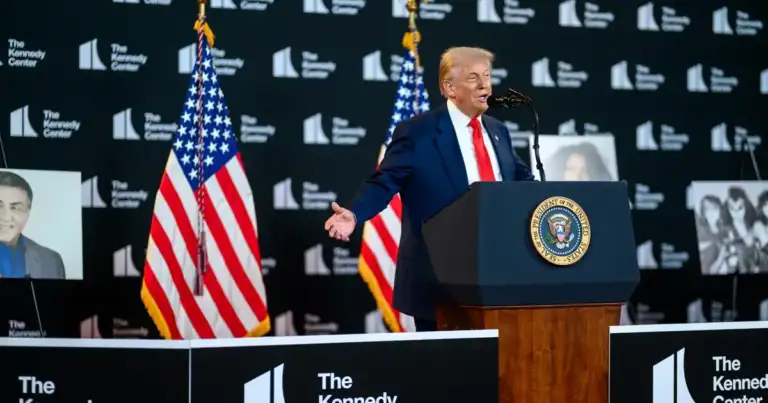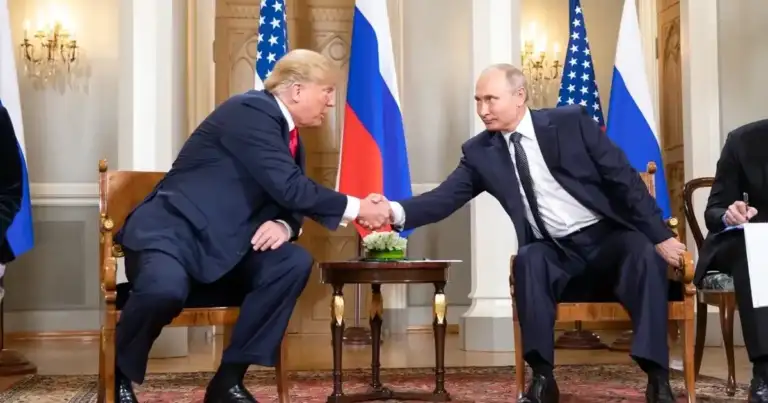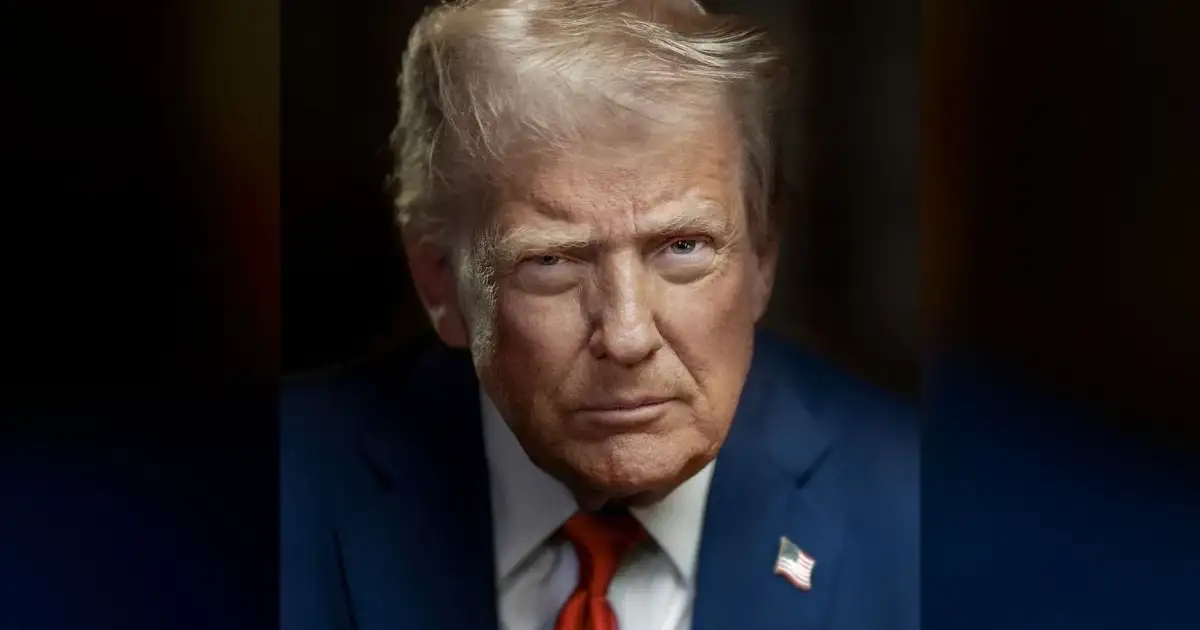

The scent of falafel now hangs heavy in the geopolitical air, thanks to a misspelled threat from the former President that has turned a crucial choke point of global commerce into a punchline. Donald Trump, ever the maestro of the unexpected, issued a bloodcurdling, misspelled threat to Iran this week, demanding the Strait of Hormuz reopen, or else. This isn’t brinkmanship; it’s a carnival act, a grand theatrical production where the lead actor fumbles his lines and the audience howls with laughter rather than fear.
The former President used his platform to deliver a 48-hour ultimatum, threatening to “obliterate power plants” in Iran. This came as the deadline to reopen the crucial shipping lane approached, a deadline that has since been pushed to April 6. The global markets, ever sensitive to the tremors of political rhetoric, reacted predictably: oil prices already spiked over $110 per barrel.

The Hummus Hour: Social Media Erupts in Mockery
The internet, however, found one detail more striking than the rising oil prices or the saber-rattling: the egregious misspelling. Trump, in a moment of either haste or profound ignorance, called it the “Strait of Hummus.” And just like that, the solemnity of international diplomacy evaporated into a cloud of comedic dust. Social media platforms—X, Reddit, and TikTok—exploded with savage mockery, turning what was intended as a menacing declaration into a global meme.
Users branded it “peak clownworld theater,” calling Trump a “senile grifter” cornered by his own bluster. Memes flooded r/PoliticalHumor. One particularly viral image showed Trump eating falafel, captioned “Art of the Deal: Falafel Edition.” This was not the reaction of a nation fearing war; it was the sound of collective eye-rolling. Critics screamed market manipulation, accusing Trump of “panic-posting to pump stocks before crash” only to “U-turn like a beta” when the heat became too intense. It’s a familiar dance, one we’ve seen performed on this stage countless times before.
A Shadow Play for Big Oil? The Cynical Theories Abound
Cynical theories abound, as they always do when the gears of power grind in such a transparent fashion. Many astute observers see this as a “shadow play” with Iran and Russia, a meticulously choreographed ballet of bluster and retreat. They believe the Caspian “shadow fleet” is mere chess bait, a strategic pawn sacrificed to achieve a larger goal: to spike energy prices for Big Oil donors. It’s a familiar tune, isn’t it? A melody played on the broken strings of international relations, always for the benefit of a select few.
Redditors on r/conspiracy and r/worldnews theorize a scripted de-escalation, a pre-determined outcome to a manufactured crisis. Trump’s ALL-CAPS “talks going well” post was quickly deleted, a digital whisper into the void, especially since Iran vehemently denies any such talks ever occurred. This echoes his Soleimani flop, a historical precedent where he threatened apocalypse, then blinked first, only to claim victory from the jaws of retreat. “Classic 4D chess for golf weekends,” one user quipped, perfectly encapsulating the blend of strategic maneuvering and casual indifference that often characterizes these episodes.
Why such a performance? The answer is as old as politics itself. There’s no real appetite for a full-blown war on Wall Street; the global economy is far too fragile to withstand such a shock. This looks suspiciously like a “wag the dog” distraction, a classic misdirection designed to pull focus from pressing domestic woes. The IDF missile maps to London are just fear porn filler, a cheap trick to keep the populace agitated and diverted. It’s a playbook as old as the Roman Empire, and we, the audience, are expected to fall for it every time.
The Playbook of Distraction: More Than Just a Misspelling
This isn’t new. We’ve seen this playbook before, etched into the annals of political history. When domestic problems mount, when approval ratings plummet, when legal challenges loom large, foreign threats mysteriously appear on the horizon. It’s a classic misdirection, a sleight of hand to keep the public’s gaze fixed elsewhere. The “threat” against Iran serves multiple purposes: it energizes a base hungry for strongman rhetoric, it rattles markets for the benefit of financial speculators, and crucially, it keeps the media talking about anything but the real issues plaguing the nation.
Think about the sprawling, often corrupt, college football industrial complex. The playoff committee corruption runs deeper than a defensive lineman’s trench. Conference realignment greed tears traditions apart like a poorly executed blitz. The unshakeable SEC bias is a stain on the very fabric of the sport, a favoritism so blatant it borders on parody. These are the real battles, the systemic issues that erode the integrity of institutions we hold dear. But who talks about them when there’s a “bloodcurdling” international incident, even one punctuated by a culinary gaffe?
The NIL/recruiting wars, a modern-day gladiatorial contest, are destroying the very fabric of amateur sports. Young athletes, once symbols of pure athletic endeavor, are now mere pawns in a high-stakes money game. Schools chase dollars, not championships, sacrificing integrity on the altar of financial gain. This is a scandal of monumental proportions, a betrayal of the ideals of sport. But it is easily overshadowed, conveniently swept under the rug, by a misspelled threat that dominates headlines and social media feeds.
The Art of the Bluster: A Masterclass in Misdirection
Trump’s rhetoric, however inflammatory, often lacks follow-through. His words are designed for shock value, for the immediate jolt of controversy. They are not always blueprints for action; rather, they are the raw materials for a never-ending news cycle. This is the art of the bluster, a performance crafted to create sensation, to dominate headlines, to be the loudest voice in the room. But does it achieve anything meaningful in the long run? That is a question we must constantly ask ourselves.
Consider the biomechanics of a golf swing. Every movement is precise, every angle calculated, every muscle engaged with deliberate intent. Trump’s foreign policy pronouncements, by contrast, are the antithesis of this precision. They are wild, unscripted, and often counterproductive, like a duffer flailing at a tee shot. Yet, paradoxically, they command attention, they captivate, they dominate the discourse. This is his unique power, a gravitational pull that draws all eyes to his chaotic orbit.
While the world grapples with misspelled threats, real action, real strategy, and real execution are happening elsewhere. Just look at the hardwood. The San Antonio Spurs recently beat the LA Clippers 118-99, a display of disciplined play and strategic brilliance. De’Aaron Fox scored 22 points, a maestro orchestrating the offense. Devin Vassell grabbed 10 rebounds, a tireless warrior battling in the paint. This is real action. This is strategy. This is execution. Trump’s threats, in stark contrast, are often just noise, a discordant symphony in a world craving harmony.
The Spurs played a dominant game at the Intuit Dome, controlling the tempo, executing their plays with surgical precision, and finishing strong. A real leader, whether on the court or in the halls of power, shows such discipline, such foresight, such unwavering commitment to a clear objective. They don’t rely on misspelled threats; they rely on substance, on strategy, on the quiet, unwavering power of competence.
The Real Stakes: Beyond the “Strait of Hummus”
The real stakes are astronomically high. The Strait of Hormuz is not merely a name on a map; it is a vital choke point, a pulsating artery through which a third of the world’s seaborne oil flows. Any actual disruption, any genuine closure, would be catastrophic. Global markets would reel, economies would falter, and the very fabric of international stability would be torn asunder. This is not a game to be played with casual indifference or misspelled threats.
But this, dear reader, is not about global stability. This is about theater. It’s about maintaining relevance in an ever-shifting political landscape. It’s about controlling the narrative, shaping perceptions, and diverting attention from the myriad legal challenges Trump faces. For example, Trump has been vociferous about various lawsuits, using his platform on Truth Social to attack opponents, to decry proceedings as a “witch hunt,” and to declare the “system is rigged.” This is his pattern: strong, inflammatory language designed to provoke, to rally his base, to dominate the conversation. It is not designed to solve problems; it is designed to create a spectacle.
He rallies his base with unsubstantiated claims, attacks perceived enemies with unbridled fury, and casts himself as the victim of a vast conspiracy. This is standard operating procedure, a well-worn path in his political journey. A misspelled threat, then, is just another arrow in his quiver, another tool in his arsenal of disruption.
What’s Next for the “Strait of Hummus”?
The deadline, now pushed to April 6, looms. Will Iran reopen the strait without further incident? Will Trump, true to his word, follow through on his threat to “obliterate power plants”? Or will there be another “clarification,” another “de-escalation,” another triumphant claim of victory from a crisis that never truly materialized? My bet, informed by years of observing this particular political drama, is on the latter. This is a game of smoke and mirrors, a carefully constructed illusion designed to keep us perpetually distracted, perpetually talking, perpetually engaged in the spectacle rather than the substance.
The real questions, the ones that truly matter, remain stubbornly unanswered. When will we, the public, demand substance over spectacle? When will we hold leaders accountable for their words, for the very real consequences of their rhetoric? When will we stop falling for the same old tricks, the same worn-out playbook of distraction and misdirection?
The “Strait of Hummus” incident, as absurd as it may seem, is a stark reminder of the era we inhabit: a political landscape dominated by performance art, where a misspelled word can ignite a global conversation, where the trivial often overshadows the profound. The consequences, however, are very real, impacting lives, economies, and the fragile peace of nations. Do not let the misspelled threats, the cheap theatrics, and the manufactured outrage distract you from the true battles that rage beneath the surface.
Source: Google News