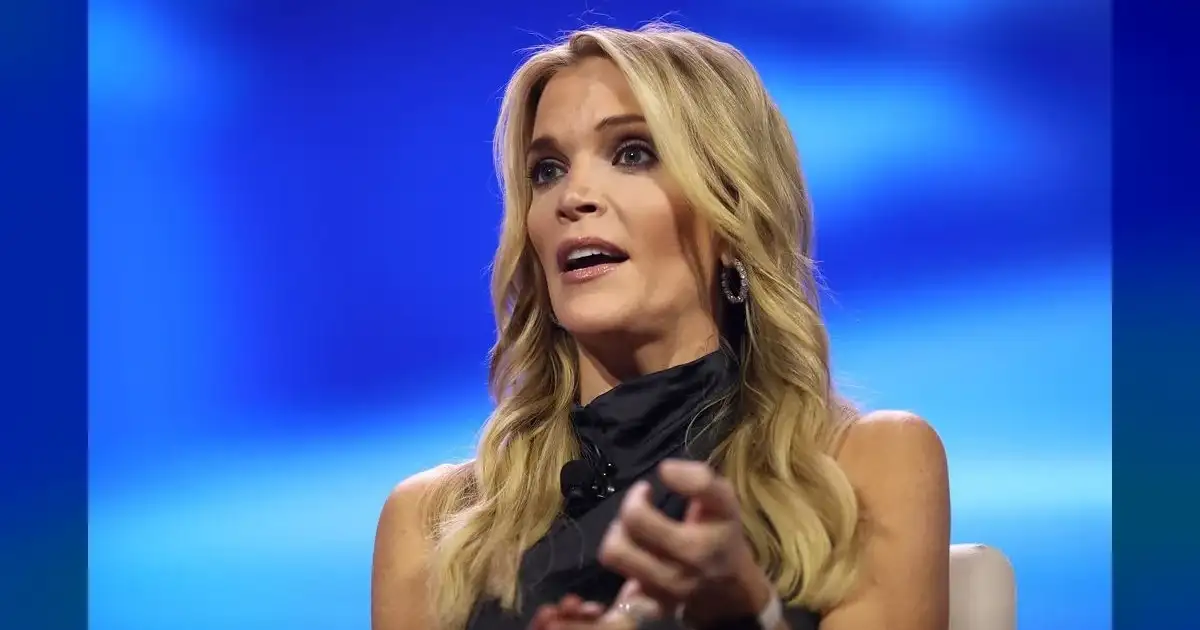

Megyn Kelly, once a stalwart voice within conservative media, has unleashed a blistering attack on President Trump, branding his recent “God-talk” amidst the bombing of Iran as “blasphemous.” This isn’t just another media spat; it’s a profound moment that exposes a widening chasm even among his most fervent loyalists.
The veteran journalist, known for her sharp critiques, spared no words. She unequivocally condemned the President’s online posts as “disgusting” and “irresponsible,” delivering her tirade as US and Israeli forces intensify military strikes against Iran.

Trump’s Provocative Posts Ignite a Firestorm
The catalyst for this conservative revolt? President Trump’s recent social media activity, which included sharing a controversial Jesus AI picture and issuing chilling threats regarding the escalating conflict in Iran. His pronouncements were nothing short of apocalyptic, vowing to erase “a whole civilization” and screaming “Open the F—in’ Strait, you crazy b——s.”
For Kelly, whose journalistic career has often intersected with Trump’s political rise, this was clearly her breaking point. Her patience, it seems, finally snapped. She unleashed her fury on her popular platform, going so far as to read a dictionary definition of blasphemy to underscore the gravity of her accusation. The raw emotion in her voice was palpable as she declared:
“I’m sick of this s–t. Can’t he just behave like a normal human? F—ing shut up!”
Kelly’s core criticism centered on his audacious rhetoric, which she saw as playing God amidst active bombing runs – a sacrilege in her view. While she had previously extended him grace on past controversies, even those involving Pope Leo XIV, this particular transgression proved unforgivable.
Right-Wing Backlash: A Chasm Opens
The blowback from President Trump’s own ideological base has been swift and brutal, laying bare a deep fracture within his movement that few could have predicted. This isn’t just dissent; it’s a full-blown conservative revolt, with figures typically aligned with Trump now openly condemning his words.
- Riley Gaines and Michael Knowles publicly condemned the Jesus AI meme, viewing it as deeply offensive.
- Marjorie Taylor Greene, a staunch ally, raged on X, tweeting “25TH AMENDMENT!!!” and unequivocally labeling the incident “evil madness.”
- Alex Jones, a long-time Trump supporter, launched into a furious tirade, claiming Trump sounded “demon possessed” and branding him an “aneurysm-struck” “Marvel supervillain” pushing genocide.
- Even Tucker Carlson, another prominent conservative voice, labeled the rhetoric a “vile… war crime,” a shocking denunciation given his past support.
The outrage is not confined to cable news or podcasts; it’s blazing across social media platforms. Reddit’s r/Conservative and X threads are ablaze with debate. While some users echo Kelly’s sentiment, declaring “Megyn’s right—he’s lost it,” others quickly dismiss her as a “RINO sellout.” Crucially, even staunch defenders of the President have been forced to concede that his recent rhetoric is “not dignified,” a telling admission of its extremity.
The “Blasphemer Trump” Divide: A Societal Strain
This isn’t merely a fleeting media squabble or political theater; it represents a watershed moment. It starkly highlights the immense strain placed on political alliances and public discourse during wartime. The US-Iran conflict, ongoing since February 28, 2026, is a grave reality, and inflammatory language from the Commander-in-Chief bears immense weight, both domestically and on the global stage.
From my perspective as a science and health editor, focused on the intricate dynamics of public discourse, this kind of extreme rhetoric has tangible and detrimental impacts on public mental well-being. It doesn’t just erode trust and social cohesion; it actively destabilizes the collective psyche. When leaders employ such language, it creates cognitive dissonance, making it profoundly harder for people to rationally grapple with the complexities of global events and distinguish fact from inflammatory provocation.
The way this incident unfolds in the intense online reactions offers a stark illustration. The raw, immediate responses demonstrate how deeply personal political figures and their pronouncements have become for many. This emotional entanglement, while understandable, is fundamentally unhealthy for a functioning democracy. It fosters an environment where tribalism often overrides critical thought, and where the constant influx of high-stakes, emotionally charged information can lead to chronic stress and anxiety among the populace.
Cynical Theories vs. Tangible Fallout
Cynical observers are quick to theorize, often dismissing Kelly’s “freak-outs” as nothing more than “performative podcast wars” – just another “saturation point of lectures from inconsistent grifters.” This viewpoint suggests that the outrage is manufactured, a calculated move in the ongoing media landscape.
Similarly, proponents of the “3D chess” theory suggest Trump’s shocking statements are not gaffes but intentional strategies. This theory posits he aims to control the narrative, test the loyalty of his base, or even intentionally provoke a reaction to divert attention from other issues. It’s an attempt to rationalize the extreme, to find a deeper, strategic meaning in what appears to be unhinged rhetoric.
But regardless of intent – whether these pronouncements are calculated gambits or genuine outbursts – the outrage and its fallout are undeniably real. They are causing genuine distress, deepening existing divisions, and actively distorting public understanding of the actual war efforts unfolding in the critical Strait of Hormuz and across the broader region. The human cost of such rhetoric is not theoretical; it’s felt in the heightened anxiety, the erosion of trust, and the fragmentation of shared reality.
A President’s words, especially during wartime, carry far-reaching consequences. They don’t just shape public opinion and international relations; they profoundly impact the emotional and psychological state of an entire nation. When the Commander-in-Chief speaks, the world listens, and the domestic population internalizes those messages, often with significant personal and collective strain.
This episode stands as a potent reminder: leadership demands a profound responsibility for one’s words. Especially when a nation is engaged in conflict, rhetoric can either unite a populace in a common cause or cleave it into irreconcilable factions. The choice of language is not trivial; it is a foundational element of governance and societal well-being.
The public deserves clear, responsible, and empathetic communication from its leaders, particularly during times of crisis. It deserves a discourse built on reason and respect, not “God-talk” that sparks accusations of blasphemy and plunges the nation into deeper division. The societal and psychological cost of such incendiary rhetoric is simply too high to bear.
For more insights into how public discourse impacts our society and our collective mental health, visit DailyNewsEdit’s Politics section. We are committed to covering the stories shaping our nation with an evidence-based approach.
Source: Google News