
Grief, it seems, has an unspoken expiration date in the public imagination. We applaud the tears, we share the condolences, but then an invisible clock starts ticking. And God help the public figure who dares to ignore it. Enter Erika Kirk, a woman whose profound loss has become a spectator sport, and whose latest ‘fiery attack’ on the so-called ‘cruel sleuths’ speaks volumes about our collective inability to let people mourn in peace.
The rumor mill, fueled by keyboard warriors and click-hungry gossip mongers, started buzzing about a ‘new boyfriend.’ Kirk’s sharp, unequivocal response—‘Charlie’s love will last me a lifetime’—was a gut punch to anyone dictating her emotional timeline. It served as a much-needed splash of cold water on public voyeurism.

Grief in the Glare: The Public’s Unsolicited Clock
Everything is content in our age, including personal tragedy. Initial public sympathy for Erika Kirk’s loss quickly morphs into an intrusive fascination with her recovery. People aren’t just sending condolences; they’re waiting for the first sign of ‘moving on.’
Is she smiling too soon? Is she seen with another man? Is she dressing differently?
This isn’t empathy; it’s entertainment, the worst kind of reality TV. The ‘cruel sleuths’ aren’t just random trolls; they’re a symptom of a culture commodifying grief.
They gain perverse agency by ‘uncovering’ what they deem truth, projecting shallow timelines onto a deeply personal journey. They don’t care about Erika Kirk’s healing; they care about being first to break a baseless ‘story.’
The Unspoken Pressure to ‘Move On’
The societal script for grief, particularly for women, is insidious. There’s an expectation that after a ‘reasonable’ period, one should ‘get back out there.’ This creates an environment where expressions of enduring love, like Kirk’s, are seen not as admirable loyalty but as a problem to be ‘fixed.’
Armchair psychologists fail to grasp that love doesn’t vanish when someone dies; it transforms and deepens. Kirk’s statement honors a profound, sustaining connection, not a refusal to live. Some loves are so monumental they don’t get ‘replaced’; they simply evolve into a different kind of presence.
“Charlie’s love will last me a lifetime.” – Erika Kirk
This isn’t a plea for pity. It’s a boundary. It’s a woman declaring ownership over her own heart and her own narrative.
The Red Marker: Our Obsession with Other People’s Love Lives
Here’s the brutal truth mainstream narratives gloss over: this isn’t about Erika Kirk’s emotional well-being. It’s about feeding the beast. The ‘cruel sleuths’ are driven by the dopamine hit of ‘breaking news’ and fleeting attention.
Gossip sites and social media aggregators prioritize clicks, shares, and ad revenue over someone’s pain. They turn human emotion into disposable content. The hypocrisy is glaring: we pretend to care, yet actively participate in behavior that makes grief harder.
We demand transparency from public figures while stripping them of privacy. We project our discomfort with death and enduring love onto them, pushing them to conform to a voyeuristic timeline, not their healing process.
Erika Kirk’s ‘fiery attack’ is a refusal to play along. It’s a defiant stand for the sanctity of private grief and the enduring power of a love that transcends mortality. The real story isn’t about a new boyfriend or a denial; it’s about the fundamental human right to process loss without a live audience demanding updates and casting judgment. Some loves truly do last a lifetime, and it’s not up to us to put a clock on them.
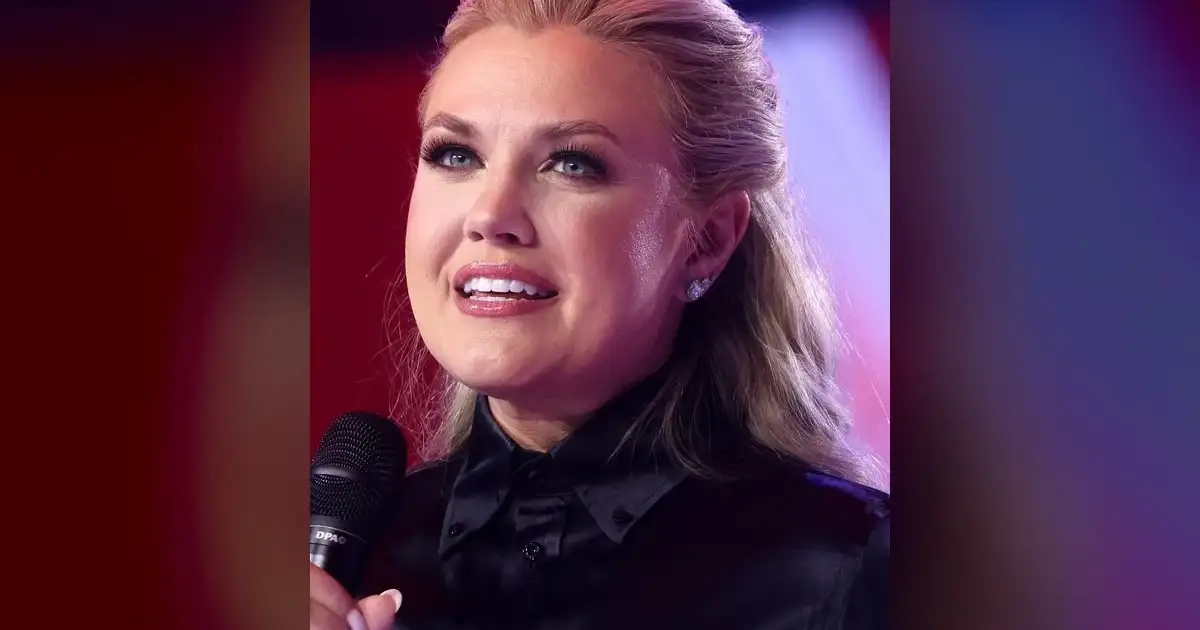
Photo: Gage Skidmore
Source: Google News