
In a geopolitical landscape already fraught with tension, President Donald Trump has made a striking claim: China will cease sending weapons to Iran. This bold assertion, delivered amidst active regional conflict, immediately reverberated across diplomatic circles and global capitals.
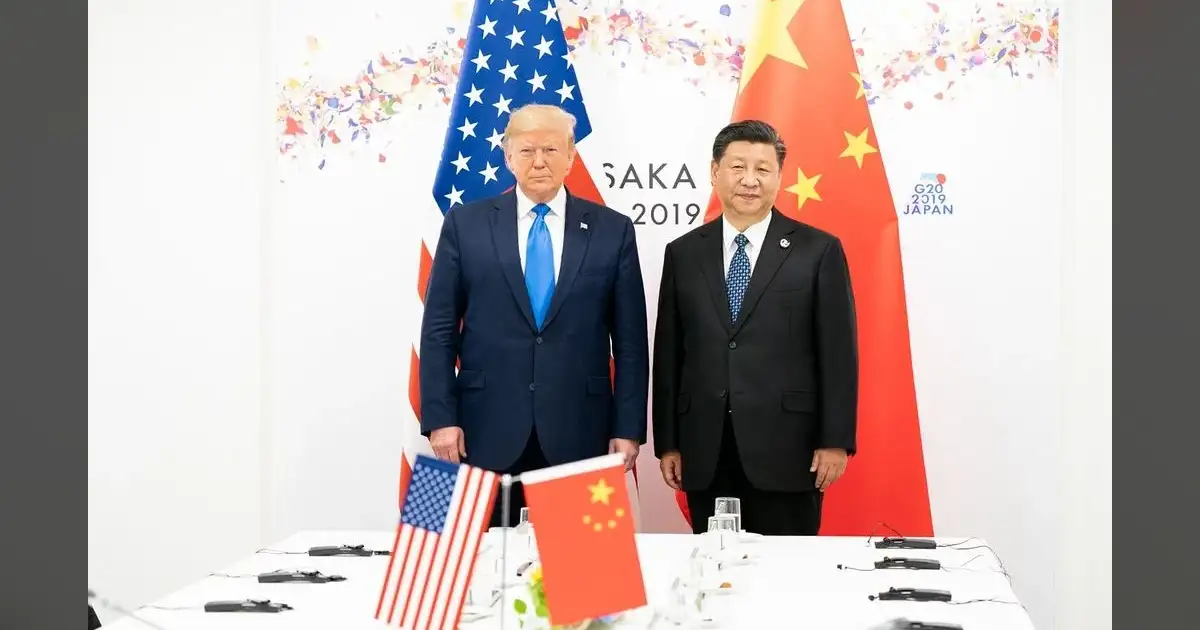
On April 14, 2026, speaking to a rally crowd in Des Moines, Iowa, President Trump declared he had engaged directly with Chinese President Xi Jinping. According to Trump, President Xi offered assurances that there would be “no more weapons for Iran.”

Trump framed this alleged agreement as a triumph for global business and peace, even humorously anticipating a “big, fat hug” from Xi at their next encounter. Yet, the critical absence of independent confirmation from either Beijing or Tehran casts a long shadow of doubt over the pronouncement.
The Echo of Silence: Unconfirmed Claims and Geopolitical Realities
The immediate and profound silence from both Chinese and Iranian official channels serves as a powerful counterpoint to President Trump’s declaration. In the intricate world of international diplomacy, such an absence of corroboration is not merely a lack of agreement; it is a significant indicator of skepticism, if not outright denial.
Washington, through its established diplomatic channels, has offered no corroboration. US government officials privately express deep skepticism regarding the feasibility and legitimacy of such an agreement, particularly given that President Trump is not operating through official governmental channels.
International observers are compelled to view this statement with extreme caution, understanding the historical depth of China’s role as a crucial military supplier to Iran. For over two decades, China has provided Iran with a range of sophisticated military technologies, including advanced drone systems, missile components, and naval hardware.
A sudden, complete cessation of this supply would represent not merely a policy adjustment, but a seismic shift in China’s long-standing strategic engagement in the Middle East.
China’s state media, while not directly addressing Trump’s claim, has subtly reinforced Beijing’s consistent stance on non-interference in sovereign affairs and adherence to international law. It simultaneously underscores the enduring strategic partnership it maintains with Iran. Publicly confirming a deal of this magnitude, particularly one that appears to be a concession to a US president (current or former), would undoubtedly disrupt China’s carefully cultivated diplomatic balance and independent foreign policy.
China’s Intricate Balancing Act
China’s relationship with Iran is a complex web built over decades, balancing substantial economic imperatives with overarching geopolitical interests.
Bilateral trade between the two nations reached approximately $30 billion in 2025. This figure underscores Iran’s importance as a consistent supplier of oil to China and a significant market for Chinese manufactured goods and technology.
This economic lifeline is further intertwined with China’s ambitious Belt and Road Initiative (BRI), where Iran holds a pivotal position. Significant Chinese investments have flowed into Iran’s infrastructure and energy sectors, cementing a strategic alignment that extends far beyond mere commerce. China was also a signatory to the 2015 Iran nuclear deal (JCPOA) and has consistently advocated for its preservation, even in the face of the US withdrawal, highlighting its commitment to multilateralism and its own regional strategic interests.
For Beijing, managing the persistent pressure from the United States while simultaneously upholding its strategic partnership with Iran is a delicate and continuous challenge.
A public agreement to halt arms transfers to Iran, especially one announced unilaterally by a US figure, could easily be perceived as a capitulation to Washington’s demands. Such a perception would not only undermine China’s image as an independent global power but could also alienate a key regional partner.
This could complicate its energy security and potentially destabilize its extensive BRI investments in the Middle East. The political cost of such a perceived concession would be substantial, making any confirmation from Beijing highly improbable without significant reciprocal gains.
Iran’s Defense Posture Amidst Ongoing Conflict
Iranian officials, predictably, have refrained from directly validating President Trump’s claim. State-affiliated media outlets have largely dismissed the assertion as “American election rhetoric,” a familiar refrain designed to deflect and delegitimize foreign pronouncements concerning Iran’s sovereign defense capabilities.
Tehran consistently reiterates its inherent right to self-defense. It maintains that its defense cooperation with nations like China is legitimate, transparent, and solely aimed at ensuring regional stability.
This claim emerges at an exceptionally volatile juncture in the Middle East. The United States and Israel launched military strikes against Iran on February 28, 2026, marking a significant escalation in an already tense and active armed conflict.
The Strait of Hormuz, a critical choke point for global oil shipments, remains a major flashpoint. This underscores the strategic importance of Iran’s naval and missile capabilities.
In this context, Iran’s access to advanced weaponry is not merely a matter of national pride but a fundamental component of its defense strategy and deterrent posture. Any tangible reduction in this access, particularly to sophisticated Chinese technology, could directly impact the dynamics of the ongoing conflict, potentially altering the balance of power.
Furthermore, Iran’s economy continues to grapple with severe international sanctions, making access to advanced weaponry challenging. China’s consistent willingness to engage with Iran, despite intense US pressure, has historically provided a crucial lifeline, enabling Tehran to bolster its defense capabilities when other avenues were closed.
The Familiar Political Playbook
President Trump’s statement aligns perfectly with a well-established pattern observed throughout his political career. Both during and after his presidency, he frequently laid claim to personal diplomatic breakthroughs and successes in negotiations with foreign leaders.
These claims, often presented as exclusive insights derived from personal relationships, frequently lacked official confirmation and were, at times, subsequently disputed by the very leaders he cited.
This particular statement appears meticulously timed for maximum political impact. It is designed to project an image of unparalleled strength and unique diplomatic prowess ahead of upcoming elections. It serves as a powerful narrative tool, suggesting that only he possesses the ability to broker such significant international agreements.
Critics, however, are quick to interpret this as a calculated political maneuver aimed at burnishing his image and asserting influence, particularly given the profound absence of any verifiable evidence.
The public reaction has been swift and largely dismissive, with many online commentators expressing strong skepticism. Social media platforms, in particular, have been awash with mockery and branding of the claim as “Trump delusion.” This reflects a deep-seated public distrust of such unconfirmed pronouncements and highlights a perceived chasm between political rhetoric and geopolitical reality. Such claims, when unsubstantiated, risk eroding the already fragile trust essential for effective international diplomacy.
Beyond Rhetoric: The ‘So What’ for Global Stability
If President Trump’s claim were to prove genuine, its ramifications for global stability would be nothing short of transformative. A verifiable reduction in Iran’s access to military technology could indeed slow its nuclear ambitions, addressing a paramount global security concern.
Furthermore, fewer advanced weapons flowing into the region could potentially de-escalate ongoing regional conflicts. This would mitigate humanitarian crises and significantly lower the pervasive risk of a wider, more devastating war. The implications for non-proliferation efforts would be profound, offering a rare glimmer of hope in a persistently volatile region.
However, the stark lack of verification renders these potential impacts entirely speculative. The claim itself, regardless of its veracity, raises critical questions about the future direction of US foreign policy and the increasing role of informal diplomacy versus established institutional channels.
It also powerfully underscores China’s burgeoning global influence. This demonstrates Beijing’s complex management of US pressure while steadfastly maintaining its strategic partnerships. The incident highlights the precarious nature of truth in an era of rapid information dissemination and the critical importance of official confirmation in matters of such grave international consequence.
Ultimately, while words can certainly shape narratives
Photo: Photo by The White House on Openverse (flickr) (https://www.flickr.com/photos/148748355@N05/48162296741)
Source: Google News