
The brutal rhythm of war in Ukraine continues to reverberate across the landscape, as both Russia and Ukraine engage in a relentless exchange of long-range strikes that penetrate deep into enemy territory. This pattern, characterized by its devastating impact on civilian populations and critical infrastructure, underscores a grim, unchanging reality where a clear end remains tragically out of sight.
The past 72 hours, spanning June 1-3, 2026, offer a stark illustration of this reality. Mutual drone and missile attacks have relentlessly targeted critical infrastructure and civilian areas, with both nations claiming operational successes while simultaneously reporting damage inflicted by the opposing side.

On June 1, Ukrainian military intelligence (GUR) successfully struck a Russian oil depot in Krasnodar Krai. While Russian officials acknowledged an incident, they characteristically downplayed the extent of the damage. Simultaneously, Russia asserted that its air defense systems had intercepted multiple Ukrainian drones over its Belgorod and Kursk regions, reporting only minor debris damage from the downed aerial vehicles.
The Relentless Air War and its Strategic Implications
The aggression escalated significantly on June 2. Russia launched a massive wave of Shahed-type drones against Ukraine’s energy grid, with the Odesa region bearing the brunt of these attacks. While Ukrainian air defense forces reported intercepting the vast majority of these drones, several managed to bypass defenses, resulting in localized power outages and disruptions across the affected areas. These strikes are not merely random acts; they represent a calculated effort to erode Ukraine’s resilience and disrupt its economic capacity.
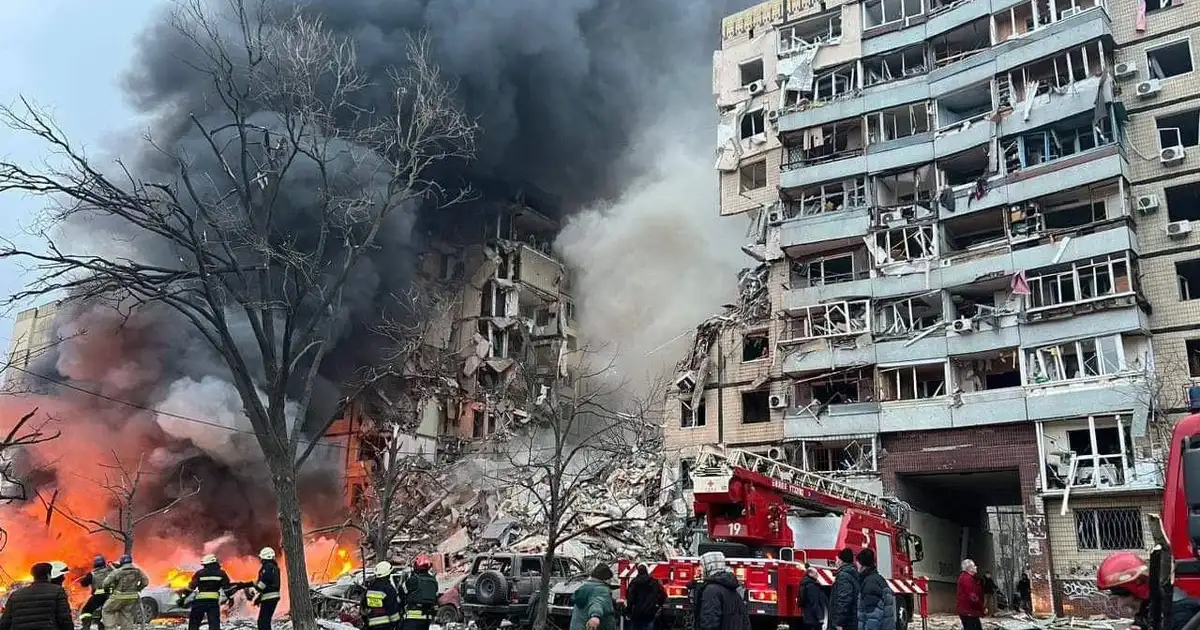
The following day, June 3, saw Russian forces pound Kharkiv, Ukraine’s second-largest city, with a barrage of missile strikes. Local officials tragically confirmed at least three civilians killed and numerous others injured in the assaults. Residential buildings and vital civilian infrastructure suffered direct hits, transforming bustling neighborhoods into scenes of devastation. Rescue operations are still desperately underway in the battered city, a testament to the enduring human cost of this conflict.
“The enemy continues to terrorize Kharkiv. Another missile strike on civilian infrastructure. Unfortunately, there are dead and wounded. All services are working at the sites of the hits.” — Oleh Syniehubov, Head of Kharkiv Regional Military Administration (June 3)
From Kyiv’s perspective, its strikes on Russian targets are an act of justified self-defense, strategically designed to disrupt Russia’s extensive war machine and retaliate for the incessant attacks on Ukrainian territory. Kyiv has consistently and unequivocally condemned Russia’s deliberate targeting of civilians as egregious war crimes, demanding international accountability.
Conversely, Moscow frames its attacks as necessary responses to what it terms Ukrainian aggression, asserting that its operations aim to degrade Ukraine’s military capabilities. Russia frequently accuses Ukraine of striking its civilian areas, labeling these actions as “terrorist acts,” thereby perpetuating a cycle of accusation and counter-accusation that obfuscates the humanitarian catastrophe.
Grim Status Quo: A Protracted War of Attrition
Are these constant, mutual attacks signaling a new, more intense phase of the conflict, or do they simply underscore the grim status quo? The evidence overwhelmingly points to the latter. This established pattern of long-range attacks has defined the conflict for well over a year, firmly indicating a protracted war of attrition rather than any sudden shift in strategic objectives. What we observe is not a dynamic evolution, but a relentless, grinding continuation of hostilities.
Neither side achieves decisive strategic breakthroughs from these strikes. While they undeniably impose massive economic and logistical costs, they have demonstrably failed to alter the front lines or significantly shift the balance of power on the battlefield. Their primary impact is felt in the hinterlands, far from the immediate contact zones, where infrastructure crumbles and civilian lives are irrevocably altered.
Ukraine’s capacity to strike deeper into Russian territory has undoubtedly grown, a direct reflection of its evolving indigenous drone technology and the consistent influx of Western military aid. This technological advancement allows Kyiv to project its defensive capabilities further. However, Russia still maintains a formidable, indeed massive, advantage in its stockpiles of missiles and artillery, allowing it to sustain a high volume of long-range attacks.
“Our air defense forces successfully destroyed 18 out of 20 enemy ‘Shahed’ attack drones launched overnight, primarily targeting the south of the country.” — Ukrainian Air Force Command (June 2)
The core objectives behind these strikes remain clear and largely unchanged. Russia seeks to fracture Ukraine’s will to resist and cripple its operational capacity, hoping to force a capitulation through sustained pressure. Ukraine, in turn, aims to disrupt Russia’s expansive war economy, targeting its logistical chains and energy infrastructure to diminish its ability to prosecute the war. Neither strategy is predicated on achieving swift territorial gains, but rather on a slow, painful erosion of the enemy’s resources and resolve.
International analysts increasingly view these exchanges as integral to a “deep battle” strategy. This approach aims to systematically weaken the enemy’s support areas, including its industrial base, logistical hubs, and command centers, thereby degrading its overall warfighting potential. Crucially, this does not signal an imminent major offensive or a sudden collapse of either side, but rather a sustained effort to gain strategic advantage through long-range engagement.
The Unseen Costs: Humanitarian Crisis and Global Instability
The human cost of this constant bombardment is immense, extending far beyond the immediate casualties. With at least three civilians confirmed dead in Kharkiv alone, and countless more suffering injuries across various regions, the grim reality is that no area is truly safe from the reach of missiles and drones. This pervasive threat infiltrates every aspect of daily life.
Daily routines are severely disrupted; power outages, the destruction of homes, and the omnipresent threat of attack have become the harrowing norm. Millions of individuals live under a constant pall of dread, their lives punctuated by air raid sirens and the distant thud of explosions. The psychological trauma inflicted by this sustained violence will undoubtedly resonate for generations, leaving indelible scars on the fabric of society.
The economic strain imposed by this conflict is equally crushing. Destroyed infrastructure, the diversion of resources to defense, and the immense cost of reconstruction drain national economies already under immense pressure. These damages run into millions, potentially billions, over time, exacerbating poverty and hindering long-term development prospects.
“A drone fell on the territory of an oil depot. There was a fire, which was quickly extinguished. There are no casualties or serious damage.” — Governor of Krasnodar Krai (June 1)
The evolution of drone warfare is accelerating at an unprecedented pace. Both sides heavily rely on drones for reconnaissance, targeting, and direct strikes. Ukraine has significantly invested in building its own long-range attack drones, demonstrating remarkable innovation under duress. Russia, meanwhile, continues to deploy Iranian-supplied Shaheds alongside its own domestically produced models, engaging in a technological arms race that continuously reshapes the battlefield.
This conflict remains a profound source of global instability, its repercussions extending far beyond the immediate combat zones. It directly impacts international energy markets, exacerbates global food insecurity, and strains diplomatic relations worldwide. The international community watches, often with a sense of helplessness, as the bombing continues unabated, a stark reminder of the limitations of diplomacy in the face of entrenched conflict.
These latest attacks are not a new chapter in the war; rather, they are another grim, agonizing page in an ongoing, brutal saga. The suffering continues, the destruction mounts, and the prospect of a meaningful resolution remains tragically elusive. As Dr. Anya Sharma might observe, the world is witnessing a modern war of attrition, where endurance, rather than decisive victory, has become the primary, and most devastating, measure of success.
Photo: Wikimedia Commons (query: Ukraine putin)
Source: Google News