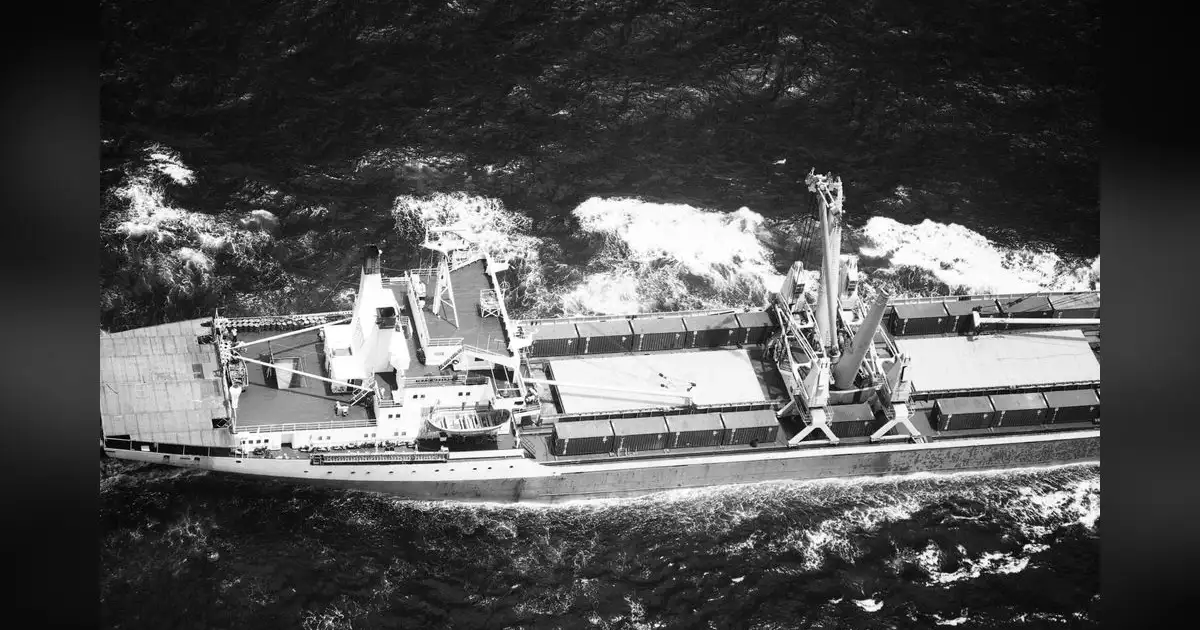

The escalating economic pressure exerted by the United States has reached a critical juncture, with its intensified blockade on Iranian trade ships now costing Tehran an estimated $490 million daily. This calculated financial attrition is designed to fundamentally challenge the Islamic Republic’s capacity for its destabilizing regional actions and its persistent nuclear program advancements, pushing the nation further to the brink.
In the past 72 hours, the U.S. Treasury Department announced a new tranche of sanctions. These measures specifically target networks facilitating Iranian oil and petrochemical sales, particularly those linked to the powerful Islamic Revolutionary Guard Corps (IRGC). This concerted effort seeks to disrupt Iran’s maritime trade and financial pipelines, aiming to render their illicit operations virtually untenable and cut off a vital revenue stream for the regime.

The Biden administration has demonstrably intensified its strategy, relentlessly tightening this economic noose. U.S. officials consistently cite Iran’s continued destabilizing activities in the Middle East and its advancements in its nuclear program as the primary drivers behind this policy.
This strategy is multifaceted, targeting not only the direct shipping companies but also the insurers, financial institutions, and intermediaries that enable the illicit oil trade. This creates a pervasive chilling effect across the global maritime and financial sectors.
Tehran’s Crushing Losses and Economic Strain
The financial toll on Iran is staggering. While the precise $490 million daily figure represents a robust estimate, a consensus of consistent reports corroborates losses in the hundreds of millions each day. This staggering sum is derived from a confluence of factors: the dramatic reduction in export volumes, the necessity of deep discounts to attract buyers in a restricted market, and the escalating costs associated with evading detection, including inflated shipping insurance premiums and circuitous routes.
A late May 2026 Financial Times report highlighted the profound challenges facing Iran’s energy sector. The nation’s oil exports remain significantly below pre-sanction levels, forcing the country to endure substantial discounts to its limited pool of buyers. Beyond the direct loss of revenue, Iran faces immense logistical and financial hurdles.
International banks, wary of secondary sanctions, largely refuse to process transactions, effectively severing Iran from the legitimate global financial system. This forces reliance on informal hawala networks and complex, opaque payment schemes, further increasing costs and reducing the net value of sales.
Iran also struggles significantly to repatriate funds from its limited sales, often resorting to holding assets in foreign currencies in countries willing to risk U.S. penalties. Experts estimate the total economic impact, encompassing lost opportunities, foregone investments, and direct revenue shortfalls, reaches billions monthly. The direct implication for the Iranian government’s budget is severe, crippling its capacity to fund essential public services, maintain critical infrastructure, and, crucially, sustain its regional ambitions and military programs.
The Sanctions Paradox: Efficacy and Human Cost
This situation raises a crucial question for policymakers and analysts alike: are these sanctions genuinely effective in altering the regime’s behavior, or do they primarily inflict suffering upon ordinary Iranians without achieving their stated strategic goals? The unfolding evidence points to a complex, and often brutal, reality.
Despite years of what has often been termed ‘maximum pressure,’ the Iranian regime has, to a significant extent, maintained its core strategic objectives. Its nuclear program has continued to advance, with reports from the International Atomic Energy Agency (IAEA) indicating increased uranium enrichment levels and the deployment of more advanced centrifuges.
Concurrently, Tehran has sustained its support for regional proxies, including Hezbollah in Lebanon and various militias in Iraq and Syria, demonstrating a persistent projection of influence. The regime also continues to suppress internal dissent with ruthless efficiency, indicating that sanctions alone do not fundamentally alter its internal governance or external policies.
However, the economic devastation wrought by these sanctions is undeniable. They have crippled Iran’s economy, leading to a dramatic devaluation of its currency and an inflation rate that soared to over 40% annually in early 2026. High unemployment, widespread poverty, and a sharp decline in purchasing power now define daily life for many citizens, creating immense hardship across the populace.
The Islamic Republic has, however, demonstrated remarkable resilience and ingenuity in adapting to these pressures. It has cultivated a sophisticated ‘ghost fleet’ of tankers operating under obscured identities, engaged in complex ship-to-ship transfers at sea, and leveraged bartering arrangements for goods and services to bypass traditional financial channels. Furthermore, there is growing evidence of Iran exploring cryptocurrencies and other digital assets as potential avenues for illicit transactions, underscoring its determination to maintain a baseline of oil exports and revenue, albeit at significantly reduced rates and increased operational risks.
Indeed, a significant body of analysis contends that external pressure can, paradoxically, backfire. By framing economic hardship as the direct result of foreign aggression, hardline factions within the Iranian regime often consolidate power, rally nationalist sentiment, and deflect domestic criticism. This narrative frequently reinforces a siege mentality, making genuine internal reform or moderation less likely, as any concession can be portrayed as capitulation to external adversaries.
International organizations, including the United Nations and various humanitarian NGOs, have consistently voiced serious concerns regarding the collateral humanitarian impact. While sanctions often include carve-outs for food, medicine, and humanitarian aid, the overarching ‘chilling effect’ on international trade and banking severely impedes legitimate transactions. Banks and shipping companies, fearing inadvertent violations and the punitive consequences of secondary sanctions, often adopt an overly cautious approach, leading to critical shortages of essential medicines, medical equipment, and other vital goods for ordinary citizens, exacerbating public health crises.
Brian Nelson, Under Secretary of the Treasury for Terrorism and Financial Intelligence, stated in late May 2026: “The United States remains committed to disrupting the IRGC’s illicit financing schemes, which enable its destabilizing activities across the globe. We will continue to target those who facilitate Iran’s illicit oil and petrochemical sales.”
This unwavering stance highlights Washington’s resolve, reflecting a deep-seated belief that these measures are effective in limiting Iran’s financial resources and thereby reducing its capacity for destabilizing actions both regionally and globally.
Geopolitical Fallout and the Enduring Human Cost
From Tehran’s perspective, these sanctions transcend mere economic policy; they constitute an act of economic warfare, a clear violation of international law aimed at destabilizing the nation. The Iranian Foreign Ministry Spokesperson in early June 2026 reflected this sentiment with sharp condemnation.
The spokesperson declared: “The illegal and unilateral sanctions imposed by the U.S. are a clear violation of international law and a desperate attempt to exert pressure on the Iranian nation. Iran will not yield to bullying and will continue to pursue its legitimate rights and interests.”
This fiery rhetoric underscores the deep divide and the entrenched positions of both nations. The implications extend far beyond Iran’s borders. Persistent volatility in the Strait of Hormuz, through which a significant portion of the world’s seaborne oil passes, poses a direct threat to global energy security. Any perceived escalation or miscalculation in this vital choke point could trigger a sharp spike in global energy prices, with cascading economic consequences worldwide.
Regionally, Iran’s severe financial strain presents a precarious dichotomy: it could either compel the regime towards de-escalation in its proxy conflicts due to resource constraints, or, conversely, provoke more aggressive, asymmetric actions as a means of asserting leverage and demonstrating resolve. The delicate balance of power in the Middle East thus hangs precariously in the balance, with the potential for either a reduction in tensions or a dangerous intensification of proxy conflicts.
Domestically, the relentless economic pressure fuels rampant inflation, exacerbates unemployment, and precipitates a precipitous decline in living standards. This cocktail of economic grievances breeds widespread public discontent, potentially leading to increased protests, social unrest, and even a brain drain as skilled professionals seek opportunities elsewhere. The regime’s ability to manage these internal pressures while simultaneously confronting external adversaries remains a formidable, perhaps insurmountable, challenge.
The United States is undeniably engaged in a high-stakes game of economic attrition, predicated on the belief that financial strangulation will ultimately compel a shift in Iran’s behavior. Yet, the profound human cost is borne most heavily by Iranian citizens, while the regime consistently adapts its tactics and deftly redirects blame towards external forces.
This enduring cycle of escalating pressure and entrenched defiance, marked by profound humanitarian consequences and persistent geopolitical instability, shows no discernible end in sight. Observers are left to ponder the true efficacy and long-term wisdom of such a strategy.
Photo: Wikimedia Commons (query: Iran loses)
Source: Google News