
In a geopolitical landscape already fraught with peril, Iran has intensified regional anxieties with audacious declarations, threatening to sink American ships in the Strait of Hormuz and, perhaps more perplexing, asserting that a U.S. ground invasion would be ‘great.’ This latest rhetorical volley, emerging amidst an active military conflict involving the United States, Israel, and Iran, represents a calculated escalation that demands careful scrutiny. The Strait of Hormuz, a critical global choke point, remains at the heart of these tensions, with Tehran’s pronouncements clearly designed to project an image of unyielding strength, even as the regime grapples with significant internal dissent and persistent external pressures.
Tehran’s Provocative Posture Amidst Internal Strain
Iranian officials recently issued these stark warnings, articulating their naval capabilities and readiness for confrontation with a defiant tone. This follows a period of escalating tensions and months of heightened defiance from Tehran, a pattern that astute observers recognize as a recurring feature of Iranian foreign policy. However, these bombastic claims are being met with widespread cynicism, particularly across global online platforms. Many international observers, and indeed many within Iran itself, perceive these declarations as desperate theater—a form of regime propaganda explicitly designed to rally domestic support and divert attention from severe economic hardship, widespread public discontent, and the demonstrable impact of recent military engagements.

Public reaction across social media platforms like X and Reddit is overwhelmingly dismissive. Users frequently mock the threats, with popular memes portraying Iran’s naval capabilities as woefully outmatched by the formidable power of the U.S. Navy. As one widely circulated post on X succinctly put it:
“Why else claim invasion ‘great’ when US/Israel strikes have gutted their air force, navy, and proxies?”Such commentary, widely shared, underscores a perceived disconnect: the regime’s rhetoric often clashes starkly with its military realities and the palpable anxiety felt by ordinary citizens. This strategic posturing, while intended for external deterrence, also serves a crucial internal function, attempting to consolidate power and suppress growing calls for reform amidst a populace increasingly weary of isolation.
Nuclear Escalation and the Looming Threat
These provocative maritime threats are inextricably linked to Iran’s alarming acceleration of its nuclear program. Tehran recently announced a substantial increase in advanced centrifuge installations, a move that significantly diminishes the international community’s oversight capabilities and heightens proliferation concerns. This includes the deployment of hundreds of new IR-6 and IR-M2 centrifuges, highly efficient machines now operational at both the clandestine Fordow and the larger Natanz enrichment facilities. Such advancements represent a critical leap in Iran’s nuclear capabilities, drastically shortening its potential “breakout time”—the period required to produce enough weapons-grade uranium for a nuclear device.
Crucially, Iran is now enriching uranium to purity levels exceeding 80% in smaller quantities. While not yet the 90% typically considered weapons-grade, this purity level is merely a technical step away from fissile material suitable for a nuclear weapon, requiring only minimal further enrichment. This strategic decision is widely interpreted by international security analysts as a direct, audacious challenge to the Non-Proliferation Treaty (NPT) and the global non-proliferation regime. Senior Iranian officials have been exceptionally assertive in their warnings; Foreign Minister Hossein Amir-Abdollahian has unequivocally stated that any new sanctions would be met with “immediate and decisive” responses. This sentiment was echoed by Supreme National Security Council Secretary Ali Akbar Ahmadian, whose remarks implied a potential, and deeply concerning, withdrawal from the NPT itself, a move that would fundamentally alter the regional security architecture.
The International Atomic Energy Agency (IAEA) Director General, Rafael Grossi, has repeatedly voiced profound alarm over these developments. He notes a troubling and continuous diminishing of transparency in Iran’s nuclear program, citing “limited access” for inspectors to key facilities and data. This lack of verifiable oversight raises serious questions about the true scope and intent of Iran’s nuclear activities, making it increasingly difficult for the IAEA to provide assurances of the program’s peaceful nature. The latest centrifuge deployment only exacerbates these concerns, pushing the region closer to a nuclear flashpoint and compelling international powers to reconsider their diplomatic and strategic approaches with renewed urgency.
The Strait of Hormuz: A Critical Global Chessboard
The Strait of Hormuz, a narrow waterway connecting the Persian Gulf to the open ocean, is undeniably one of the world’s most vital choke points for global oil shipments. Approximately 20% of the world’s total petroleum consumption, and a significant portion of its liquefied natural gas, transits through this strategic passage daily, underpinning global energy security. Threats to close or disrupt this waterway are therefore not new; they have been a recurring feature of Iranian leverage for decades. However, given the ongoing and active US-Iran conflict, which formally commenced with military strikes by the United States and Israel against Iran on February 28, 2026, these threats now carry an unprecedented and dangerous weight, transforming a perennial concern into an immediate flashpoint.
This conflict has transformed the Strait of Hormuz into a major flashpoint, a maritime battleground where any miscalculation could trigger catastrophic consequences for global energy markets and regional stability. Iran’s threats to sink American ships are clearly designed to deter the substantial U.S. naval presence in the Gulf and to assert a perceived, if not actual, control over this strategically crucial maritime route. This plays into a long-standing pattern of Iranian naval posturing, often involving harassment of commercial vessels and provocative exercises. Yet, despite these public declarations and Iranian state TV denials, U.S. destroyers have continued to sail through the Strait unmolested, demonstrating an unwavering American commitment to the principle of freedom of navigation—a cornerstone of international maritime law and global trade, which the U.S. consistently upholds through its robust naval presence.
A Ground Invasion: Reality Versus Rhetoric in Tehran
The assertion that a U.S. ground invasion would be “great” is perhaps the most perplexing and strategically nonsensical of Tehran’s recent declarations. It runs entirely counter to all military logic and historical precedent, given the immense logistical challenges and the certainty of devastating consequences. A full-scale ground conflict would undoubtedly devastate Iran, inflict immense casualties on its population, and irrevocably damage its infrastructure, potentially leading to widespread internal collapse. This rhetoric unequivocally serves as domestic propaganda, a desperate attempt by the regime to project an image of strength and unwavering resolve
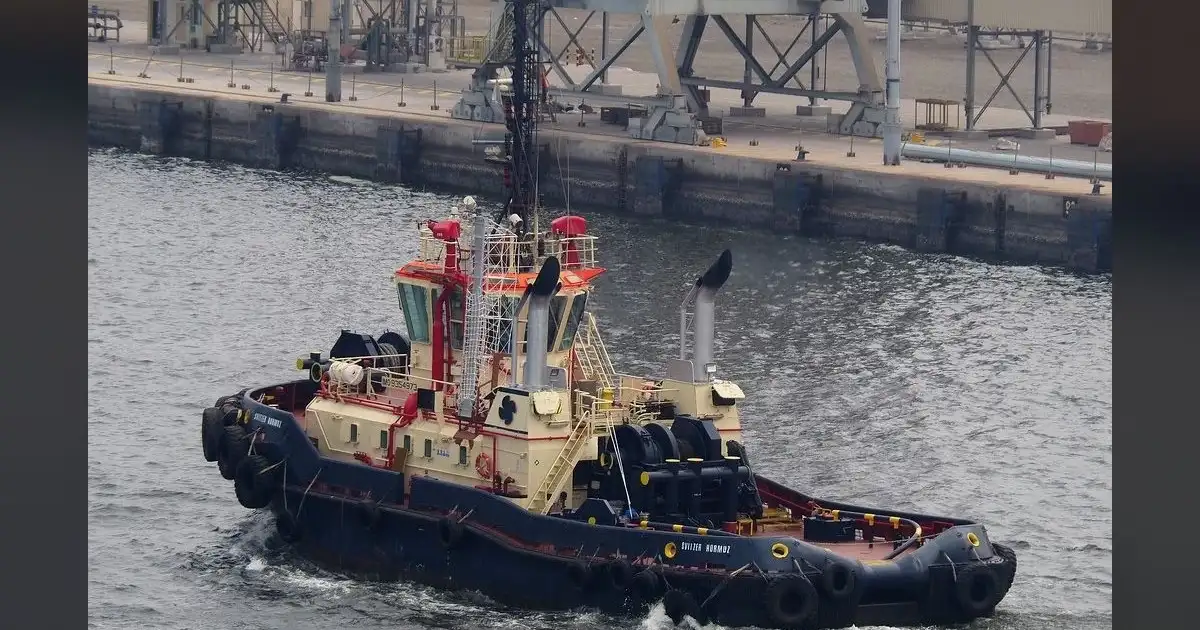
Photo: Photo by Maasmondmaritime on Openverse (flickr) (https://www.flickr.com/photos/33438735@N08/32507088617)
Source: Google News