
Forget the rosy economic forecasts. Beneath the veneer of “recovery,” the American Dream is quietly bleeding out, one foreclosure notice at a time.
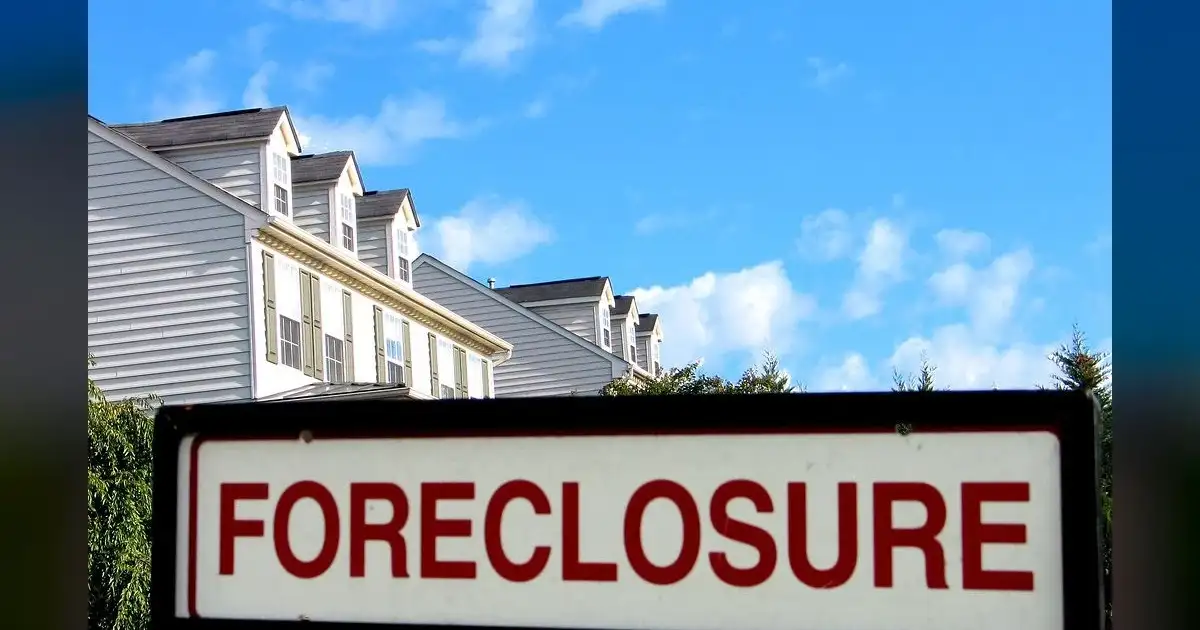
A brutal reckoning is upon us. A looming foreclosure surge threatens a staggering 118,000 homes across the nation.

This isn’t just a cold statistic. It’s a catastrophic crisis for real families, their stability shattering under the relentless weight of financial strain.
The Relentless Squeeze
Mortgage delinquencies aren’t just climbing; they’re steadily suffocating households. The culprits are clear: sustained higher interest rates, weaponized by central banks.
These rates have turned every monthly payment into an agonizing battle. This isn’t some abstract economic theory; it’s the brutal reality of an “affordability crunch.”
Home prices, inflated to absurd heights during the pandemic’s speculative frenzy, now collide with borrowing costs that have rocketed through the roof.
This lethal combination stretches household budgets past their breaking point. Many homeowners, especially those with adjustable-rate mortgages (ARMs), face eye-watering bill hikes they can’t absorb.
For those clinging to fixed-rate loans, the dream of refinancing has become a nightmarish fantasy.
Industry watchdogs, like the Mortgage Bankers Association, track a steady uptick in early-stage delinquencies.
This trend is pronounced in cities that saw rapid, unsustainable price jumps. These areas are now softening at an alarming pace.
While overall numbers may not yet mirror the cataclysm of 2008, this upward trajectory signals undeniable trouble. Pockets of weakness are festering, threatening to spread like an economic contagion.
Why the Walls Are Closing In
Let’s be clear: this isn’t a re-run of the 2008 housing market collapse. This is something arguably more insidious – a slow, agonizing strangulation for countless families.
The market isn’t healthy; it’s a mirage for many, propped up by low inventory while individual homeowners drown.
Local economic conditions play a devastating role. Job market fluctuations, from tech layoffs to manufacturing shifts, are gutting household incomes in targeted regions. These aren’t isolated incidents; they are systemic tremors.
The post-pandemic boom, hailed as a triumph, merely masked deep-seated issues now bubbling to the surface.
Persistent inflation, a silent thief, continues to eat away at savings and disposable income. Every trip to the grocery store feels like a mugging.
Gas prices remain stubbornly, punishingly high. These everyday costs, once manageable, now stack up into an insurmountable wall.
For far too many, the mortgage payment transforms into an impossible choice: food on the table or a roof over your head? What kind of twisted “recovery” forces such a hellish decision?
This pressure is felt most acutely in areas like Tampa, Florida. Insurance costs have exploded there, adding a cruel double whammy to an already strained budget.
Homeowners are getting squeezed from all sides, caught in a vise grip of rising expenses and stagnant wages.
The Cruel Illusion of Assistance
Lenders and government agencies are quick to talk a good game, parading out “loan modification programs” and “forbearance options.”
Financial counseling services are readily available, supposedly designed to help homeowners in temporary hardship and prevent foreclosures.
But let’s be honest: these programs often feel like cynical band-aids on a gaping wound. They don’t fix the core problem; they merely delay the inevitable for some, offering a brief reprieve before the axe falls.
The underlying financial difficulties persist, leaving homeowners in a suffocating limbo, struggling month after month.
These interventions, while well-intentioned on paper, often serve only to dampen official foreclosure numbers. They mask the true extent of the pain.
The system offers relief, but rarely a real, lasting solution. It prolongs the agony, turning a quick break into a torturous decline.
The public sees through this charade. A pervasive sense of betrayal lingers, a belief that the system is rigged to benefit big institutions, not everyday people.
The True Cost of a “Correction”
The housing market’s delicate balance is shifting, and the consequences are dire.
Low inventory has prevented a rapid, dramatic crash, but it has also trapped distressed homeowners. They are unable to sell without taking a devastating loss.
Their hard-earned equity is tied up, or worse, completely evaporated. New construction, struggling against labor shortages and material costs, does little to ease supply constraints.
Buyer demand wavers amidst profound economic uncertainty. This isn’t just creating a volatile environment; it’s creating a breeding ground for despair.
This isn’t merely about economic data points or market “corrections.” It’s about shattered dreams, about families losing their biggest asset, their sanctuary, their stake in the American promise.
These foreclosures will not just devastate individual households; they will rip through communities. They will leave lasting scars on generations.
The ripple effect is undeniable, touching schools, local businesses, and the very fabric of neighborhoods.
The American dream of homeownership isn’t just becoming a nightmare; it’s being actively dismantled for those who can least afford it.
This is a harsh, inescapable reality check we must face head-on. The illusion of stability has shattered for 118,000 households, and counting.
This isn’t just a market adjustment; it’s a profound betrayal of trust for those who believed in the system.
Their homes are now just another statistic, a monument to a system that failed them utterly and completely.
The question isn’t *if* the dam will break, but how many more will drown before we finally admit the water is rising.
Photo: Photo by taberandrew on Openverse (flickr) (https://www.flickr.com/photos/88442983@N00/3899715321)
Source: Google News