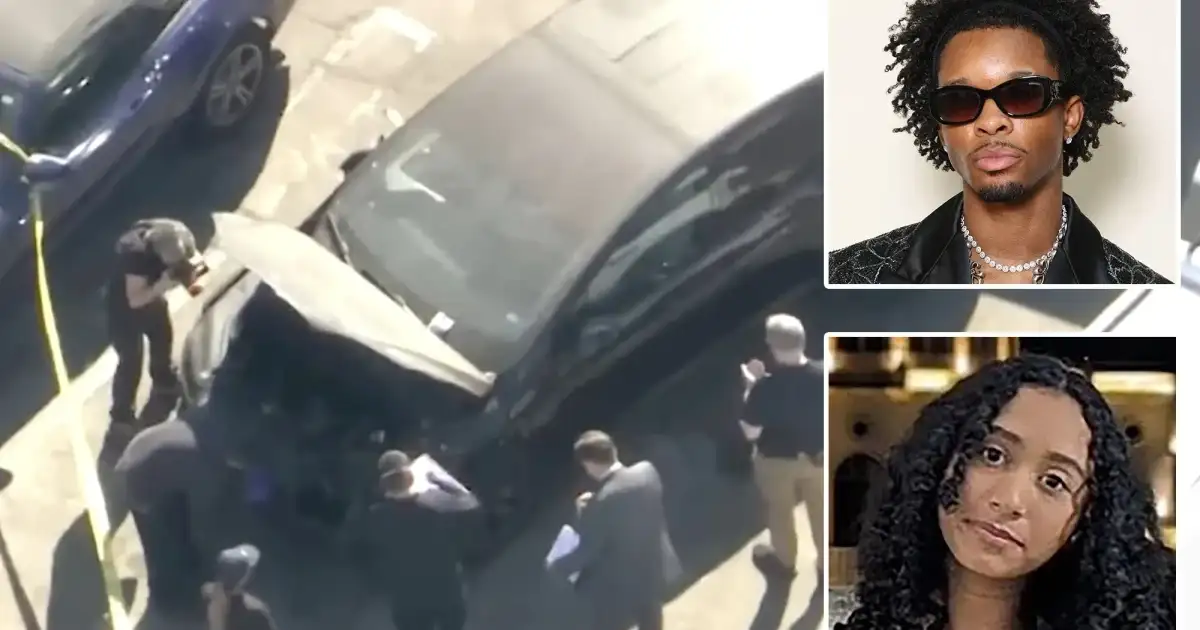

The very air still shimmers with the grotesque unreality of it: D4vd, the musician born David Burke, arrested for the brutal murder of 14-year-old Celeste Rivas Hernandez. Her dismembered body, a silent scream entombed in a Tesla trunk for seven agonizing months, is not just a horror story; it’s a damning indictment of every safety net, every promise of protection, our society claims to offer its children. This isn’t merely a crime; it’s a profound societal wound, ripping open the dark underbelly of celebrity, unchecked violence, and a justice system seemingly paralyzed by its own inertia.
Authorities finally moved against Burke in April, following the unsealing of grand jury documents in January 2026. This came long after the young girl’s gruesome discovery, leaving a chilling, inexcusable gap in the timeline of justice. The world reeled, not just from the horror of the act, but from the chilling, inescapable question that echoed across every news feed and whispered conversation: What in God’s name took so long? Who failed Celeste, and why was her alleged killer allowed to walk free for so many months?

The Sinister Silence and the Glacial Crawl of Justice
Celeste Rivas Hernandez was a child, her life violently, brutally cut short. Her family endured seven months of unimaginable torment, a living purgatory where every sunrise brought renewed anguish and every sunset deepened the despair. They searched, they pleaded, they clung to a fading hope, while a suspected killer allegedly walked free, touring, releasing music, and living a public life. This timeline isn’t merely a ‘gut punch’; it’s a damning indictment of a system that moved with glacial speed, prioritizing what, exactly, over a missing child?
Consider the sheer audacity, the chilling normalcy of it all. A young girl was dismembered, her remains hidden in a vehicle, a desperate attempt to erase her from existence. Yet, the alleged perpetrator continued his public career, bathed in the very spotlight that should have illuminated his dark deeds. While Celeste’s family walked through a living nightmare, posting flyers, clinging to a fading hope, D4vd allegedly continued his public life, his ‘sadboy’ anthems echoing across venues, his Instagram feed curated with the banality of celebrity. This isn’t just a delay; it’s a grotesque parallel universe, where the architect of an unspeakable crime could move freely, unburdened by the weight of his alleged actions.
How did the trail grow so cold for so long? What resources were truly allocated to find Celeste, to connect the dots that, in retrospect, now seem so starkly visible? These questions don’t just haunt the case; they scream for answers, demanding an unflinching audit of every decision, every delay, every missed opportunity. The very fabric of public trust frays when a child vanishes, her body is desecrated, and the accused perpetrator is granted a horrifyingly long leash by the very institutions sworn to protect.
The Digital Whisper That Broke a Case, Not a Proactive Investigation
The “tip-off” that finally led police to D4vd remains shrouded in a disturbing vagueness, a testament to either investigative incompetence or a deliberate obfuscation of the facts. Reports, widely circulated, suggest an anonymous Snapchat DM from a hookup was the critical lead. Let that sink in for a moment. A single, anonymous digital whisper, a fleeting message from a casual acquaintance on social media, is reportedly what finally shattered the sinister silence surrounding Celeste Rivas Hernandez’s disappearance. Not a relentless, boots-on-the-ground investigation, not a sophisticated forensic breakthrough, but a casual, digital breadcrumb. This isn’t a testament to modern policing; it’s a terrifying admission of how close this monstrous crime came to remaining unsolved, how easily it could have been swallowed by the digital ether.
This Snapchat message, if true, speaks volumes about the human element, both its failure and its eventual, agonizing success. It suggests someone knew something. Someone held crucial, life-altering information for months, perhaps paralyzed by fear, misplaced loyalty, or a chilling indifference. Why did it take so long for that information to surface? Was fear involved? Was loyalty misplaced, prioritized over the life of a child? The delay cost Celeste Rivas Hernandez dearly. It allowed a suspected killer to evade capture, to continue his life, perhaps even to further conceal the extent of his alleged depravity. That the police reportedly relied on a rumor, a digital breadcrumb, rather than a robust, proactive investigation, is not how justice should find its way in a civilized society. It points to a reactive system, waiting for a whisper in the digital wind, rather than actively hunting for the truth.
The Public’s Outrage, Cynicism, and the Birth of Conspiracy
The public reaction, predictably, exploded across social media platforms, a digital firestorm of disgust, betrayal, and unvarnished cynicism. On Reddit’s r/popheads and r/TrueCrime, users voiced pure, unadulterated disgust, the kind that curdles the stomach. The carefully constructed image of the ‘sadboy’ artist shattered into a million pieces, revealing a potential abyss beneath.
“D4vd went from ‘Here With Me’ sadboy to actual psycho? Streaming his discog now feels cursed,” one user posted, encapsulating the profound shock and betrayal felt by many fans who had invested emotionally in his persona.This sentiment captured the visceral shock, the sickening realization that the art they loved might have been crafted by a monster. Others, with a darker, more cynical eye, saw a chilling pattern, calling his TikTok persona “predator grooming masked as emo vibes.” This is the raw, unfiltered truth of public perception, a collective gaze that, once suspicion takes hold, strips away the glamor, rips apart the carefully constructed image, and exposes the chilling possibilities lurking beneath the surface.
The cynicism didn’t stop there; it festered and grew. X (formerly Twitter) became a breeding ground for conspiracy theories, a digital echo chamber where facts were scarce and speculation ran rampant. Users sarcastically questioned the timing, the suddenness of the arrest after months of silence. Some, with a chilling lack of empathy, claimed it was a “label setup to kill his flop era,” suggesting a calculated industry move. Others, even more disturbingly, called it “performance art,” or suggested a “scripted comeback” was underway, a macabre publicity stunt. This immediate distrust is telling; it speaks to a public that has seen too many manipulations, too many carefully orchestrated narratives. They are quick to assume a PR stunt, quick to doubt the official narrative, especially when it feels incomplete or suspiciously delayed.
Why do people jump to such dark, outlandish conclusions? Perhaps it is the vagueness surrounding the “tip-off,” the lack of transparent information from authorities. Perhaps it is the slow, agonizing crawl of the justice system itself. When authorities are not transparent, when they fail to provide clear, consistent updates, distrust festers like an untreated wound. When a suspected killer has months to tour, to live a seemingly normal life, questions don’t just arise; they explode into a torrent of doubt and suspicion. Influencers like @DramaAlert, ever keen to fan the flames of controversy, highlighted reports of D4vd’s family being subpoenaed in Texas, sparking talk of a “family cover-up or Illuminati sacrifice ritual.” Such extreme theories emerge from a void, a vacuum of official information and accountability. They fill the gaps where clear answers should be, reflecting a desperate, if misguided, attempt to make sense of the senseless. The public demands accountability; they crave definitive action. When they don’t get it, when the truth remains elusive, they invent their own narratives, however outlandish, to fill the terrifying silence.
The Unspeakable Cost of Delay: A Child’s Life, A Family’s Agony
Celeste Rivas Hernandez deserved immediate justice. She deserved every ounce of effort, every resource, every waking moment dedicated to finding her. The fact that her body was dismembered points to an act of extreme brutality, a desperate, calculated attempt to hide the crime, to erase the victim, and to evade justice. The alleged killer, D4vd, was reportedly known for his “sadboy” image, a carefully cultivated persona of vulnerability and introspection. This public image now stands in stark, horrifying contrast to the accusations, creating a jarring, sickening disconnect that shatters any illusion of innocence. How many other young fans looked up to him, drawn in by his music, by the very image that now feels so profoundly tainted? The allegations shatter that illusion, exposing a potential predator lurking beneath the veneer of artistry.
The seven-month delay in his arrest is not merely an administrative oversight; it is a profound injustice that prolonged the agony of a family, allowed an alleged killer to operate with impunity, and desecrated the very concept of justice. Her dismembered body, a final, horrifying act of dehumanization, screams of a perpetrator desperate to erase his crime, to make Celeste disappear utterly. This is a profound failure of the system, a failure to act with urgency, a failure to prioritize a missing child over the convenience or bureaucratic hurdles of an investigation. The public’s “hoax buzz” and the conspiracy theories, however misguided, stem from this deep-seated place of distrust. The timing of the arrest, amid his “stalled career,” fuels suspicion, suggesting external forces at play beyond the simple pursuit of justice. But the true tragedy, the unforgivable sin, is Celeste. Her story, her stolen future, is buried under celebrity gossip and overshadowed by a social media frenzy. Her death demands serious attention, a clear, unambiguous pursuit of truth, untainted by the noise.
The Systemic Cracks: Why D4vd Walked Free for So Long
The fact that D4vd allegedly toured and continued his public life post-body drop is sickening, an affront to decency and a damning indictment of investigative efficacy. He even “canceled” tours later, adding another layer of unsettling mystery to a timeline already riddled with questions. This entire period represents a gaping, festering hole in justice. Why wasn’t he flagged earlier? What initial investigative steps were missed, or worse, deliberately ignored? The LAPD’s vague explanation for the “tip-off” isn’t just problematic; it’s an insult to the public’s intelligence and a dereliction of duty. We are owed more than cryptic pronouncements; we are owed a full, unvarnished truth. Was this Snapchat DM truly the first actionable intelligence, or was it the last resort after months of missteps, ignored leads, or bureaucratic paralysis? This ambiguity only serves to erode public confidence, fostering suspicion where clarity is desperately needed.
The connection to Houston, Celeste’s origins, adds another complex, troubling layer to this tragedy. Did inter-agency communication fail? Was jurisdiction a barrier to swift action, an invisible wall protecting a killer rather than a child? These are not minor details; these are critical questions about systemic competence, about the very ability of our law enforcement agencies to protect the most vulnerable. When a child disappears, the clock starts ticking, not just for the family, but for the integrity of the justice system itself. Every moment counts. Seven months is an eternity—an eternity for a family in anguish, an eternity for a killer to cover tracks, to solidify an alibi, to erase evidence. The dismemberment itself speaks to a desperate, cold-blooded cover-up, a calculated effort to evade justice. The police response should have been relentless, immediate, and thorough, prioritizing the life of a child above all else.
The public is right to be outraged. They are right to demand answers, to scrutinize every aspect of this investigation. The system failed Celeste Rivas Hernandez on multiple fronts: it failed her when she vanished, it failed her when her body lay hidden, and it failed her by allowing her alleged killer to roam free for an unconscionable period. This is not merely a grotesque miscarriage of justice; it is a damning indictment of police work, a stark reminder of who pays the highest price when the system falters. The victim, always the victim, pays the highest price, her life extinguished, her memory tainted by the very failures meant to prevent such horrors.
The Shadow of Social Media: A Double-Edged Sword
Social media plays a profoundly dual role in this unfolding tragedy, a double-edged sword that both illuminated and obscured the path to justice. On one hand, it provided the alleged “tip-off”—a simple Snapchat message, a digital breadcrumb in an ocean of noise. This highlights the unexpected power of informal networks, the way crucial information can bypass official channels, sometimes by accident, sometimes out of fear of formal engagement. It suggests a disturbing reality: that in an era of pervasive digital communication, the most vital clues might come not from traditional police work, but from the fleeting, ephemeral whispers of the internet.
But social media also fuels the frenzy, allowing for rampant speculation, misinformation, and the rapid propagation of conspiracy theories. The “Illuminati sacrifice ritual” talk, however absurd, thrives in the absence of clear, consistent facts. The public, starved for information, fills the silence with their darkest fears, their most cynical imaginings, seeking to make sense of the senseless in whatever way they can. This is a direct consequence of opaque investigations, of a lack of transparency that erodes trust and invites chaos. The focus, the unwavering attention, should be on Celeste, on holding her killer accountable, on understanding the mechanisms of her disappearance and death. Instead, the narrative gets hijacked, twisted into a circus of speculation, where the truth gets lost in the deafening noise. We must cut through that noise. We must demand precise details, champion transparency, and ensure that the digital realm, for all its potential for distraction, is leveraged for justice, not for sensationalism. Only then can true justice begin to be served.
A Call for Unflinching Truth and Systemic Reckoning
The arrest of D4vd is not an ending; it is merely the brutal, long-overdue beginning of a deeper reckoning. The public, haunted by the specter of Celeste Rivas Hernandez, deserves more than vague rumors and cryptic statements. They deserve a full, unvarnished accounting of the facts, a meticulous dissection of the investigative process that allowed such an horrific crime to remain unpunished for so long. How did a 14-year-old girl vanish from her life, her future stolen? How was her body dismembered and hidden, a final act of desecration? And most critically, how did her alleged killer evade capture for seven agonizing months, continuing his public life while a family grieved in an unbearable vacuum?
The answers must be clear, complete, and delivered with an unwavering commitment to transparency. The justice system must scrutinize its own actions, its own failures, with the same intensity it applies to prosecuting criminals. It must identify its systemic weaknesses, its bureaucratic bottlenecks, and its misplaced priorities, learning from this horrific case so that no other child suffers Celeste’s fate. No more vague “tip-offs” as the primary breakthrough. No more seven-month delays that mock the very concept of swift justice. Celeste Rivas Hernandez was failed, profoundly and repeatedly. Her memory demands better from us all, a profound shift in how we protect our children and how we pursue justice for the lost. This tragedy is not just a stark reminder of unchecked evil; it is a devastating critique of slow-moving justice, a chilling testament to the human cost of institutional inertia. The truth, however ugly, however painful, must finally emerge, not just for Celeste, but to ensure that such a monstrous failure never again casts its long, dark shadow over another innocent life.
Source: Google News