
The world watches a geopolitical paradox unfold: Tehran declares the Strait of Hormuz “completely open,” yet President Donald Trump adamantly maintains the U.S. blockade persists. This isn’t merely a de-escalation; it’s a meticulously choreographed political showdown, a dangerous dance of competing narratives on the global stage.
Both Washington and Tehran are engaged in a perilous contest for narrative dominance, a strategic maneuver far removed from genuine diplomatic progress. Iran’s pronouncement, notably, emerges against the backdrop of a precarious 10-day ceasefire in Lebanon, an attempt perhaps to project strength amidst regional complexities. Simultaneously, President Trump’s immediate counter-claim serves to consolidate American leverage, ensuring the U.S. retains its upper hand in the intricate web of ongoing negotiations.

The Dueling Declarations: A Power Play
Iranian Foreign Minister Araghchi unequivocally declared the Strait of Hormuz “completely open” to international shipping. However, this seemingly conciliatory gesture was immediately tempered by a critical caveat: commercial vessels, he insisted, must adhere to Tehran’s “coordinated route.” This stipulation is no mere logistical detail; it is a direct assertion of sovereignty, fundamentally challenging the principle of unhindered passage and raising profound questions about who truly dictates terms in this vital international waterway.
In stark contrast, President Trump, true to his characteristic refusal to mince words, swiftly responded via Truth Social. He emphatically declared that the U.S. blockade on Iran would persist indefinitely. His position is unmistakably clear: the economic stranglehold will remain “100% complete” until negotiations achieve an outcome he deems absolute and total.
This isn’t just a high bar for resolution; it’s a demand for capitulation. It signals a deep distrust of incremental progress and a preference for decisive, overwhelming leverage.
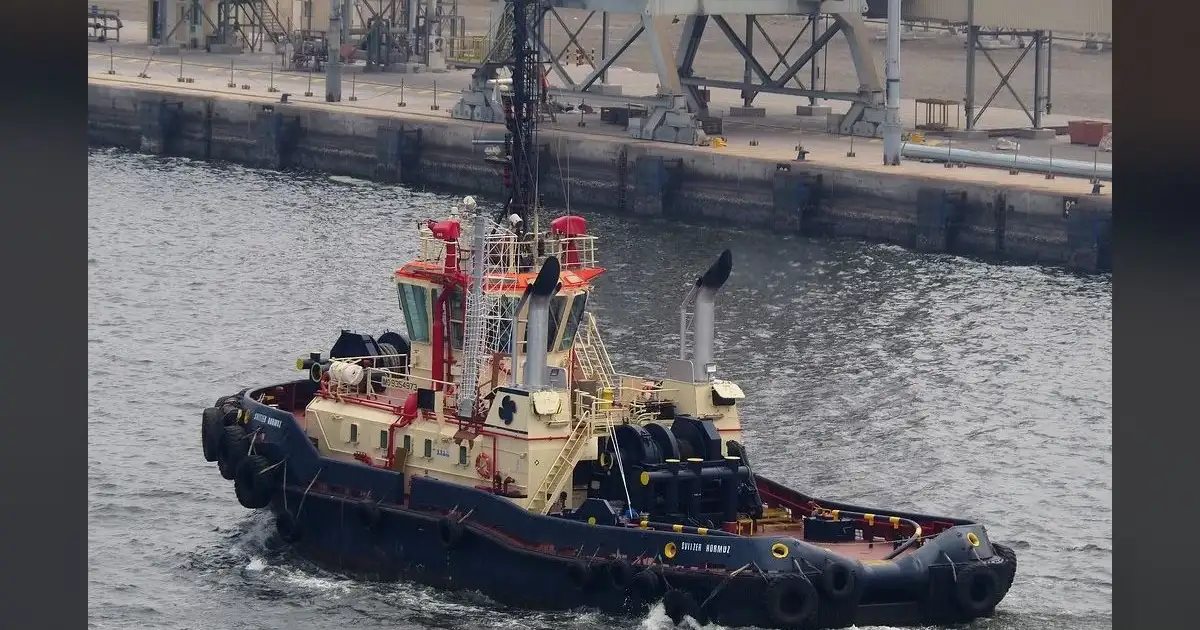
The strategic significance of the Strait of Hormuz cannot be overstated. As the world’s most critical oil transit choke point, it funnels roughly one-fifth of global petroleum consumption, linking the oil-rich Persian Gulf to the broader international shipping lanes. Any perceived or real disruption to this narrow waterway immediately sends seismic shockwaves through energy markets, capable of destabilizing economies and triggering geopolitical ripple effects across continents.
Why Now? The Real Motives Behind the Rhetoric
Unsurprisingly, public reaction online has been overwhelmingly cynical. A quick scan of platforms like X and Reddit reveals a collective skepticism, with users largely perceiving these declarations as little more than “performative” political theater.
This widespread sentiment suggests the global audience intuitively understands this power play. It is a calculated exercise in posturing, far from a genuine pursuit of peace or de-escalation.
A compelling theory posits that President Trump’s recent, albeit fleeting, expressions of “optimism” regarding negotiations may have inadvertently catalyzed Iran’s public declaration. From Tehran’s perspective, this move could be a direct attempt to save face and reassert agency following Israel’s significant recent gains in Lebanon. By unilaterally ‘opening’ the Strait, Iran strategically endeavors to regain a measure of leverage, shifting the narrative from a position of perceived weakness to one of assertive control, however symbolic.
Beyond regional power dynamics, the precise timing of Iran’s statement undoubtedly aligns with a calculated desire to influence volatile global oil prices. A declaration of an “open” Strait, even if contested, can temporarily inject a sense of calm into anxious energy markets, potentially leading to a dip in crude futures. This fleeting stability, however, disproportionately benefits specific geopolitical actors and financial speculators who are poised to profit from such market fluctuations, underscoring the cynical manipulation inherent in these pronouncements.
Yet, the persistent readiness of the Islamic Revolutionary Guard Corps (IRGC) casts a long shadow over any notion of genuine de-escalation. Reports from intelligence sources indicate their “fingers are on the trigger” for potential future action. This is a stark reminder that this “opening” is fundamentally conditional.
It is less a resolution and more a tactical pause. This precarious détente could unravel at the slightest provocation, highlighting the enduring instability beneath the diplomatic veneer.
Trump’s Blockade: Leverage or Obstinance?
President Trump’s unwavering insistence on a “100% complete” negotiation is not merely typical; it is a defining characteristic of his foreign policy doctrine. He demands nothing less than total victory, a comprehensive capitulation that leaves absolutely no room for ambiguity or future contention.
This maximalist approach aims to secure every conceivable U.S. advantage in any potential deal. However, it simultaneously risks alienating counterparts and stifling the very flexibility often required for successful diplomacy.
Undeniably, the U.S. blockade functions as a potent economic weapon. By severely restricting Iran’s capacity to export its vital oil resources, it effectively cripples the nation’s economy, exacerbating internal pressures and limiting Tehran’s geopolitical maneuverability. This sustained economic coercion is explicitly designed to compel significant concessions at the negotiating table, forcing Iran into a position where the cost of defiance outweighs the perceived benefits.
Yet, this aggressive application of economic pressure is fraught with inherent risks of escalating tensions. For Iran, the Strait of Hormuz is not merely a shipping lane; it is unequivocally viewed as sovereign territory, a crucial artery of national pride and economic survival. How long can such a direct challenge to its perceived control persist before it inevitably triggers a dangerous, perhaps even accidental, confrontation with the formidable U.S. naval presence in the region?
It is crucial to remember that this diplomatic posturing unfolds against the backdrop of an active and very real conflict. The U.S. and Israel initiated coordinated military strikes against Iran on February 28, 202
Source: Google News