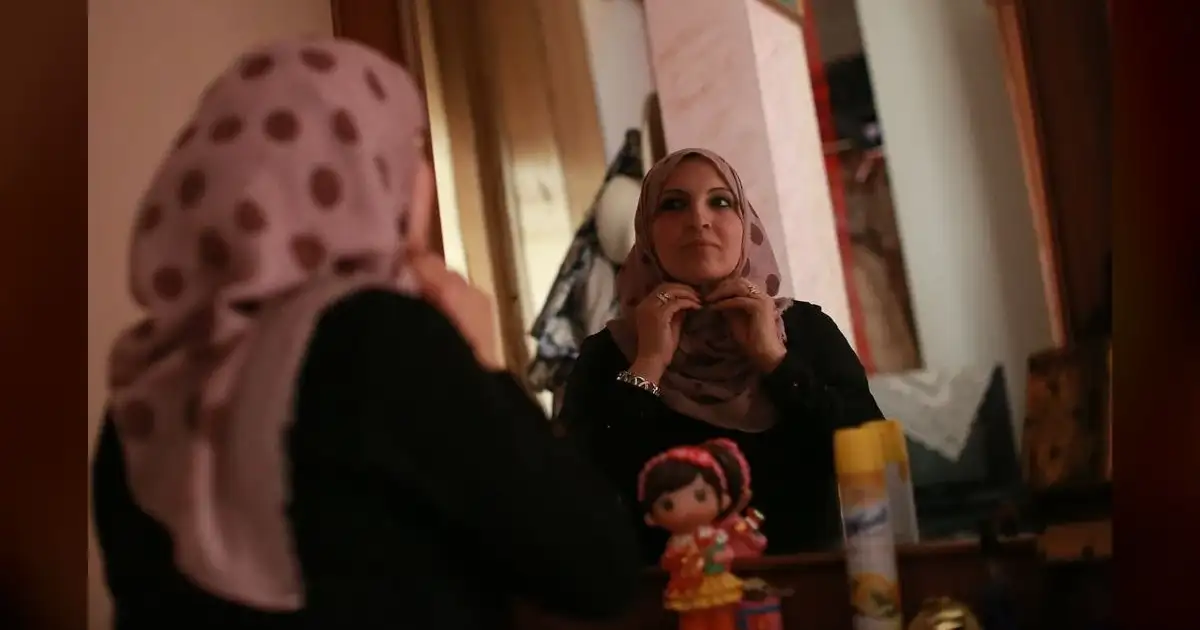

While Washington indulges in its familiar, glacial dance of policy debate, a grotesque reality unfolds in Gaza. Women, stripped of dignity and agency, are reportedly being forced into sexual servitude by Hamas fighters, trading their bodies for the most basic sustenance.
This isn’t merely a humanitarian crisis; it is a profound moral indictment of a world that watches. A political system consistently fails to meet the moment.

The distant debates in congressional halls and executive offices feel not just hollow, but utterly scandalous against such brutal, immediate suffering.
Washington’s Inherited Inertia
The corridors of power in Washington, now firmly under President Donald Trump’s “America First” banner, still echo with the inherited rhetoric of humanitarian urgency.
Previous administrations, like Joe Biden’s, spoke of pushing for “more access” and working through complex diplomatic channels. But what does such bureaucratic jargon truly signify for a woman in Gaza facing starvation, or worse, sexual violence?
It means, unequivocally, that Washington’s mechanisms are too slow, its priorities misaligned. The system, fundamentally, is failing those it purports to help.
Over 80% of Gaza’s population — roughly 1.8 million people — are displaced, teetering on the brink of famine. Reports from the World Food Programme (WFP) and the United Nations Relief and Works Agency (UNRWA) paint a grim picture.
Women disproportionately bear the burden of managing households amidst the rubble, facing unprecedented levels of food insecurity and a complete collapse of social services. Protection mechanisms, once fragile, are now utterly absent.
This isn’t merely a byproduct of conflict; it is the deliberate architecture of hell. It is crafted by Hamas’s brutal control and exacerbated by the world’s hesitant response.
The Congressional Circus Continues
Meanwhile, the US Congress, a theater of performative outrage and entrenched partisanship, remains locked in a self-serving debate.
Progressive Democrats demand robust US leverage and unimpeded aid flow. They rightly cite egregious human rights violations and desperate conditions where women make unimaginable choices for survival, and children starve daily.
Yet, their impassioned pleas often dissolve into legislative gridlock, becoming just another partisan talking point.
Across the aisle, Republican lawmakers, emboldened by President Trump’s stance, thunder about aid diversion. They express legitimate fears of Hamas exploiting assistance and demand stricter oversight.
But let’s be blunt: this isn’t a principled debate; it’s a grotesque political football, kicked back and forth across the aisle. It’s less about the agonizing reality of women dying for a loaf of bread.
It’s more about ideological posturing, the optics of US foreign policy, and the endless dance around strategic implications. The moral imperative, the raw, visceral suffering, is consistently shunted aside for political expediency and electoral advantage.
Who Truly Pays the Price?
While Washington’s political class continues its interminable arguments, the true cost is tallied in the broken lives of Gaza’s women and children.
The American taxpayer, often unwittingly, funds an aid apparatus that, by many accounts, is critically flawed. It fails to consistently reach its intended recipients.
But the real price? It’s paid in dignity lost, in bodies violated, in lives extinguished. This is the bitter harvest of failed governance, both local and international.
It is a tragically slow, often cynical, global response. Aid, in this cynical calculus, is rarely just a humanitarian gesture.
It is a potent political tool, a pawn in a larger, ruthless geopolitical game. Billions flow, yet accountability remains a phantom.
Who, then, truly profits from this engineered chaos? Not the starving, not the vulnerable.
Instead, it is the entrenched power brokers, the corrupt intermediaries, and, most sickeningly, terror groups like Hamas. They solidify their brutal grip while the population descends further into desperation. Is this the legacy America wishes to champion?
Trump’s Dominant Hand
Donald Trump, as the sitting President, has indelibly stamped his “America First” doctrine onto US foreign policy. This offers a stark and often brutal contrast to the multilateral engagement championed by the previous Biden administration.
His transactional approach to global crises, historically favoring perceived American interests above all else, has already reshaped Washington’s posture in the Middle East.
Under his current administration, the re-evaluation of aid frameworks is not a prediction, but an ongoing reality. Security concerns, particularly counter-terrorism, rightly dominate the discourse, but often at the expense of humanitarian considerations.
This administration’s skepticism towards broad multilateral coordination, a hallmark of Trump’s previous term, has profound and immediate implications for aid delivery to Gaza.
Less international synergy means less effective distribution, more bureaucratic hurdles, and ultimately, a harsher reality for the women and children trapped in this quagmire.
Analysts are not merely predicting a decrease in aid emphasis; they are observing it. This comes alongside a relentless focus on security that, while necessary to combat terror, often sidelines the desperate needs of the most vulnerable.
The tragic irony is that while Trump aims to dismantle the mechanisms of terror, his approach risks leaving its most innocent victims even more exposed. They are caught between the hammer of conflict and the anvil of political indifference.
The Unseen Scars of Indifference
Beyond the immediate horrors, the challenges for women in Gaza cast a long, unseen shadow. Access to even rudimentary reproductive health services is virtually non-existent.
Protection from gender-based violence is not merely inadequate; it is a cruel myth. These are not abstract statistics to be parsed in policy papers.
These are individual lives irrevocably destroyed, futures brutally stolen. Reports from reputable organizations like the United Nations Population Fund (UNFPA) meticulously document this agony.
Yet their findings are too often relegated to footnotes in Washington’s endless political analyses. They serve as mere data points in debates about the efficacy of US foreign aid or the ethical dimensions of intervention.
What about the woman forced into unthinkable choices? What about the indelible, long-term trauma that will haunt her for years, if not decades?
Washington’s rarefied policy debates, conducted in air-conditioned offices, feel not just far removed, but utterly alien to her lived reality.
The US political response, whether through action or inaction, is inextricably intertwined with the daily prospects for these vulnerable populations. The world, it seems, watches with a feigned concern.
Washington, under its current leadership and inherited bureaucratic inertia, bickers and delays. Meanwhile, the most basic human rights, the very essence of human dignity, are not just trampled in Gaza; they are systematically obliterated.
This, then, is the obscene cost of political paralysis and strategic myopia. It is not merely a stain on humanity’s conscience; it is a gaping wound, festering under the gaze of a supposedly civilized world.
The question is no longer if anyone will be held accountable, but when Washington will finally confront the uncomfortable truth: its own complicity in a crisis it has the power, but perhaps not the will, to truly address. Until then, the cries from Gaza will continue to be a damning echo of our collective failure.
Photo: Photo by UN Women Gallery on Openverse (flickr) (https://www.flickr.com/photos/51431730@N04/38197693246)
Source: Google News