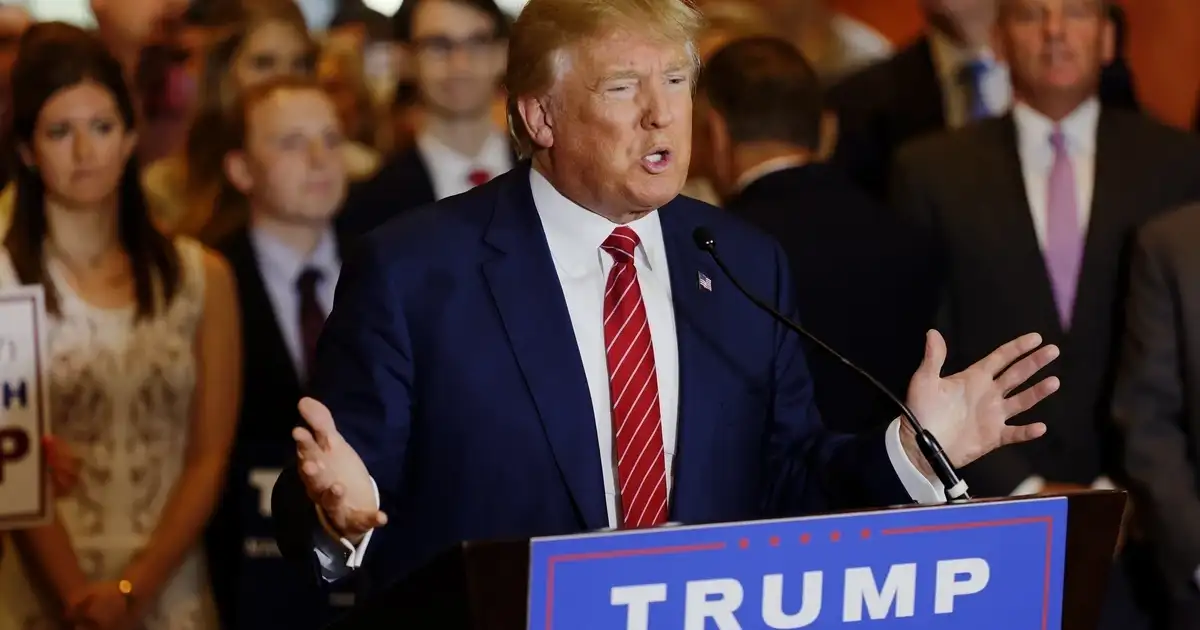

President Donald Trump just absorbed a devastating political blow in a pivotal swing state, a setback that not only signals deep trouble for the GOP’s immediate future but fundamentally jeopardizes their entire legislative agenda.
A bombshell Reuters/Ipsos poll, unveiled on April 21, 2026, reveals a significant and alarming erosion of support for President Trump in Wisconsin. This critical swing state, long a proving ground for national political trends, now flashes a stark warning sign. While the precise figures remain under wraps, the implications are undeniable: Trump’s political standing has been severely weakened, coming on the heels of a desperate, last-ditch plea to voters.

The Wisconsin Wake-Up Call
Conducted between April 19-20, the poll isn’t merely a data point; it’s a political tremor. Wisconsin has always been the ultimate battleground, a state where victories are hard-won and losses resonate. To lose ground here, even incrementally, isn’t just concerning – it’s a seismic shock sending genuine shivers down Republican spines. It unequivocally demonstrates that voters are not only paying attention to the incessant chaos emanating from Washington but are actively punishing it.
This isn’t merely the fleeting snapshot of a single poll. It’s a profound manifestation of a growing disillusionment within the electorate. President Trump’s administration isn’t simply facing “multiple headwinds”; it’s being battered by a perfect storm of challenges, each one eroding his base and alienating crucial independent voters.
These interconnected issues are hitting with particular ferocity in states like Wisconsin, where the margin between victory and defeat is razor-thin and every single vote is a battle won or lost.
GOP’s Civil War Rages On
One of the most corrosive factors gnawing at the President’s standing is the bitter, ongoing internal battle over FISA legislation. Republicans aren’t just disagreeing; they are openly tearing each other apart, revealing a party utterly incapable of presenting a united front against any opposition, let alone their own. This isn’t a policy debate; it’s a public bloodsport.
The fight over critical surveillance powers has metastasized into an internecine war, pitting hardline civil libertarians against national security hawks within the party. While some demand radical reform, citing profound privacy concerns and past abuses, others vociferously insist on maintaining robust intelligence capabilities in an increasingly dangerous world. This public squabbling doesn’t just make the party look “weak and disorganized”; it broadcasts a profound ideological schism, a fundamental inability to find common ground on issues of national security.
What does it say about a party that cannot even govern itself? How can the GOP credibly claim to lead the country when its own members are locked in a death grip over fundamental security laws? This relentless infighting isn’t just draining political capital; it’s hemorrhaging it, leaving the party vulnerable and exposed. It actively alienates the very voters who yearn for competence and stability, not the ceaseless, self-destructive conflict that has become the GOP’s hallmark.
The Legal Noose Tightens
The legal noose around President Trump’s political neck continues to tighten with alarming regularity. These aren’t mere “minor distractions” to be brushed aside; they are a relentless, existential drain on his time, his dwindling resources, and his already battered public image. Each new court filing, each new subpoena, each new indictment brings a fresh wave of damning headlines, dominating news cycles and overshadowing any policy achievements.
These sprawling legal battles don’t just cost millions; they siphon off critical attention and energy, forcing the administration to constantly divert focus from pressing policy matters to damage control. Voters aren’t just seeing a leader “constantly fighting legal fires”; they’re witnessing a president perpetually on the defensive, besieged on multiple fronts. This spectacle doesn’t merely erode trust; it actively projects an image of profound instability and chaos at the very heart of government.
The perception of being perpetually embroiled in legal combat is not just damaging; it’s politically devastating. It doesn’t merely “fuel skepticism” among crucial independent voters; it hardens their resolve against him. It doesn’t just “give ammunition” to his opponents; it hands them an entire arsenal, loaded and ready. This is a political cost the GOP can ill afford, a self-inflicted wound that bleeds support with every passing day.
DOJ in Flux: A Sign of Instability
The revolving door at the Department of Justice leadership isn’t merely a sign of administrative churn; it’s a glaring symptom of profound instability at the core of the nation’s legal system. A stable, independent DOJ isn’t just “crucial for public confidence”; it’s the bedrock of the rule of law itself. Frequent, often abrupt, shifts at the top don’t just create uncertainty; they breed suspicion, forcing the public to question the very integrity and direction of the administration’s legal apparatus.
These rapid leadership changes don’t just “spark speculation and criticism”; they ignite a firestorm of accusations regarding political interference and weaponization of justice. When the nation’s chief law enforcement agency appears to be in constant flux, the very perception of justice is compromised. A strong, truly independent DOJ is not just “vital for the rule of law”; it is the ultimate guarantor of fairness and accountability. Instability here doesn’t just undermine that perception; it shatters it, leaving a vacuum of trust.
The American public demands a government that functions with competence and unwavering integrity, not one that resembles a chaotic game of musical chairs. Constant reshuffling in such a critical department doesn’t merely fail to inspire confidence; it actively cultivates a narrative of an administration in perpetual disarray, unable to maintain even basic institutional stability. This is not how a serious government operates.
War on Two Fronts: Iran and Public Opinion
The specter of the ongoing US-Iran war, coupled with the increasingly bitter congressional debates on war powers, hangs like a dark cloud over the administration. Americans are not merely “weary” of prolonged conflicts; they are utterly exhausted, their patience worn thin by the ceaseless demands of distant battlefields. The human and financial costs aren’t just “imm
Source: Google News