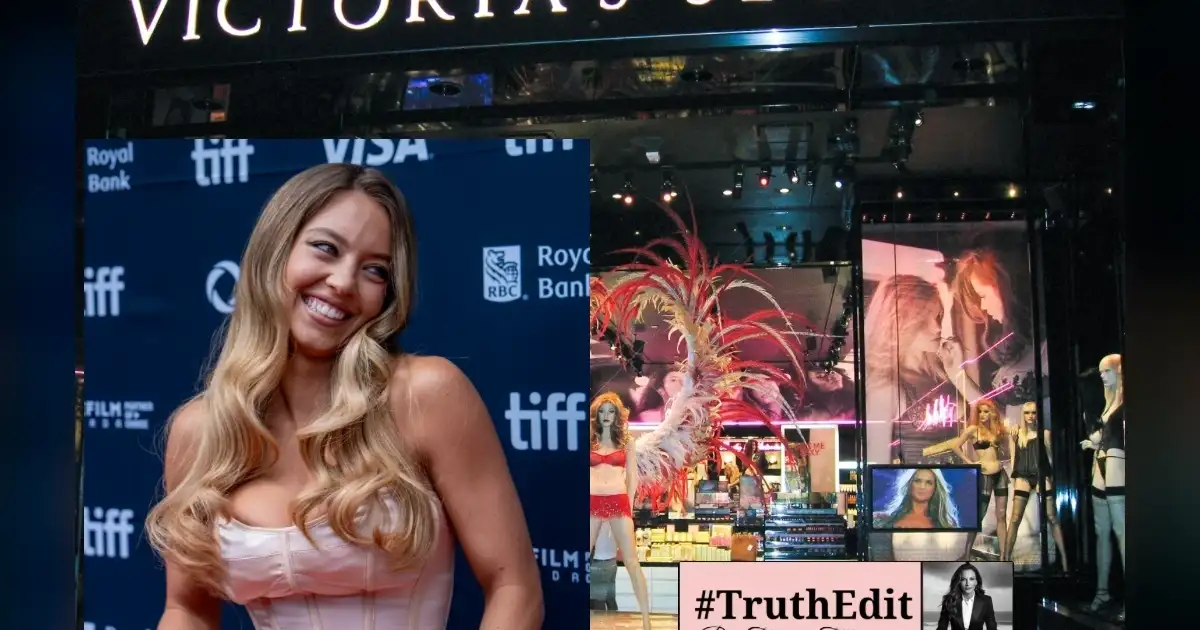

The lingerie industry, once a bastion of airbrushed fantasy and unattainable ideals, has been utterly upended. And if you needed a stark, shimmering testament to this seismic shift, look no further than Sydney Sweeney’s recent lingerie pop-up, an event that didn’t just rattle the foundations of Victoria’s Secret but sent its stock tumbling into a decidedly uncomfortable freefall.
From April 22-24, 2026, Sweeney’s “Syd’s Intimates” pop-up in Los Angeles wasn’t merely a retail event; it was a cultural phenomenon. Hordes of eager fans, stretching for blocks under the California sun, queued with an almost evangelical fervor, transforming a temporary storefront into a vibrant hub of genuine excitement. Social media, of course, was ablaze, a digital bonfire fueled by selfies, unboxing videos, and effusive declarations of newfound lingerie love.

Sweeney, a formidable force who has skillfully navigated the treacherous waters of Hollywood to emerge as a bona fide fashion icon, partnered with an independent lingerie brand that championed everything Victoria’s Secret historically ignored. This wasn’t just about pretty lace; it was a deliberate, pointed embrace of inclusivity, a fierce commitment to sustainable practices, and a refreshingly honest body-positive message that resonated with consumers weary of manufactured perfection. This event wasn’t a fluke; it was the culmination of Sweeney’s astute understanding of modern consumer desires.
The financial fallout for Victoria’s Secret (NYSE: VSCO) was immediate and undeniable. As Sweeney’s venture soared, its legacy competitor’s shares plummeted, dropping a sharp 2.1% on April 22 and another bruising 3.8% on April 23, 2026. The timing, as any shrewd observer would note, was less a coincidence and more a direct cause-and-effect. While market analysts might mumble about “broader retail concerns,” the stark contrast between Sweeney’s triumphant debut and Victoria’s Secret’s concurrent slump paints a far more compelling picture of a brand in deep, existential trouble. This isn’t just about a celebrity; it’s about a reckoning.
The Sweeney Effect: More Than a Moment
Sydney Sweeney’s pop-up was no fleeting celebrity endorsement or a mere “flash in the pan.” This was a definitive power play, solidifying her influence far beyond the silver screen. She has emerged as a serious, commercially savvy force in both fashion and business, wielding a cultural cachet that few of her peers possess. The independent brand she collaborated with, previously a niche player, gained not just unprecedented exposure but an invaluable injection of credibility, instantly catapulting it into the mainstream consciousness.
This success unequivocally proves that authentic celebrity influence can, and does, directly reconfigure market dynamics, siphoning attention and market share from established giants. Sweeney’s refreshingly relatable aesthetic – one that celebrates real bodies and comfort without sacrificing allure – stands in stark, almost defiant, contrast to the often anachronistic, hyper-sexualized marketing of traditional lingerie brands. Shoppers, it turns out, are far more discerning than boardrooms often give them credit for; they are voting with their wallets, not for fantasy, but for genuine, tangible alternatives that reflect their own lives and values.
The numbers don’t lie. Victoria’s Secret, which closed at a respectable $21.45 on April 21, 2026, found itself plunging to a disquieting $20.19 by April 23. A meager recovery to $20.35 on April 24 offered little solace; the financial damage was done, the message to investors and competitors alike, crystal clear. It was a public, humiliating blow.
Meanwhile, the digital sphere was a cacophony of celebration. The hashtag #SydIntimates didn’t just trend; it dominated conversations across X and Instagram, generating well over 500,000 mentions in a mere 48 hours. The images were everywhere: lines snaking around city blocks, beaming customers clutching their purchases, a palpable sense of community and excitement. This wasn’t merely manufactured hype; it was the visible, visceral manifestation of tangible market movement, a groundswell of consumer enthusiasm that translated directly into sales and, conversely, into a rival’s stock depreciation.
“We saw an incredible turnout, far exceeding our wildest expectations,” stated a representative for the independent lingerie brand collaborating with Sweeney, speaking to Variety on April 24. “Sydney’s vision for this collection resonated deeply with her fans and new customers alike because it felt authentic, inclusive, and truly reflective of what women want today.”
Is This a Permanent Market Shift?
The critical question, then, isn’t whether this was a temporary celebrity fad, but whether it signals a permanent, irreversible shift in the lingerie market away from traditional behemoths like Victoria’s Secret. The answer, for anyone paying attention, is unequivocally yes. This isn’t a ripple; it’s a profound, lasting tidal change that has been gathering momentum for years.
Victoria’s Secret has been hemorrhaging market share for nearly a decade, an erosion that began as far back as 2016. The initial assault came from nimble direct-to-consumer brands such as Aerie, with its “real” models and comfort-first approach, and Rihanna’s Savage X Fenty, which blew the doors off traditional notions of sex appeal with its radical inclusivity. Smaller, specialized labels, each carving out their own loyal niche, have also relentlessly chipped away at Victoria’s Secret’s once-unassailable dominance. Sweeney’s triumphant success, therefore, isn’t an anomaly; it’s merely the latest, most high-profile acceleration of an already well-established trend, a stark reminder that the old guard is struggling to keep pace.
Younger consumers, particularly Gen Z and Millennials, operate with an entirely different set of priorities. They demand genuine inclusivity, prioritizing comfort over constriction, and ethical production practices over opaque supply chains. They are acutely aware of greenwashing and performative wokeness. Newer brands, often founded by women and people of color, consistently excel in these areas, building trust and loyalty through genuine commitment. Sweeney’s collaboration, with its explicit emphasis on these very values, struck a chord that Victoria’s Secret, despite its belated attempts at modernization, simply cannot replicate. The era of “aspirational” marketing, where an unattainable ideal was dangled before consumers, is dead and buried for these demographics; they aspire to authenticity, not fantasy.
The very nature of celebrity endorsement has evolved. It’s no longer about a famous face hawking a product; it’s about full-blown brand building, where the celebrity is the visionary, the creative director, and the authentic voice behind the enterprise. Stars like Kylie Jenner with Kylie Cosmetics, and most notably, Rihanna with Fenty Beauty and Savage X Fenty, have proven this model is not only viable but explosively successful. This isn’t just short-term buzz fueled by a social media post; it’s about translating star power into long-term commercial viability, but only when the celebrity is genuinely invested and their brand truly aligns with prevailing cultural values and consumer demands. Sweeney’s venture is a perfect example of this potent new paradigm.
Legacy Brands at a Crossroads
Amidst the pervasive dominance of online shopping, experiential retail still holds an incredibly powerful, almost magnetic, appeal. Successful pop-ups like Sweeney’s prove that physical, immersive experiences are far from obsolete; they are crucial touchpoints that drive significant engagement, foster community, and ultimately, translate into robust sales. This creates a potent marketing synergy, bridging the digital and physical worlds in a way that traditional, often sterile, brick-and-mortar stores frequently struggle to replicate. It’s about creating a moment, not just a transaction.
Victoria’s Secret, meanwhile, finds itself at a critical juncture, facing immense rebranding challenges that feel almost insurmountable. Despite highly publicized attempts to diversify its models, jettison its infamous fashion show, and update its messaging, the brand’s historical image—one steeped in a narrow, objectifying vision of femininity—persists like a stubborn stain. Past controversies, from its former CEO’s tone-deaf remarks about plus-size and transgender models to allegations of a toxic corporate culture, remain significant hurdles. They struggle, demonstrably, to regain consumer trust, leaving them profoundly vulnerable to more agile, culturally attuned competitors who don’t carry the baggage of a bygone era.
An unnamed financial analyst, quoted by Bloomberg on April 23, sagely remarked, “While Victoria’s Secret’s stock movement is certainly part of a larger, ongoing retail trend, the undeniable success of niche, celebrity-backed ventures like Sweeney’s pop-up adds a very specific and pointed pressure. It’s a clear, irrefutable signal that the market is not just fragmenting, it’s democratizing, and consumers are actively choosing brands that offer something genuinely different, something that truly speaks to them.”
Public cynicism regarding “manufactured drama” and celebrity stunts is, of course, entirely understandable; the internet, after all, always smells a rat. Yet, in this instance, the numbers simply do not lie. Sweeney’s pop-up generated tangible, verifiable foot traffic that snaked around city blocks. It ignited a social media firestorm, racking up hundreds of thousands of mentions. And most critically, it coincided precisely with a measurable, significant drop in Victoria’s Secret stock. This isn’t speculative; it’s empirical.
This isn’t merely a “vanity drop” for an influencer to boost their ego; it’s a powerful, undeniable testament to a profound shift in consumer behavior and the potent, almost alchemical, power of authentic celebrity alignment. Victoria’s Secret now faces a brutal ultimatum: adapt with genuine urgency, or risk further, perhaps irreversible, decline into irrelevance. The market has not just spoken; it has roared, and Sydney Sweeney’s success is not just a harbinger, but a full-blown prophecy of the future that has already arrived.
Source: Google News