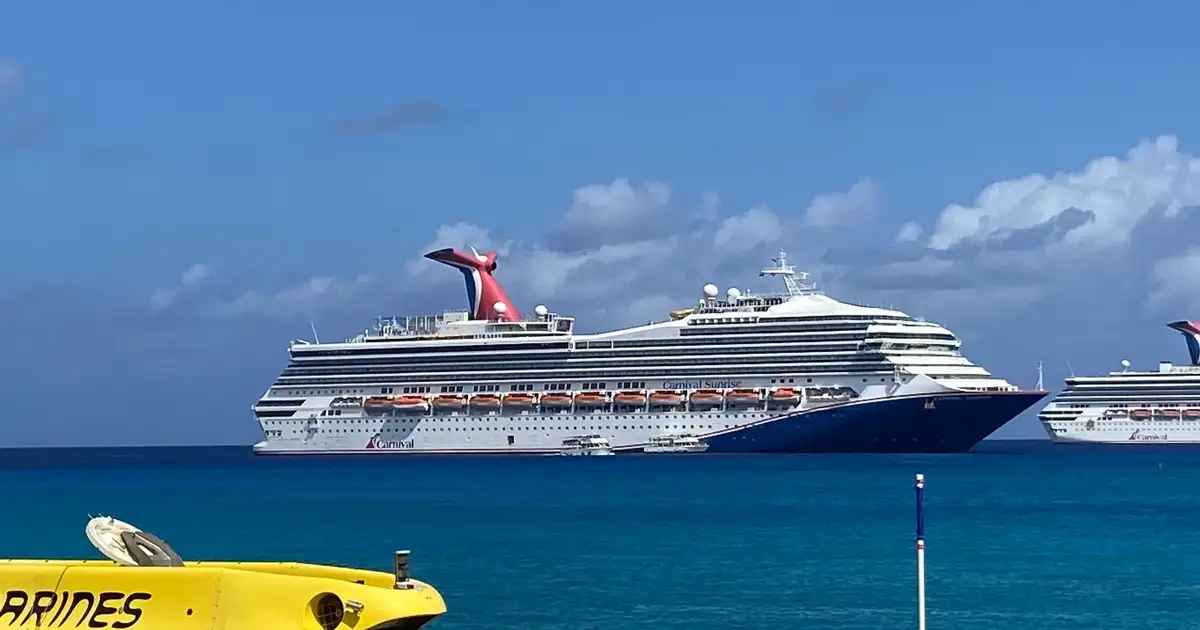

Another body, another balcony, another grim stain on Carnival Cruise Line’s already tattered reputation. Off the California coast, a woman’s tragic plunge from her private stateroom isn’t just a horrific individual incident; it’s a catastrophic failure of an industry that continually prioritizes profit over passenger safety. Her lifeless form, discovered on a lower deck, a stark indicator of the fatal drop, screams negligence.
Forget “grim statistics.” This isn’t just a blip on a spreadsheet; it’s a five-alarm fire bell for an entire industry that’s been playing fast and loose with passenger lives. The federal agencies aren’t just ‘triggered’; they’re being forced to step onto the deck, guns drawn, ready to dissect every inch of Carnival’s operation. This wasn’t some isolated mishap in the vast ocean; it played out off the very shores of California, under the watchful, yet often lax, eye of maritime authorities.
The immediate scramble from the ship’s medical team and the captain’s belated notification are standard damage control. But did those “security protocols” truly “kick into high gear” before the tragedy, or only after the body hit the deck? That’s the critical question that demands an answer, and Carnival’s initial response will be scrutinized under a microscope.
The Investigation: A Full-Scale Forensic Assault
The cavalry has arrived, but for Carnival, it’s more like a firing squad. The U.S. Coast Guard and the FBI aren’t just ‘involved’; they’re launching a full-scale forensic assault. This isn’t “standard procedure”; it’s the inevitable consequence of a system that fails to prevent such horrors.
While the ship’s flag state authorities received notification, the real pressure comes from the American public and the looming threat of legal action.
Carnival’s internal “probe” began, no doubt, with a focus on containment and narrative control. Securing evidence and reviewing CCTV footage are crucial, yes, but who’s controlling the narrative from those witness interviews? This isn’t just a “tragic puzzle”; it’s a potential legal minefield, and Carnival is already trying to clear a path, attempting to shape the story before the truth can fully emerge.
Once docked in a California port, the real investigators boarded – the FBI, local law enforcement, and the medical examiner. The disembarkation of the body for a full autopsy isn’t merely a formality; it’s the first step in uncovering the unvarnished truth, a truth Carnival may desperately want to keep submerged. Every detail, every bruise, every toxicology report will be a piece of evidence in a much larger, more damning indictment.
Indeed, this is where the gloves come off. Was it a tragic accident, a deliberate act, or something far more sinister? These aren’t just “questions”; they are the foundational pillars of a case that will expose the cracks in Carnival’s safety façade, demanding immediate and unequivocal answers from all parties involved.
Carnival’s Catastrophic PR Hurricane
For Carnival Cruise Line, this isn’t just a “major hit”; it’s a Category 5 hurricane tearing through their carefully constructed public image. The “public relations nightmare” is already a full-blown catastrophe, and the legal wolves are not just ‘looming large’; they’re circling the ship, ready to pounce on any sign of corporate negligence or cover-up.
Carnival’s “focus” isn’t just shifting; it’s a desperate pivot to damage control. “Cooperating with authorities” is a legal obligation, not an act of goodwill. While they’ll pay lip service to “passenger safety,” their true priority remains managing the media narrative and mitigating financial bleeding.
It’s a cynical calculus, but a predictable one from an industry perpetually caught between profit margins and passenger well-being.
Meanwhile, a family is shattered, grappling with unimaginable grief. They don’t just “deserve” transparency and accountability; they demand it. If Carnival or the investigators try to obfuscate, the public will stand with them, amplifying their calls for justice.
Their pain is a stark reminder of the human cost beyond the corporate balance sheets.
The other passengers aren’t just “rattled”; their dreams of a carefree escape have been replaced by the chilling reality of a death at sea. Their “disrupted vacations” are a minor inconvenience compared to the gnawing question now haunting every deck: “Am I truly safe here?” The trust, once freely given, has been shattered.
The maritime authorities must not just determine the cause of death; they must hold Carnival’s feet to the fire on every safety regulation. This investigation cannot afford to be anything less than utterly thorough and unflinchingly impartial. The stakes are too high for anything less than a complete and transparent accounting of what transpired.
The “Floating Coffin” Backlash: Public Outrage Boils Over
The public reaction isn’t just “toxic”; it’s a full-blown inferno of outrage. Social media isn’t merely “aflame”; it’s a digital battlefield where cynical comments and morbid memes are the weapons of choice. The simmering rage against cruise lines, particularly Carnival, has finally boiled over, and it’s scalding, threatening to engulf their entire brand.
Critics aren’t just “torching” Carnival; they’re burning it to the ground online. The “floating coffin” moniker is sticking, and the cries of “zero safety rails” on balconies, while perhaps hyperbolic, resonate deeply after a similar, unaddressed incident earlier in 2024.
Are we seeing a pattern here, or just a tragic coincidence that Carnival refuses to fix? The public is demanding answers, not platitudes.
A Redditor, whose scathing critique garnered thousands of upvotes, didn’t just “blast” the company; they delivered a gut punch:
“Carnival’s balconies are death traps for drunks—why no plexiglass?”This isn’t just a rant; it’s a direct accusation of cheap engineering and dangerously lax security, and it’s a sentiment echoing across the internet, challenging the very design philosophy of these vessels.
The accusations of “cover-ups” are particularly damning, with allegations surfacing that crew members may have deliberately concealed the body for hours to “dodge bad press.” If true, this isn’t just a PR blunder; it’s a criminal act, reminiscent of the chilling 2019 Radiance overboard murder scandal, where transparency was also a casualty. Such allegations erode public trust to its very core.
The legal sharks are already circling, with lawyers openly pitching class-action lawsuits on X (formerly Twitter). One widely shared post didn’t mince words:
“Sue the shit out of them for negligence.”This isn’t mere legal posturing; it’s a clear signal that the public has seen through Carnival’s usual crisis management playbook, and they’re not buying it anymore. The era of easy settlements and quiet disappearances is over.
Safety Standards Under Fire: A Decade of Inaction?
Let’s be clear: this isn’t an isolated incident, a mere anomaly. The grim reality is that hundreds of individuals have vanished or gone overboard from cruise ships since the turn of the millennium. Falls from balconies, whether accidental, intentional, or worse, represent a gaping, unaddressed wound in the industry’s safety protocols, a wound that festers with each new tragedy.
The chilling truth is that the vast majority of “person overboard” incidents are not daring rescues; they are grim recovery missions, ending in fatalities. This latest tragedy doesn’t just “highlight” those statistics; it screams them from the highest deck, demanding an end to the preventable losses that continue to plague an industry that promises dreams but sometimes delivers nightmares.
Historically, such deaths should spark intense scrutiny and lead to concrete safety improvements. Balcony railing heights are perpetually debated, and emergency response protocols are constantly “under review.” But how many more lives must be lost before these “reviews” translate into actual, enforceable change?
The cycle of tragedy and review without meaningful action is utterly unacceptable.
The Cruise Vessel Security and Safety Act of 2010 (CVSSA) was supposed to be a game-changer, mandating higher railing requirements in specific areas and stricter crime reporting. But is a decade-old act truly sufficient for today’s mega-ships and their evolving risks? The answer, clearly, is no, it’s not enough.
The public isn’t just “demanding answers”; they’re demanding action. They want to know, unequivocally, if the current “standards” are anything more than a flimsy paper barrier against preventable death.
Beyond the Brochure: The Real Risk and the Reckoning
Strip away
Source: Google News