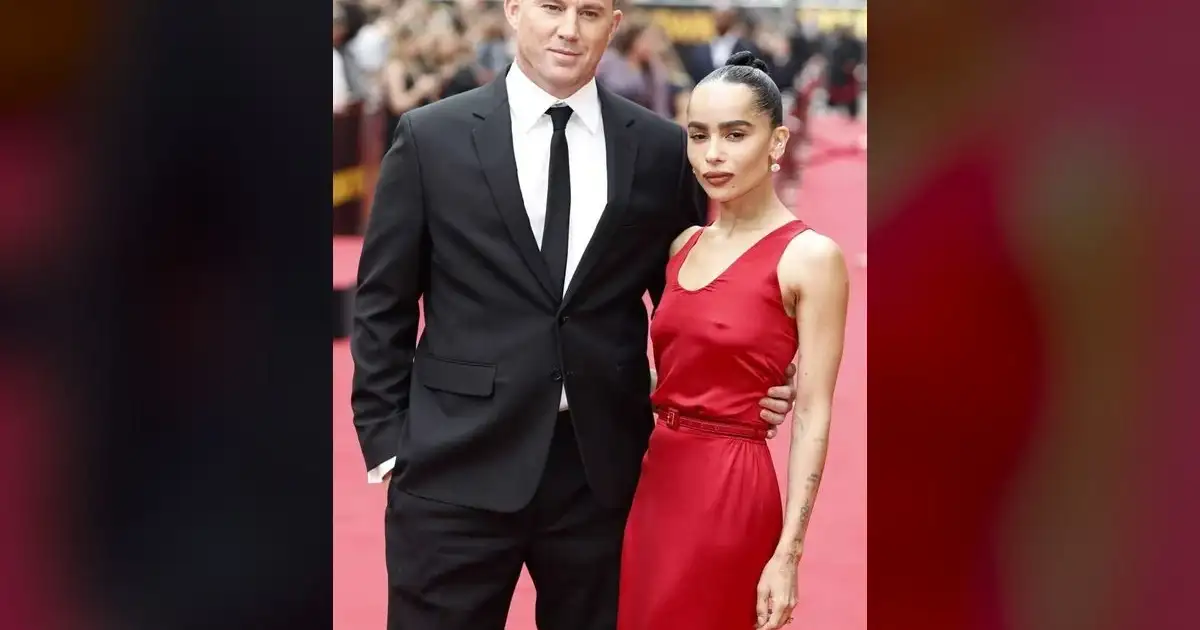

Hollywood’s polished facade cracks for no one, not even its most formidable stars. Case in point: Channing Tatum. Just days after news exploded that his ex-fiancée, Zoe Kravitz, is reportedly engaged to Harry Styles, Tatum didn’t issue a PR statement or retreat into silence. Instead, he dropped a cryptic poem on social media, ripping open a vein of raw anxiety and the gut-punch aftermath of “divorce.” This wasn’t just celebrity gossip; it was a public unraveling that screamed a universal truth.
For those keeping score, Kravitz and Styles have been a high-profile item, and the engagement news, surfacing just days ago, predictably sent entertainment channels into overdrive. Then, on April 27, 2026, Tatum delivered his counter-punch: a poem, not a carefully crafted soundbite. It detailed overwhelming anxiety and the enduring sting of a relationship’s end, pointedly using the loaded term “divorce.” This isn’t merely a celebrity struggling; it’s a stark, public snapshot of a man, regardless of his fame, grappling with profound emotional fallout while the world watches his ex-partner confidently move into her next chapter. It’s a brutal reality check for anyone who thinks wealth and fame insulate you from the deepest human pains.

The Unseen Battle: Men, Breakups, and the Public Eye
This isn’t just celebrity gossip; it’s a seismic tremor in the conversation around male mental wellness. It’s a stark, undeniable truth: mental fitness isn’t a luxury; it’s the bedrock of true strength, especially for men.
Channing Tatum, a man forged in physically demanding roles, a stoic action-hero persona personified, exposing this raw vulnerability isn’t merely unsettling for some—it’s a necessary, gut-level jolt for all of us.
Men are relentlessly conditioned to compartmentalize, to “man up,” to suppress anything that even whispers of weakness. We’re taught to power through, to suck it up, to fix it, or, more often, to ignore it until it metastasizes into something far more destructive.
But breakups, especially the kind that play out under the unforgiving glare of the public eye, don’t follow that stoic script. They don’t just crack your carefully constructed defenses; they obliterate them.
The “divorce” Tatum mentions, whether a legal reality or a searing metaphor for a profound relationship’s end, carries a psychological weight that can crush even the most resilient among us.
The anxiety he speaks of isn’t some fleeting worry; it’s a common, debilitating physiological hijack, a primal scream from the nervous system when your world feels utterly out of control. It’s the brain’s alarm bells ringing at full volume, demanding attention, not suppression.
“The idea that men, especially public figures, should be immune to the emotional devastation of a breakup is a dangerous myth. It forces a performance of strength that ultimately makes us weaker.” – Ryan Cross
What Tatum’s post, however cryptic, does is blast open a crucial window into this often-hidden reality. It screams to men, without uttering a single explicit instruction, that it’s not just okay to feel this shit—it’s necessary.
It’s okay for your insides to be scrambled, for your compass to spin wildly when your world shifts. It’s a powerful, silent nod to the millions of men who suffer in agonizing silence, battling their own anxieties and processing their own relationship endings, often without the public platform, the sympathetic audience, or the perceived “permission” to be anything but stoic.
Beyond the Cryptic: Taking Action on Your Mental Fitness
While Tatum’s public expression is undoubtedly significant, the real, transformative work happens not on a global stage, but in the unforgiving trenches of your own life. Mental wellness isn’t achieved by dropping a cryptic poem; it’s forged through relentless resilience, by developing ironclad coping mechanisms, and by actively, courageously engaging with your own emotional landscape. Here’s what that looks like in practice:
Acknowledge the Pain, Don’t Bury It
First, and unequivocally: stop pretending you’re fine. That reflexive “I’m good” is a silent killer, a lie you tell yourself that only prolongs the agony.
When a relationship ends, it is a profound loss—a death of a future you envisioned. Grieve it. Allow yourself to feel the full, messy spectrum: the searing anger, the crushing sadness, the disorienting confusion, the gnawing anxiety.
This isn’t weakness; this is the brutal, essential processing required to heal and rebuild.
Re-Center Your Life’s Pillars
When one foundational pillar (like a significant relationship) collapses, don’t crumble; lean harder, deliberately, on the others. This isn’t about mere distraction; it’s about strategic re-anchoring.
Double down on your physical training—push your limits. Laser-focus on your career—dominate your field. Reconnect with your core circle of friends and family—their support is invaluable.
Forge new hobbies, new passions—rediscover parts of yourself that were dormant. These are not just activities; they are vital anchors that powerfully reaffirm your self-worth, proving it extends far beyond the confines of any single relationship.
Seek Professional Support
Let’s be crystal clear: professional support isn’t for “broken” people; it’s for smart, strategic individuals committed to optimizing their performance in all areas of life. Therapy, executive coaching, or even a robust support group provides battle-tested tools, objective perspectives, and critical strategies you simply won’t discover trying to tough it out alone. This isn’t a sign of weakness; it’s a non-negotiable investment in your long-term mental fitness, precisely like a top-tier personal trainer is an investment in your physical peak.
Physicality as Therapy
Physicality isn’t just a coping mechanism; it’s a potent, scientifically proven antidote to anxiety and emotional turmoil. It’s not a magic bullet, but the rush of endorphins, the undeniable sense of accomplishment, and the disciplined, structured routine are powerful, physiological stabilizers.
Don’t just dabble; hit the weights with fury, run the miles until your lungs burn, train with an unyielding purpose. Sweat out that emotional sludge, literally. Transform your pain into power, one rep, one stride, one grueling session at a time.
Tatum’s post will be a fleeting blip in the celebrity news cycle. But the stark, undeniable truth it illuminates—that even the toughest among us face profound emotional challenges—is a permanent, inescapable reality. The question isn’t whether you’ll face it; it’s how you’ll confront it. Will you shrink, or will you leverage that raw, human experience to forge an unshakeable strength? Your response defines your true power.
Red Marker Verdict: Let’s be real. Channing Tatum, a mega-star, puts out a “cryptic poem” about anxiety and “divorce” just as his ex-fiancée’s engagement news is splashed everywhere.
Is it raw, honest vulnerability? Maybe. Is it also a perfectly timed, emotionally intelligent move to re-frame his narrative, elicit public empathy, and ensure he’s not just “the ex” but “the guy processing deep emotional pain”? Absolutely.
In the celebrity ecosystem, even pain can be leveraged. It’s a calculated deployment of vulnerability, a way to control the emotional high ground when the spotlight shifts.
The hypocrisy isn’t Tatum’s feelings, it’s that most men don’t get a global stage and a sympathetic audience for their private anguish; they’re just expected to shut up and deal. Tatum gets to be both the stoic action hero and the sensitive poet, all while subtly reminding everyone he’s human, too. Convenient.
Fitness Mental Health Men’s WellnessSource: Google News