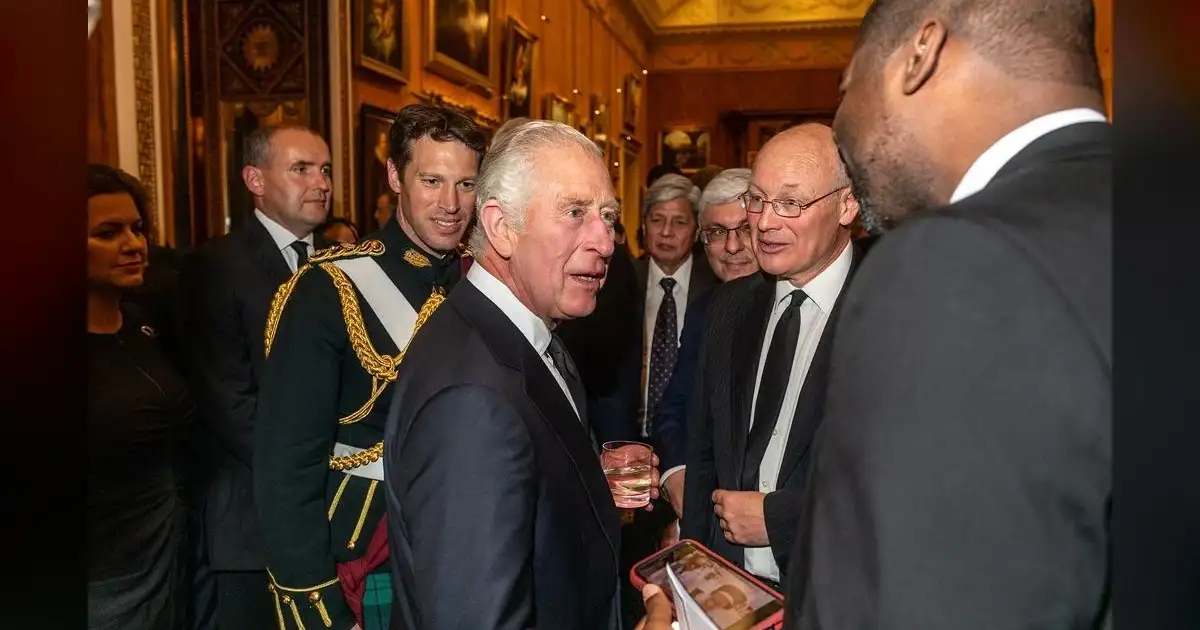

Washington, ever the stage for performative pageantry, rolled out its most gilded carpet this week, not for a head of state, but for royalty. King Charles III and Queen Camilla, on their inaugural US visit as monarchs, concluded their first day with a garden party so lavish it bordered on parody – a spectacle at the UK Ambassador to the US’s Washington residence on April 27, 2026, designed purely to reinforce the myth of the “Special Relationship.”
The day had been a whirlwind of diplomatic theater: King Charles addressed a joint session of Congress, then retreated for private talks with senior officials from the Trump Administration. But the garden party? That was the real show – a carefully curated “relaxed affair” that served as a glittering magnet for Washington’s power brokers and a smattering of British cultural figures, all eager to rub shoulders.

The Royal Charade: Who Benefits?
Forget the fancy canapés and polite chatter; the real purpose of this royal visit slices far deeper than mere pleasantries. This isn’t about tea and crumpets; it’s about cold, calculated power plays on a global stage teetering on the brink. With Eastern Europe ablaze, the Middle East a powder keg, and authoritarian regimes flexing their muscles, the United Kingdom, quite frankly, desperately needs its allies.
This carefully choreographed visit isn’t just about “solidifying” the US-UK alliance; it’s about projecting an impenetrable, united front to a skeptical world. For the Trump Administration, it’s a political coup, a visible demonstration of global stability and enduring partnerships, even as domestic storms gather. Make no mistake: both sides are shamelessly leveraging the monarchy for their own strategic advantage.
And yes, behind those gilded doors, serious discussions undoubtedly took place. Climate change, economic cooperation, defense strategy – these are the weighty issues that truly matter. King Charles, the self-appointed environmental crusader, certainly seized his moment, using his regal platform to push for more aggressive climate action, a convenient alignment with stated White House priorities. But was it substantive, or just another talking point?
Beyond the policy, the royal presence itself is a masterclass in public relations, a guaranteed media frenzy. The UK shamelessly exploits this to promote its “brand,” hoping to lure investment and boost tourism. These visits invariably bring in tow a phalanx of trade delegations, ostensibly to forge “deeper economic ties.” One wonders how many actual deals are struck amidst the champagne toasts.
D.C.’s Power Brokers Toast Themselves
The guest list for this royal bash wasn’t just a list; it was a parade of D.C.’s entrenched insider class, a who’s who of power and privilege. Cabinet Secretaries, members of Congress, even Supreme Court justices – all were present, mingling freely with prominent business magnates. A sprinkling of British actors and musicians provided the superficial “sparkle,” but the real stars were the politicians themselves.
While D.C. reveled, the online reaction was brutal, a torrent of unvarnished cynicism. Social media users, ever the unsparing jury, swiftly labeled it “peak performative cringe.” For many, it reeked of a desperate UK bid to schmooze the Trump Administration for favorable trade deals, a perception crystallized by one viral meme that damningly dubbed it “Tea with Traitors.”
The guest list wasn’t just a roster; it was a stark ledger of who truly runs Washington. From **Stephen Miller** to **Scott Bessent** and **Doug Burgum**, the Trump orbit was well-represented. The truly telling detail was the presence of both **House Speaker Mike Johnson** and his predecessor, **Nancy Pelosi**. This isn’t just “crossing the aisle.” It’s a blatant demonstration that the D.C. swamp, for all its partisan bickering, welcomes all with open arms when a crown is involved – and the cameras are rolling.
This bipartisan attendance wasn’t merely symbolic; it was a calculated message. Washington’s entrenched elite, despite their manufactured domestic feuds, are remarkably united when it comes to foreign policy. They stand together, shoulder-to-shoulder, when it suits their collective interests.
It’s a performative show of strength, yes, but one primarily staged for each other. It was a self-congratulatory pat on the back for the D.C. power structure.
Soft Power, Hard Cash, and Public Cynicism
The Royal Household, ever the master of image, desperately aims to project an aura of “soft power,” a veneer of continuity and enduring global importance. This particular visit, King Charles III’s inaugural state visit to the US as monarch, is undoubtedly a pivotal moment for the UK, a chance to reassert the vitality of the transatlantic relationship. But does anyone beyond the diplomatic bubble truly believe it?
But let’s strip away the pomp: what does any of this mean for the struggling average person? Absolutely nothing. Most citizens, grappling with relentless inflation and mounting bills, couldn’t care less about royal garden parties.
The online chatter, a raw barometer of public sentiment, screamed this disconnect, slamming the “tone-deaf decadence.” Critics, with justifiable fury, highlighted the grotesque juxtaposition of UK food banks overflowing while elites “noshed salmon” in Washington.
This, then, is the ultimate D.C. hypocrisy laid bare. They wax poetic about “enduring alliances” and “shared values” while the cost of living spirals out of control for their constituents. These events aren’t just “expensive”; they are obscenely lavish.
Taxpayers on both sides invariably foot the colossal bill. Specific financial figures, naturally, are never disclosed, cloaked in official secrecy, but history confirms that state visits always bleed public coffers dry.
The predictable refrain? “Symbolic value,” always cited as if it magically outweighs any direct financial outlay. This isn’t just political spin; it’s a tired, cynical justification for egregious spending that benefits a privileged few, never the struggling many.
“It was an immense honor to host Their Majesties and so many distinguished guests tonight. This evening truly celebrated the deep friendships and connections that underpin the unique relationship between the United States and the United Kingdom.”
The Enduring “Special Relationship” or Just More Swamp?
At its core, the visit is a cynical exercise in diplomatic optics: solidifying ties, promoting British interests, projecting influence. King Charles III, still finding his footing as monarch, clearly aims to carve out his international role, to demonstrate the monarchy’s supposed diplomatic utility. But for whom, exactly?
For Washington, it’s a convenient opportunity to engage with new British leadership and, more critically, to project an image of unwavering unity. It’s a carefully crafted signal to the world that alliances, despite internal squabbles, still hold sway. This message is especially vital for the **Trump Administration**, which desperately needs to project an image of strength and stability on a tumultuous global stage.
Let’s cut through the gilded facade. This garden party wasn’t just a performance; it was a brazen display of power and privilege, a self-congratulatory celebration of the political class.
The “Special Relationship” endures, certainly, but it serves the elites first and foremost. It’s a convenient justification for lavish spending that costs taxpayers and lines the pockets of lobbyists and donors.
The pomp and circumstance, the carefully orchestrated smiles – they are nothing but a grand distraction from the real issues plaguing both nations. The D.C. swamp, it seems, just keeps getting deeper, and the public is left to foot the bill.
Source: Google News