
The silence that followed the grinding shriek of metal and the sickening thud was perhaps the most brutal sound of all. Then, the dust settled, and a horrifying truth emerged from the freshly churned earth of Willow Creek: a pair of small, mud-caked boots, sticking out of the trench like a grotesque marker. They belonged to Mateo Rodriguez, a sixteen-year-old boy, and they were the last thing anyone saw of him alive. This isn’t just a tragic accident; it is a gut punch straight to the heart of this nation, a stark, unforgivable reminder of corporate greed burying a child, literally and metaphorically, under the weight of its indifference.
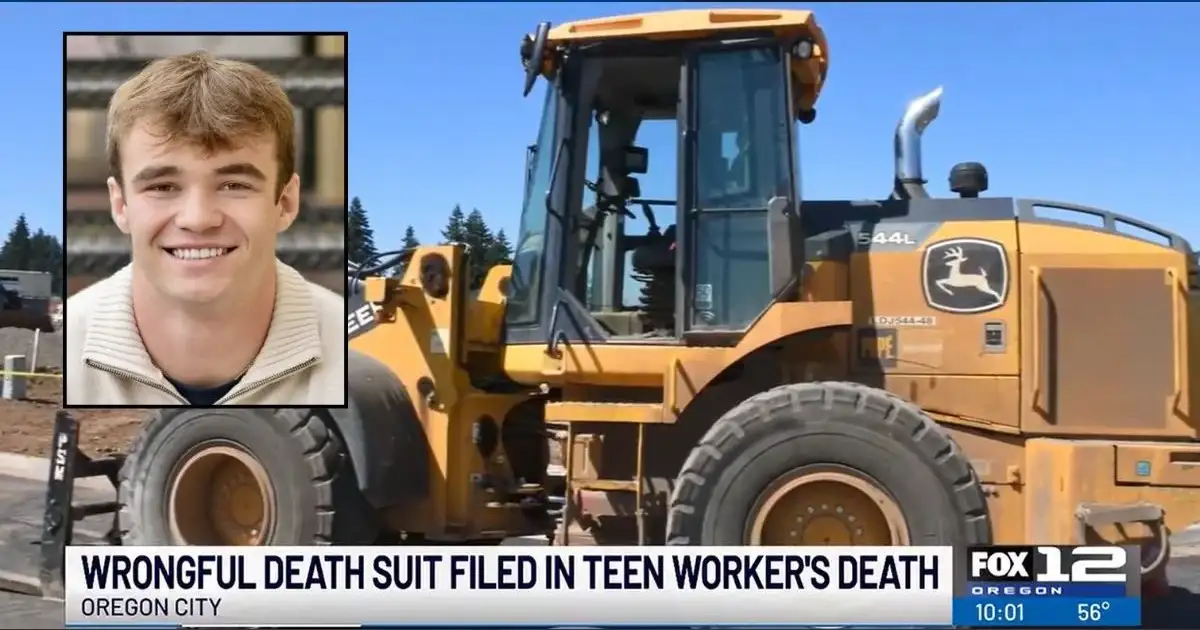
This isn’t merely a tragedy to be mourned; it is a lawsuit claiming cold, hard negligence, a deliberate pattern of disregard that led to a preventable death. On October 15, 2025, a 16-year-old boy was crushed by a wheel loader at a Willow Creek, California construction site. His task? Clearing debris from a newly dug hole, a job for seasoned adults equipped with proper safety gear, not for a child barely out of junior high. The sheer audacity of placing such a burden on such young shoulders is, frankly, criminal.
New court filings from April 29, 2026, against Acme Construction Co. and its site supervisor, Mark Jensen, don’t just expose a horrifying truth; they rip it open, bleeding for all to see. Depositions from former workers, unsealed and now public, allege a chilling pattern of systemic safety violations. They claim Jensen, the man in charge, routinely pushed young, green workers into tasks that were not only beyond their experience but overtly dangerous. All this, they contend, to meet brutal, unforgiving deadlines, sacrificing human lives on the altar of profit margins.
The Crushing Cost of Corners Cut: A System Built on Exploitation
The family’s attorney, his voice weighted with grief and righteous anger, stated it plainly, unequivocally: “Mateo was just a child, trying to earn money for his family. He deserved to come home safely.” These words should not merely echo; they should reverberate with the force of a thunderclap through the polished halls of every construction company, every boardroom where quarterly profits are prioritized over human dignity. The new testimony, far from being isolated anecdotes, paints a damning picture of a company that valued its bottom line over a human life, a company willing to gamble with the futures of its youngest employees. It’s an outrage that doesn’t just scream for justice; it demands it, with an urgency that should shake us all to our core.
Acme Construction Co., predictably, denies everything. They issue boilerplate statements about “robust safety protocols” and insist the wheel loader operator was “fully certified.” Yet, here we stand, with a 16-year-old boy dead, his life extinguished in a moment of corporate malfeasance. How can any entity, with a shred of moral integrity, possibly claim “all safety measures were followed” when a child lies crushed under tons of heavy machinery? It’s a question that hangs heavy in the air, a testament to the moral bankruptcy that often accompanies unchecked corporate power. Their denials are not just disingenuous; they are an insult to Mateo’s memory and to the intelligence of anyone paying attention.
The family’s wrongful death lawsuit seeks over $10 million in damages. This figure, though substantial, barely begins to account for the emotional distress, the lost future earnings, the unimaginable grief that now defines their existence, let alone the cold, hard costs of funeral arrangements. But what price do you truly put on a child’s life? For the Rodriguez family, this isn’t solely about money, though the financial burden of such a loss is immense. It’s about accountability, about tearing down the wall of corporate impunity. It’s about ensuring that no other family ever has to endure the soul-crushing agony they now face. It’s about stopping this from ever happening again, a desperate plea for a future where profit does not trump human life.
The Occupational Safety and Health Administration (OSHA), often criticized for its reactive rather than proactive approach, already hit Acme with initial fines totaling $125,000. These penalties were levied for “inadequate supervision” and a “failure to ensure proper equipment operation.” While these fines are currently under appeal, they feel like a paltry slap on the wrist, a mere inconvenience for a company whose alleged negligence cost a child his life. One hundred twenty-five thousand dollars for a human soul? It’s a chilling calculus that underscores the systemic undervaluation of worker safety in the face of corporate expediency. It’s something, perhaps, but it is far from justice.
This case rips open the ugly underbelly of an entire industry, an industry too often riddled with safety shortcuts and a callous disregard for human well-being. These shortcuts are rampant, particularly when deadlines loom large, when the pressure to complete projects at breakneck speed becomes paramount. They are especially prevalent among non-union or smaller contractors, where oversight can be lax and the temptation to cut corners for financial gain becomes sickeningly powerful. The incentives are clear: finish fast, save money, and if a few regulations get bent, or a few lives are put at risk, well, that’s just the cost of doing business. This insidious logic must be dismantled.
One former Acme Construction Co. worker, whose unsealed deposition now forms a crucial part of the evidence, painted a scene so chilling, so viscerally horrifying, it should haunt us all. He recounted, with a tremor in his voice that transcended the sterile courtroom transcript, “I only saw his little boots sticking out of the trench. It haunts me every night.” This isn’t just a quote; it’s a raw, unfiltered cry from the soul, a testament to the indelible trauma inflicted by such a preventable tragedy. It captures the sheer, unadulterated horror of that moment, a moment etched forever into the memory of those who witnessed it, and now, into the collective conscience of a community.
And let us be clear: this is not an isolated incident. The Bureau of Labor Statistics confirms, with cold, hard numbers, that construction remains a deadly industry for young workers. In 2024 alone, a staggering 47 teenagers died in construction-related incidents across the nation. Forty-seven young lives, snuffed out before they even had a chance to truly begin. This isn’t merely a statistic; it’s a silent epidemic of preventable tragedies, a national disgrace that demands our immediate and unwavering attention. Each number represents a Mateo, a family shattered, a future stolen. How many more must fall before we truly act?
Youth in Peril: The Exploitation of Minors in a Ruthless Industry
We need to talk, with brutal honesty, about the exploitation of underage workers. Mateo Rodriguez was doing a job no child should ever do, a job that violated every principle of child labor protection. He was directed to clear a newly dug hole, a task that inherently requires not just adult supervision, but specialized training, proper safety equipment, and, crucially, trained spotters to ensure the safety of those working near heavy machinery. Mateo had none of it. He was a child, thrust into an adult world of danger, without the necessary protections or experience. This is not just negligence; it is a betrayal of trust, a profound failure of guardianship by those who employed him.
The depositions against Mark Jensen are damning, painting a portrait of a supervisor who allegedly operated with a reckless disregard for the safety of his most vulnerable employees. They claim he routinely pushed young, inexperienced workers into hazardous tasks, tasks for which they lacked adequate training, tasks performed without proper oversight. This was all, according to the testimony, to meet “aggressive construction deadlines” – a phrase that should now be synonymous with “reckless endangerment.” This isn’t supervision; this is, by any moral and legal standard, criminal negligence, an alleged pattern of behavior that directly led to a child’s death. Jensen, if these allegations hold true, stands as a stark embodiment of a system that prioritizes speed and profit over the very lives it purports to manage.
Are our current labor laws enough to prevent such horrors? Is enforcement strong enough to deter such egregious behavior? History, sadly, offers a resounding and tragic answer: no. Child labor laws were not created on a whim; they were forged in the crucible of past tragedies, designed specifically to prevent exactly this kind of exploitation and death. High-profile cases from decades ago, like the 1989 death of a 17-year-old in New York who fell into a meat grinder, led to stricter rules, to a renewed national commitment to protecting our children. But it seems, in our relentless pursuit of economic efficiency, we have tragically forgotten those hard-won lessons, allowing the shadows of the past to once again engulf our present.
Lax oversight is not just a problem; it is a killer. Especially on rapidly expanding projects, where the sheer scale and pace can overwhelm existing safety protocols. Especially when companies, driven by insatiable greed, prioritize speed over human lives, viewing safety measures as inconvenient impediments to progress. We must ask ourselves, with a chilling sense of dread: How many other Mateos are out there right now, working in the shadows of dangerous construction sites? How many other children are being put in harm’s way today, their youth and inexperience exploited by unscrupulous employers?
Parents, in this increasingly precarious landscape, need to be more vigilant than ever. They need to scrutinize potential employers with an almost forensic intensity, demanding transparency and checking safety records with unwavering diligence. No amount of money, no promise of a better future, is worth a child’s life. The system, as evidenced by Mateo’s death, is failing our youngest workers. It is failing their families, leaving them with unimaginable grief and a lifetime of questions. And in its failure to protect the most vulnerable among us, it is, in a very real sense, failing all of us.
This case should serve as a seismic wake-up call for every parent, every guardian, every individual who cares about the future of our youth. It should be a stark, unblinking warning to every young person contemplating entering the workforce: some jobs are simply too dangerous, some companies are simply too reckless, and some supervisors are simply too negligent to be trusted with a young life. We cannot, we must not, allow this horrifying pattern of exploitation and death to continue. The cost is simply too high.
Beyond the Verdict: What Does Justice Truly Look Like?
What does “justice” truly mean for the Rodriguez family? A monetary settlement, even a substantial one, will not, cannot, bring Mateo back. It will not erase the haunting image of his “little boots” from their minds, nor will it heal the gaping, festering wound in their lives. Money, in this context, is a poor substitute for a future stolen, for dreams unrealized, for a life tragically cut short. It is a cold comfort, a legal necessity, but it is not, and never will be, true solace.
Justice, in this heart-wrenching case, must extend far beyond financial compensation. It must be about accountability, unyielding and absolute. It must be about systemic, fundamental change. It means Acme Construction Co. must not merely pay a fine or settle a lawsuit; it must fundamentally and irrevocably alter its practices, embedding a culture of safety at its very core, prioritizing human life above all else. It means Mark Jensen must face the full, unvarnished consequences of his alleged actions, not just in a civil court, but potentially through criminal proceedings if the evidence warrants it. It means other companies, watching this case unfold, must learn from this tragedy, internalizing its lessons before they, too, find themselves stained by similar blood. Anything less would be a travesty.
The preliminary hearing, set for late June 2026, is not just another date on a legal calendar; it is a critical moment, a crucible where truth will be tested. The new evidence, the unsealed depositions, the raw, unfiltered testimony of those who witnessed Acme’s alleged negligence firsthand, must be heard. They must be taken seriously, their weight acknowledged. The court, in this moment, has a profound opportunity to send a powerful, unambiguous message: that human life matters more than construction schedules, that a child’s future is infinitely more valuable than a company’s profit margin. It is a chance to reassert the moral compass of our society.
For the tight-knit community of Willow Creek, this is more than a legal battle; it is a profound, collective loss. It’s a scar that will not easily heal, a wound that will fester for generations. Mateo Rodriguez was not just a name; he was part of their fabric, a young man with potential, with dreams, with a family who adored him. His death highlights, with brutal clarity, the vulnerability of young people in a world too often driven by greed. It highlights the dangers of unchecked corporate power, of an industry that seems to believe it can operate above the law, above morality.
This case, therefore, is not merely a wrongful death suit; it is a battle for corporate responsibility, a fight for the effectiveness and stringent enforcement of safety regulations, and a demand for the ethical treatment of all employees, especially minors. The legal action initiated by Mateo’s family is not just crucial; it is essential. It is the mechanism through which we, as a society, hold powerful entities accountable. It is the only way we can hope to prevent future horrors, to ensure that the tragic image of Mateo’s “little boots” never again becomes a reality for another child.
The Whistleblower’s Burden and the Silence of a Broken System
The courage of those former workers, who stepped forward to offer their depositions, cannot be overstated. It is a testament to the enduring power of conscience, even in the face of immense pressure. Coming forward against an employer, especially one as large and influential as Acme Construction Co., takes guts. It can mean professional ruin, the blacklisting that follows those who dare to speak truth to power. It can mean personal attacks, the questioning of motives, the erosion of one’s reputation. Yet, they spoke out, breaking the omertà of the industry, exposing the truth that Acme so desperately sought to bury. Their bravery is a beacon in the darkness of this tragedy.
Their depositions are not merely damning; they are a direct indictment. They allege that Jensen was not merely an absent supervisor but was directly involved in directing unsafe practices, pushing workers into situations that were patently dangerous. This testimony, from individuals who lived and worked within Acme’s alleged culture of negligence, breaks through the corporate denials, pierces the carefully constructed veil of official statements. It brings us closer, uncomfortably so, to the cold, hard facts of how Mateo Rodriguez lost his life. It paints a picture of deliberate choices, not unfortunate accidents.
The construction industry, like many others, often closes ranks when faced with external scrutiny. Workers fear retaliation, the very real threat of losing their livelihoods in a competitive job market. This pervasive fear creates a culture of silence, an unspoken agreement to look the other way, to prioritize self-preservation over moral obligation. It allows dangerous practices to fester, to become normalized. It allows monsters, in the form of negligent supervisors and profit-driven executives, to operate unchecked, their actions hidden behind a wall of complicit silence. This silence is not golden; it is deadly.
We need stronger protections for whistleblowers, not just in theory, but in practice. We need a system that actively encourages truth-telling, that safeguards those brave enough to expose wrongdoing, rather than punishing them. We need a justice system that values human lives above all else, above corporate profits, above construction deadlines, above the comfortable status quo. Without it, the tragic cycle will continue. More Mateos will die. More families will suffer. More communities will be scarred by preventable loss. The responsibility to change this rests squarely on our shoulders.
The tragedy of Mateo Rodriguez is not just a local news story; it is a stain on our collective conscience, a testament to systemic failure at multiple levels. It reveals a chilling, almost incomprehensible, disregard for the most vulnerable among us, for the young, the inexperienced, the desperate. His “little boots,” sticking out of that trench, should serve as a permanent, visceral reminder of what happens when we allow profit to overshadow humanity, when we permit greed to dictate safety. We must demand better from those who build our world, from the corporations and supervisors entrusted with lives. They must never again be allowed to build it on the graves of our children. The memory of Mateo Rodriguez demands nothing less than a complete, uncompromising reckoning.
Photo: Jamie Frevele
Source: Google News