
The fragile UN-brokered humanitarian pause in southern Lebanon shattered violently within hours on April 30, 2026, confirming the region’s entrenched and tragic cycle of violence. Deadly Israeli strikes claimed civilian lives alongside militants, rendering any immediate talk of de-escalation not merely difficult, but almost cynically meaningless.
On that morning, Israeli warplanes launched targeted operations in southern Lebanon, reportedly killing at least five people. Among the deceased were three Hezbollah militants and two Lebanese civilians, caught in the renewed hostilities.

The strikes devastated areas near the towns of Bint Jbeil and Khiam, occurring mere hours after a “humanitarian pause,” agreed upon on April 28 between Israeli and Lebanese officials, was meant to commence. The intent was clear: to halt fighting and facilitate the urgent passage of aid.
The Immediate Unraveling of a Precarious Agreement
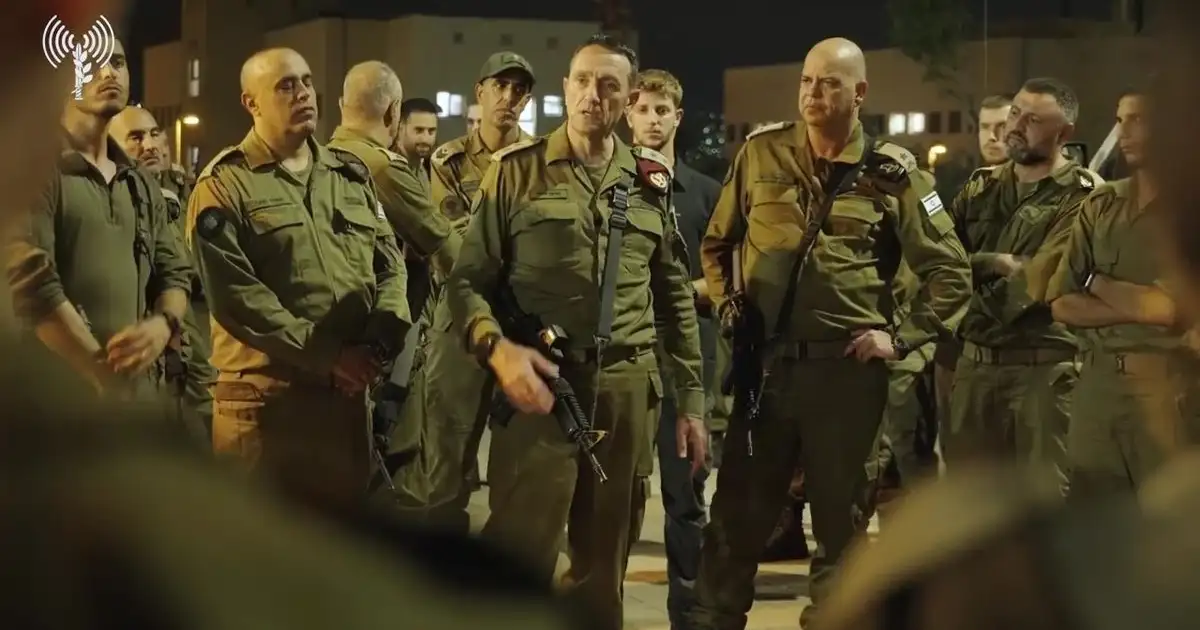
Israel’s military swiftly asserted that these strikes were a direct response to rocket fire emanating from Lebanese territory on April 29, targeting northern Israel. While no casualties were reported from the rocket attacks, air raid sirens blared across several Israeli towns, triggering widespread alarm and a predictable demand for retaliation.
Hezbollah, however, vehemently denied any responsibility for the rocket fire, condemning the Israeli actions as a flagrant violation of the nascent ceasefire and an unacceptable assault on Lebanese sovereignty. This immediate and stark divergence in narratives underscores the profound mistrust that plagues the region, where each side perceives itself as acting defensively while simultaneously accusing the other of aggression.
The instantaneous breakdown of this painstakingly negotiated pause is a stark illustration of how easily such agreements unravel amidst deeply entrenched conflict. Both parties were quick to assign blame, demonstrating a reflexive pattern of finger-pointing that leaves scant room for genuine de-escalation. The cycle of retaliation, tragically, remains not just intact, but robust, seemingly impervious to diplomatic overtures.
“These cowardly acts by the Zionist entity will not go unanswered. Our response will be proportionate and swift,” a Hezbollah spokesperson stated, as reported by Al-Manar TV, signaling an ominous commitment to further confrontation.
Israel’s stance, articulated by an unnamed military official to The Jerusalem Post, is equally unyielding. The official stated that Israel would not tolerate threats and that its operations are meticulously precise, designed to neutralize terrorist infrastructure “regardless of any so-called ‘pause’ that Hezbollah exploits.”
This perspective powerfully illustrates Israel’s profound distrust, viewing any cessation of hostilities as a potential regrouping opportunity for Hezbollah rather than a genuine step towards peace. Such a mindset prioritizes immediate, often pre-emptive, security responses over the painstaking, long-term work of diplomatic engagement, thereby perpetuating the very cycle it seeks to control.
Can the Humanitarian Pause Be Revived? A Bleak Assessment
The core question now confronting international mediators and the suffering populations alike is whether this UN-brokered humanitarian pause can possibly be salvaged. The current evidence, regrettably, points to a grim outlook.
Confidence in the agreement, fragile to begin with, has been severely damaged, perhaps irrevocably.
- The April 30th strikes occurred within mere hours of the pause’s intended commencement, an immediate and devastating blow to any nascent trust. This timing was not merely unfortunate; it was a profound undermining of the diplomatic effort itself.
- Despite the breach, UNIFIL and other international bodies continue to engage both sides, urging de-escalation. This persistent engagement, while commendable, reveals the UN’s desperate hope that the pause might still serve as a viable framework, however tenuous.
- The agreement was explicitly a “humanitarian pause,” not a full ceasefire. This crucial distinction, while intended to offer flexibility, has unfortunately allowed for differing interpretations of “defensive” actions, providing a convenient loophole for continued hostilities.
- The region’s history is replete with broken agreements. Initial breaches are common, yet sustained international pressure has, on rare occasions, helped to restore some semblance of adherence. Can this be one of those instances, or is the damage too profound?
- Ultimately, salvaging the pause hinges entirely on the political will of both Israel and Hezbollah to genuinely de-escalate. Their commitment, judging by recent actions and rhetoric, appears profoundly shaky, if not entirely absent.
History, a harsh and unforgiving teacher in this particular theatre, offers a sobering lesson. Decades of conflict define the relationship between Israel and Lebanon, with Hezbollah as an undeniable central player.
The devastating 2006 Lebanon War stands as a stark reminder of how quickly border skirmishes can escalate into full-blown regional conflagrations. This volatile border region, a perennial flashpoint, seems destined to spark clashes, each violation, whether perceived or real, risking a larger, more destructive response. This latest incident, far from being an anomaly, fits a depressingly familiar pattern.
The UN’s Enduring Dilemma and the Weight of Civilian Suffering
UN peacekeepers (UNIFIL) have expressed profound concern, calling for maximum restraint from both sides and urging adherence to the humanitarian pause. Yet, the tragic reality is that their words, however well-intentioned, often carry little practical weight on the ground. The very architecture of international peacekeeping struggles to impose order when fundamental political will is absent and mutual distrust reigns supreme.
“We are gravely concerned by reports of renewed hostilities and call on all parties to immediately cease fire and respect the humanitarian pause. The safety of civilians must be paramount,” a UNIFIL spokesperson reiterated in a statement, highlighting the urgent, yet often ignored, humanitarian imperative.
International observers rightly fear a wider escalation, one that could further destabilize an already volatile Middle East. This incident starkly highlights the extreme fragility of peace efforts in the region, where enforcing international agreements without robust accountability mechanisms remains an immense, often insurmountable, challenge.
The international community finds itself caught in a recurring dilemma: how to mediate effectively when the primary actors operate from positions of deep-seated animosity and perceived existential threat?
For the ordinary people living in southern Lebanon and northern Israel, the situation is dire beyond diplomatic platitudes. They face constant fear, living under the perpetual shadow of conflict. Displacement is a common, brutal reality, uprooting families and destroying livelihoods.
Aid organizations, already stretched thin, struggle desperately to deliver vital supplies amidst the chaos and insecurity. The cold calculus of political and military actions translates directly into profound suffering for vulnerable populations, crushing any hope for a semblance of normal life. This is the true, devastating cost of the unending cycle of mistrust.
The Unending Cycle of Mistrust: A Path Forward?
The immediate aftermath of these strikes paints an unequivocally bleak picture. Both sides cling resolutely to their entrenched narratives: Israel asserting defensive necessity, Hezbollah condemning aggression. The UN, despite its persistent efforts, struggles to mediate effectively, caught between two profoundly intractable positions.
The humanitarian pause was born of a desperate necessity, designed to offer a minuscule window of relief and perhaps a sliver of hope. Yet, the deep-seated mistrust, cultivated over decades of conflict, shattered it almost instantaneously.
Neither side appears genuinely willing to de-escalate without absolute security guarantees – assurances that are, in the current climate, utterly impossible to achieve. This fundamental impasse ensures that any diplomatic gains remain fleeting, easily undone by the next perceived provocation.
The question of salvaging this particular pause is, regrettably, largely rhetorical. The necessary political will is palpably absent, overshadowed by the clamor of retaliation and the imperative of perceived self-defense.
The actions on the ground speak far louder than any diplomatic agreement, however well-intentioned. The “humanitarian pause” is, to all intents and purposes, effectively dead, another tragic casualty of unending regional conflict.
The true challenge now lies not in reviving this specific agreement, but in confronting the systemic mistrust that makes any lasting peace seem an increasingly distant, almost utopian, dream. What, then, will it take to break this devastating cycle?
Source: Google News