
One moment, Dwayne “The Rock” Johnson was basking in the gilded glow of Hollywood, celebrating Emily Blunt’s star on the Walk of Fame – a tableau of manufactured joy and public adoration. The next, he was facing the stark, unglamorous reality of a police officer peering into his notoriously tinted windows. It was a jarring, almost theatrical pivot, perfectly encapsulating the bizarre duality of Tinseltown: a land where dreams are spun into gold, and even demi-gods are subject to the mundane tyranny of traffic laws.
The incident unfolded on April 30, 2026, a fleeting yet highly visible moment. Johnson, fresh from the Walk of Fame ceremony, was pulled over by local law enforcement. The reason: his vehicle’s notoriously tinted windows.
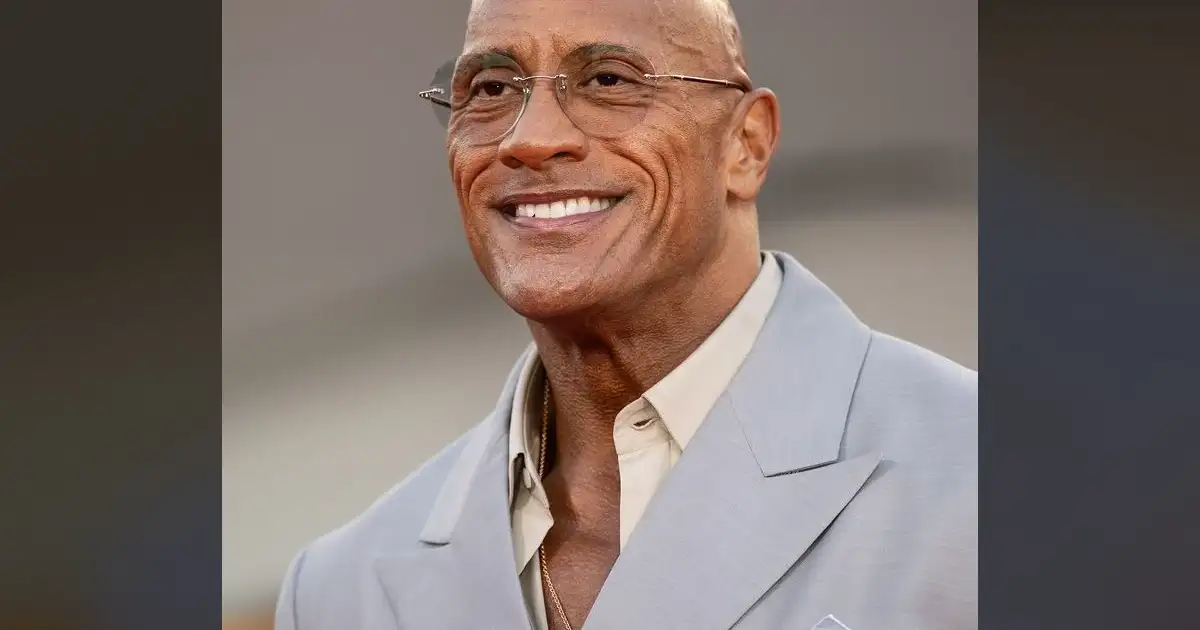
What would be a minor inconvenience for most became a brand management opportunity for Johnson. Dressed in a sharp cream suit, he remained composed, even shaking the officer’s hand. This disarmingly polite gesture bordered on performance art, showcasing Johnson’s skill in handling unscripted public moments.
The Cracks in the Celebrity Panacea
Johnson meticulously built an empire on his larger-than-life persona. He is the ultimate action hero, a charismatic titan whose public image is a fortress of strength. Yet, even this modern Hercules must contend with minor infractions.
This unexpected detour, minutes after a Hollywood landmark dedication, served as a fleeting reality check. It showed that even demi-gods are subject to mundane rules.
The incident peeled back carefully curated layers of his public image, revealing a curious vulnerability. A global superstar, whose every move is analyzed, faced the same bureaucratic inconvenience as any suburban dad. This offered a glimpse into celebrity’s peculiar paradox: untouchable yet susceptible to trivial legalities.
The public, hungry for authenticity, devoured it. They found perverse comfort seeing their idols occasionally grounded by everyday rules.
Hollywood’s Unscripted Drama
The Walk of Fame ceremony itself is peak Hollywood – a meticulously choreographed spectacle of manufactured moments, effusive platitudes, and public adoration. It’s a carefully constructed narrative designed to perpetuate the myth of Tinseltown’s magic. Then, with the abruptness of a plot twist, the real world intrudes, often with a flashing blue light.
Minutes after accolades, Johnson faced a traffic stop, transforming triumph into bureaucracy. This jarring juxtaposition highlights Hollywood’s bizarre duality: dreams and speed traps. Every celebrity knows the camera is always on.
A routine stop, an annoyance for most, becomes an instant public spectacle for a star like Johnson. This is the unspoken price of omnipresent visibility, where the mundane becomes drama.
The Rock’s Unyielding Brand Management
Johnson’s composure was no accident; it underpins his meticulously managed brand. Years of cultivating a mass-appeal image were on display. Every public interaction reinforces his “good guy” persona.
Shaking the officer’s hand was a masterclass in public relations. It was a calculated demonstration of respect and calm authority, an unscripted moment perfectly on brand.
His brands, “Project Rock” and Teremana Tequila, thrive on this image of authenticity. His global social media presence extends this carefully curated persona. Even a traffic stop can be deftly spun to highlight his character.
This solidifies his perception as a titan of industry and a relatable figure. His global appeal ensures any incident is managed, often repurposed to his advantage.
The Tinted Window Trope: Privacy vs. Public Life
Tinted windows are a celebrity cliché, a silent declaration for privacy in a transparent world. They shield from paparazzi and the public eye. Yet, they often push legal limits.
This creates tension between personal space and public order. It’s a common infraction, disproportionately affecting high-profile individuals because police often recognize their faces.
The opacity of a car window speaks volumes about the exhausting negotiation between privacy and public life for celebrities. Stars like Johnson live under an unblinking microscope. Every action is magnified for public consumption.
The incident reminds us that fame grants no immunity from the law. Rules apply to everyone, even the biggest stars. This is a crucial message in an era obsessed with unfiltered authenticity.
The Business of Being The Rock
Beyond the traffic stop, Johnson’s professional life continues its upward trajectory. His filmography, a savvy blend of action and humor, resonates globally. News about his projects generates immense interest.
His upcoming film, Red One, exemplifies this strategic prowess. Slated for Amazon MGM Studios’ Prime Video, it aims to redefine holiday action-adventure. Johnson’s charisma is key to its appeal.
This strategic rollout is being watched closely across the industry, not just for its entertainment value, but as a case study in how big-budget films adapt to evolving consumption habits in the streaming era. Johnson’s involvement is not merely critical for its success; it is, in many ways, the very engine driving its visibility and appeal. Even a seemingly trivial traffic stop, in the grand calculus of his brand, subtly reinforces his image as a relatable, yet undeniably powerful, figure, further cementing his unique position at the intersection of entertainment, business, and cultural ubiquity.
The Enduring Narrative of the Relatable Titan
The traffic stop was inconsequential: no charges, just a discussion or minor citation. Yet, the image of Dwayne Johnson, calm by his car, engaging with an officer, will stick. It adds an intriguing layer to his carefully constructed public narrative.
He is the relatable titan, the down-to
Photo: Harald Krichel
Source: Google News