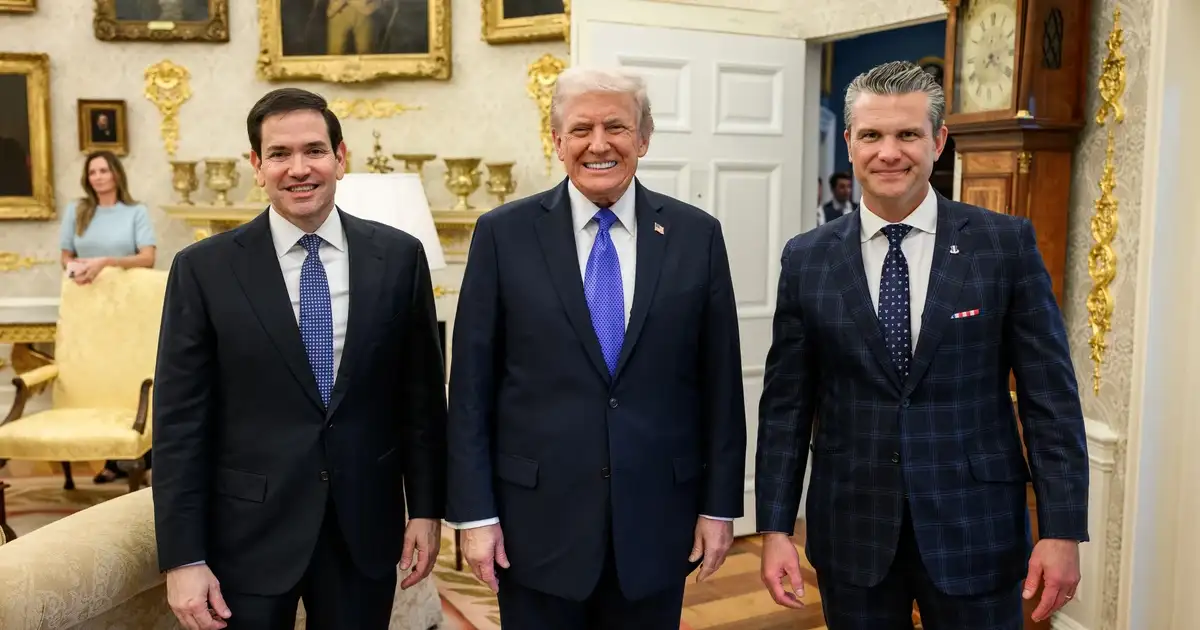

The political stage is set, the curtain rises, and once again, the Middle East becomes the backdrop for a brutal display of American power plays. Former President Donald Trump didn’t just “rip into” Marco Rubio’s “glaring absence” from critical Middle East peace talks; he exposed the raw, cynical choreography behind a predictably wobbling ceasefire. This isn’t merely about diplomacy; it’s a naked assertion of power, a strategic positioning for future influence, and a stark reminder of who truly profits when the world burns.
The much-touted Israel-Hamas ceasefire, brokered just last week, now teeters precariously on the brink of total collapse. Reports from Jerusalem and Gaza confirm a resurgence of hostilities. Rocket fire and retaliatory strikes threaten to completely derail the fragile agreement, plunging the region back into full-scale conflict. The international community, through mediators from Egypt and Qatar, struggles to hold the line, while both sides predictably point fingers, accusing the other of flagrant violations. The situation is not merely unstable; it is a powder keg awaiting the next spark, a crisis many insiders knew was almost inevitable.

Trump’s Calculated Strike on “Weak” Foreign Policy
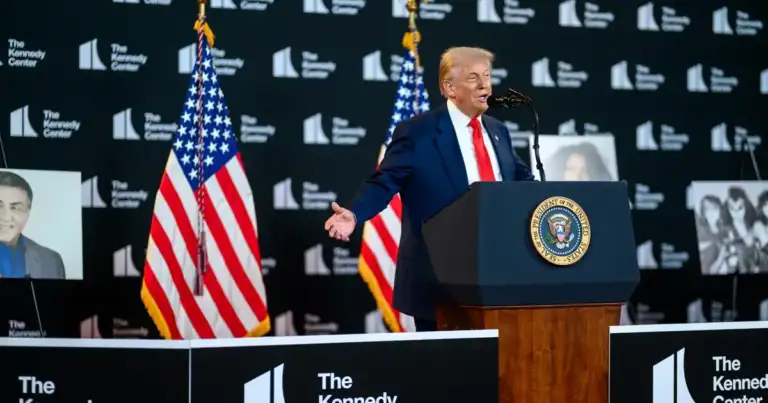
Former President Trump, ever the showman, did not mince words. At a raucous Pennsylvania campaign event on April 30th, he unleashed a scathing indictment of the current administration’s foreign policy. He branded it “weak” and “ineffective,” arguing vehemently that America’s global standing has plummeted under its watch. This perceived decline, Trump asserted, leads directly to unstable ceasefires and a glaring lack of respect for U.S. diplomatic efforts. While his remarks painted with a broad brush, their true target was surgically precise.
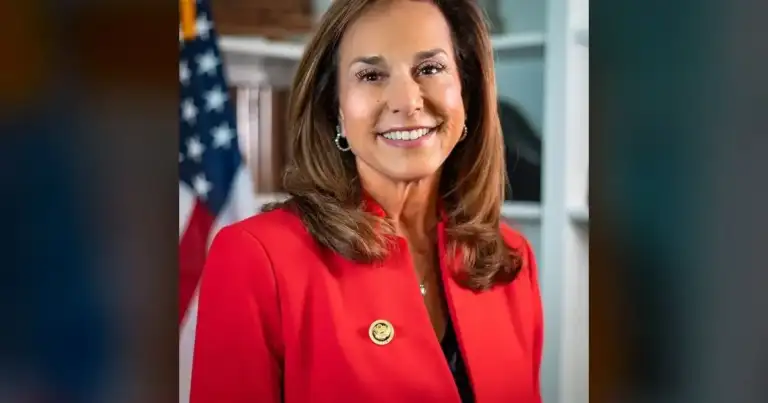
Political operatives and seasoned analysts immediately understood the maneuver. Trump’s impassioned call for “strong, decisive American leadership” was not just a generic campaign slogan; it was an implicit challenge to key Republicans who fancy themselves foreign policy heavyweights. Senator Marco Rubio’s name, a perennial fixture in such discussions, instantly sprang to mind. Rubio, a prominent voice on foreign policy, serves on both the influential Senate Intelligence Committee and the powerful Senate Foreign Relations Committee. Yet, during these critical negotiations—negotiations literally determining life and death in a volatile region—he has been conspicuously, glaringly absent.
His office has issued predictable, boilerplate statements supporting Israel’s right to self-defense and calling for de-escalation. But where is the direct involvement? Where are the high-profile interventions, the shuttle diplomacy, the visible leadership one would expect from a senator of his stature in such a crisis? This silence, this visible detachment, creates precisely the “glaring absence” Trump was so eager to highlight, turning it into a political weapon.
Rubio’s Strategic Retreat: A Masterclass in Kayfabe
Why would Marco Rubio, a known hawk with a history of interventionist rhetoric, sit out such a pivotal moment? The public, increasingly cynical and weary, sees through the political fog. On platforms like Reddit’s r/politics and X, the prevailing sentiment isn’t confusion; it’s outright disgust, widely labeling it “peak Trump theater.”
This cynicism isn’t shallow; it’s born of repeated observation. Many believe Rubio’s no-show is not an oversight but a deliberate, calculated move. It’s seen by some as a strategic retreat, designed not to facilitate peace, but to allow the “war machine” to keep humming for MAGA donors and other vested interests. As one viral X thread, garnering over 12,000 likes, acidly noted, Rubio’s current quietness fits a disturbing pattern, tying his absence to perceived no-shows in past crucial moments like Ukraine talks and Iran Hormuz negotiations. “Rubio’s ‘absence’ is just him auditioning for Trump’s VP slot 2.0,” one user snarked. “Boycott the table, blame Zelenskyy, rinse repeat.” This isn’t an isolated incident; it’s a playbook.
The prevailing theory among political insiders and online commentators alike? This entire situation is a carefully orchestrated piece of political “kayfabe”—a staged performance where the outcome is predetermined. Rubio ghosts the messy, thankless negotiations, allowing the ceasefire to “wobble” and ultimately fail. This then creates a vacuum, perfectly primed for Trump to swoop in as the ultimate savior, the only one capable of decisive action. It is a well-worn script, honed over decades, designed to maximize political gain, not diplomatic success.
“Ceasefire wobbles? More like WWE script—Rubio no-shows, Vance ultimatum, Pentagon lurks ‘hanging around’. Iran’s begging, but nuclear talk postponed? Pure grift to fund endless wars.”
— Viral Reddit megathread (45,000 upvotes)
This isn’t about fostering genuine peace; it’s about maintaining leverage. It’s about shaping optics. Above all, it’s about preserving a lucrative status quo for those who truly pull the strings in Washington, D.C. The human cost, the geopolitical instability—these are mere externalities in the grand game.
The Grift Behind the “Wobble”
The public discourse is brutally honest, calling this entire spectacle “performance art.” Trump’s Truth Social posts, critics argue, are nothing more than “fear porn,” designed to manipulate public sentiment and, cynics suggest, to spike oil stocks and defense contractor shares. Rubio’s carefully cultivated tough-guy routine on cable news, meanwhile, masks a strategic retreat—a calculated absence that undeniably benefits specific, powerful interests. The question isn’t if there’s a benefit, but who precisely reaps it.
Peace, in this cynical calculus, “kills the grift.” When ceasefires fail, conflicts continue. When conflicts continue, certain industries thrive: the military-industrial complex keeps churning out weapons, lobbyists continue to collect hefty fees, and political donors with stakes in defense, energy, and reconstruction efforts see their investments protected. This is the cold, hard truth of Washington, a truth often obscured by patriotic rhetoric. Rubio, by his absence, ensures no lasting deal gets made, thereby keeping the conflict simmering. Trump then “addresses” it, turning it into perfect rally fodder, a testament to his supposed unique ability to fix problems created by others. This self-perpetuating cycle repeats, with the American taxpayer ultimately footing the bill for endless instability and the tragic human cost that follows.
This isn’t just about a single ceasefire in the Middle East; it’s about a systemic flaw. It’s about a political ecosystem where posturing trumps genuine diplomacy, where calculated “absence” can be a far more powerful and profitable move than active engagement. It’s a system designed to benefit the powerful, not the peaceful, and the consequences ripple across the globe.
The Unfolding Chessboard: What Comes Next?
Trump’s direct jab at Rubio is far more than a casual insult; it’s a strategic play on a complex political chessboard. It reinforces his image as the decisive, unyielding leader, the only one capable of wielding true power. Crucially, it also puts immense pressure on potential Vice Presidential candidates, forcing them to prove their unwavering loyalty and their perceived effectiveness—or lack thereof—in the eyes of the presumptive nominee.
Rubio’s quietness, whether a deliberate calculation or a genuine misstep, now looks like a significant liability. In a Republican Party increasingly demanding “America First” strength and visible action, his perceived inaction on a critical global stage is a glaring weakness. His long-held Vice Presidential aspirations could suffer a serious, perhaps irreparable, blow, as Trump demands absolute fealty and a willingness to engage on his terms.
For the actual ceasefire, the outlook remains grim, indeed. With key players seemingly more interested in political maneuvering and self-preservation than genuine peace-making, true stability becomes a distant, almost utopian dream. The Middle East remains a volatile chessboard, where human lives are pawns in a larger, more cynical game of power.
The cost of this political theater is immeasurable. It’s not just counted in dollars spent or in America’s credibility on the global stage. It’s counted in the tragic loss of human lives, in the shattered trust of everyday citizens who watch this political circus unfold, feeling increasingly helpless and unheard. The “wobbling ceasefire” isn’t an accident of diplomacy; it is a deliberate feature of a broken system. A system designed not to foster peace, but to perpetually benefit the powerful. And until that system is dismantled, piece by agonizing piece, expect more “glaring absences” and more political theater, played out on the graves of those caught in the crossfire.
Source: Google News