
Oil giants are once again flaunting immense profits, and the political establishment, predictably, is screaming for a cut. ExxonMobil and Chevron just posted staggering Q1 2026 earnings, immediately reigniting the perennial debate over temporary windfall taxes. But let’s cut through the noise: the real question isn’t just who benefits now, but who ultimately bears the cost when the political theater fades?
The Profit Bonanza and the Political Firestorm
Major oil and gas companies aren’t just doing well; they’re experiencing a bonanza. This past week, ExxonMobil reported a breathtaking $11.8 billion in Q1 2026 net income – a figure that sent tremors through financial markets. Not to be outdone, Chevron announced a robust $7.2 billion for the same quarter.

These aren’t merely good numbers; they decisively blew past analyst expectations, underscoring a period of extraordinary profitability.
The global Brent Crude price, stubbornly hovering around $90-95 per barrel, acts as a veritable goldmine for these energy titans. High prices translate directly into fat margins, a reality further amplified by persistent geopolitical tensions and shrewd supply management strategies by OPEC+ nations. This isn’t just market fluctuation; it’s a meticulously managed boom, and the companies are reaping the rewards.
Politicians Demand Their Share – A Predictable Playbook
The moment big oil posts big profits, the political class emerges, ready to swing. Progressive lawmakers and consumer advocacy groups are vociferously demanding a windfall tax, framing these earnings as “unjust” or “unearned.” Their core argument is simple: these companies benefit unfairly from market conditions while ordinary citizens grapple with soaring fuel and utility costs.
Senator Maria Rodriguez (D-CA) didn’t mince words, articulating the outrage with sharp clarity.
“It is unconscionable that while families struggle to pay for gas and heat their homes, these oil giants are raking in billions in profits, not through innovation, but through global instability. We must enact a federal windfall profits tax immediately to bring relief to working families.”
— Senator Maria Rodriguez (D-CA)
Her call for a federal windfall profits tax is not just loud; it’s a familiar refrain. We’ve witnessed this political playbook before.
The UK, for instance, implemented a 25% Energy Profits Levy on companies in 2022, later hiking it to a substantial 35%. The EU quickly followed suit with its own “solidarity contribution,” demonstrating a global appetite for clawing back what’s perceived as excessive profit.
The Real Impact: Who Pays the Price Later?
But here’s where the political rhetoric often diverges from economic reality: if a windfall tax passes, what does it genuinely mean for your wallet? How quickly would you actually see relief at the pump? And, more critically, what long-term damage would it inflict on the companies’ capacity for future investment?
The stark reality is this: consumers expecting immediate relief are deluding themselves. Any funds collected would take months, if not years, to filter down. Governments must first collect the revenue, then manage the labyrinthine process of allocation, and finally distribute it via rebates or subsidies.
This is not a quick fix; it’s a bureaucratic marathon.
Investment at Risk: The Unseen Costs
Oil companies are not silent victims in this debate. They vociferously argue that these taxes gut their capital, essential for both traditional energy development and the crucial transition to green technologies. Consider the precedent set by the UK’s Energy Profits Levy: several major companies immediately scaled back their North Sea investment plans.
Fewer investments invariably lead to less supply down the line, a cruel twist for consumers who face higher prices as a direct consequence. It’s an economic paradox: taxing profits today could very well guarantee higher costs tomorrow.
Dr. Alan Davies, a respected energy economist at the University of Houston, issued a stark warning against such short-sighted policies.
“We must be cautious not to implement policies that could jeopardize future energy security. Punitive taxes risk driving investment away from the very sector responsible for keeping our economies running, ultimately harming the consumer.”
— Dr. Alan Davies, energy economist, University of Houston
His point is irrefutable: you cannot simply tax profits without inviting significant, often unintended, consequences.
The Green Paradox: Hindering the Transition?
Then there’s the green transition, the supposed noble cause often invoked by proponents of the tax. They argue that windfall revenue could directly fund renewable energy initiatives. While appealing in theory, this overlooks a critical detail: companies like ExxonMobil and Chevron assert that their own robust profits are already funding internal projects aimed at decarbonization.
These include cutting-edge carbon capture technologies, sustainable biofuels, and hydrogen development. Diverting those funds through taxation could, ironically, slow down their proprietary transition efforts, not accelerate them.
Darren Woods, Chairman and CEO of ExxonMobil, articulated this position with clarity.
“Our strong first-quarter results reflect disciplined capital allocation, operational excellence, and a commitment to delivering reliable energy to the world. These earnings enable us to invest in both traditional energy production and the lower-emission solutions critical for the future.”
— Darren Woods, Chairman and CEO of ExxonMobil
This creates a high-stakes gamble: do governments seize these profits, hoping to spend them more wisely, or do they allow the companies to invest them directly, trusting their market-driven efficiency? The answer is far from simple.
The Political Theater of “Windfall” and Public Scrutiny
The public reaction to these debates is, predictably, a cacophony of conflicting narratives. Progressive activists and Democratic politicians frame these as “egregious profits” that must be returned to pump-pinched families. Meanwhile, online users on platforms like Reddit and X are quick to label it “performative theater,” often pointing out that some of the same politicians pushing for these taxes have also advocated for Middle East conflicts that inherently drive oil prices higher.
Conservatives and the crypto-bro contingent are quick to slam it as “socialist grift,” questioning why “war profiteering” is only being taxed now, not when conflicts began. Many mock the idea of “chump change bribes” from government rebates, arguing that new taxes will simply hike pump prices long-term. One viral X post, for instance, sneered at the notion of funding EV subsidies, citing BP’s “soaring profits” despite facing a hefty 78% North Sea levy.
The “Astroturf” theories are also flying, with some on r/conspiracy suggesting it’s a sophisticated method to launder “war cash” into shareholder buybacks, with rebates serving as a thinly veiled 2026 election ploy, polling well only because the true economic impact remains hidden from the average voter.
The Real Cost: Beyond the Headlines
This isn’t merely a debate about ethics or fairness; it’s about hard, unforgiving economics. A windfall tax sounds like justice, a righteous act of making big corporations pay their “fair share.” Yet, the actual impact on your gas bill remains months, if not years, away.
The long-term risk, however, is immediate and very real.
Reduced investment in new energy sources, both traditional and green, guarantees higher prices and less reliable supply in the future. Furthermore, the political will to pass and sustain such a tax is notoriously shaky. The specific design of any tax — its temporary nature, the threshold for “windfall,” and the ultimate allocation of revenue — matters immensely.
These intricate details determine whether it’s a genuine short-term fix or a long-term problem masquerading as a solution.
So, while politicians grandstand and the public clamors for immediate gratification, remember this: the quick fix in energy policy almost always comes with a hidden, far more significant, and often painful long-term cost. The real question isn’t whether we can tax these profits, but whether we can afford the consequences.
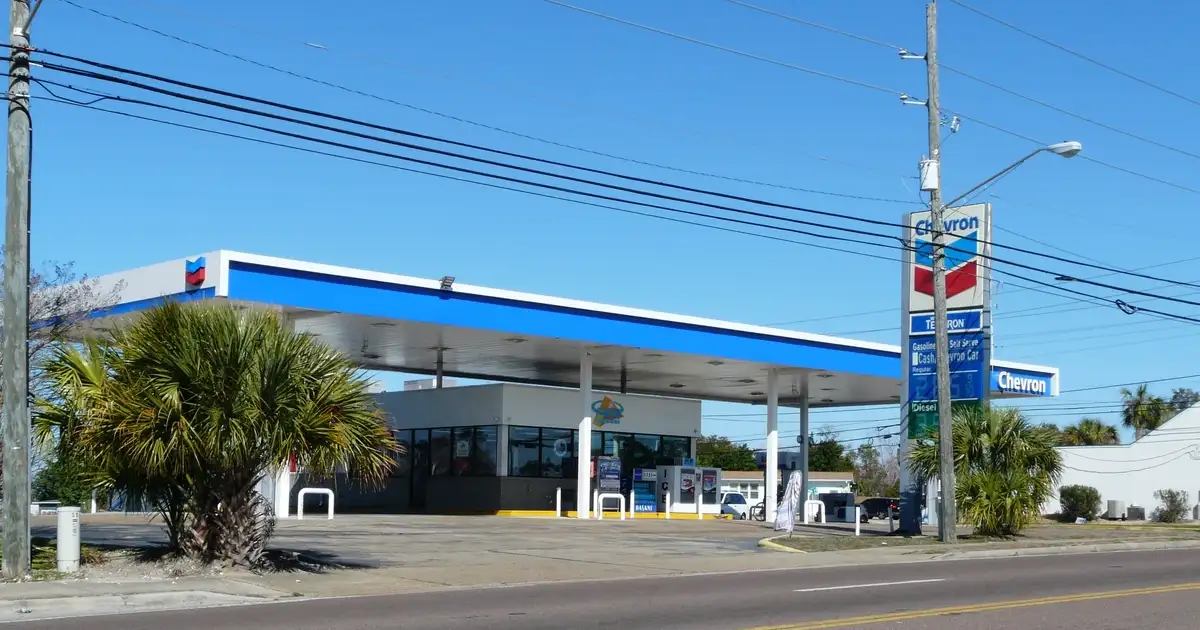
Photo: Wikimedia Commons (query: Chevron exxonmobil)
Source: Google News