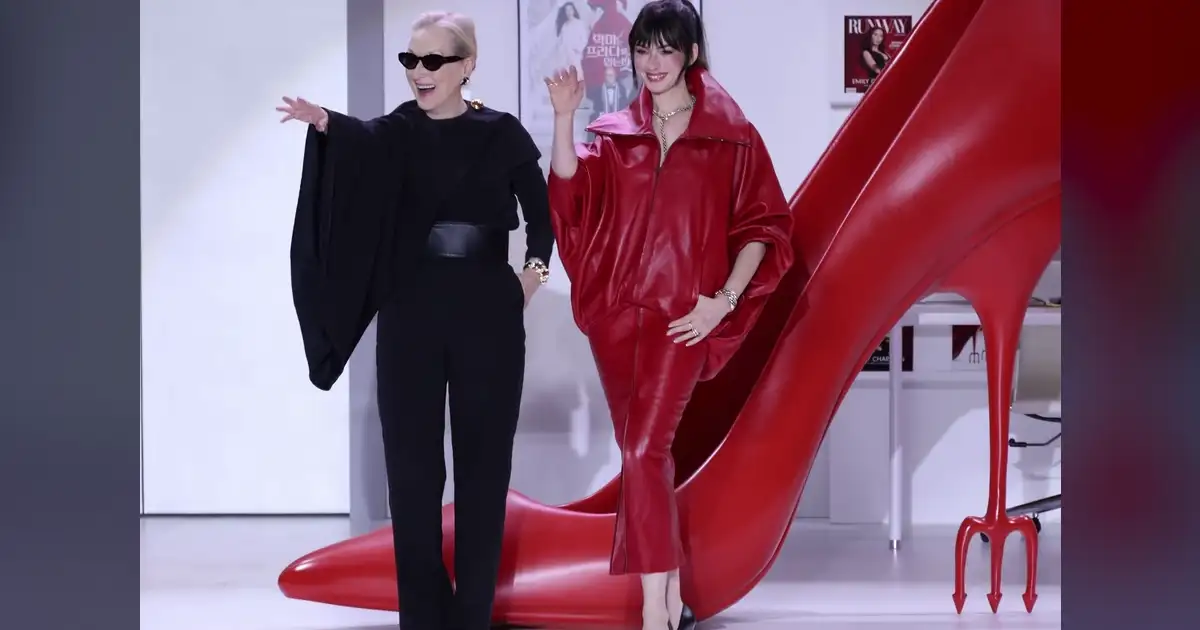

If the reviews for “Devil Wears Prada 2” were a garment, they would be a polyester knock-off, unraveling at the seams before it even hit the runway. The highly anticipated sequel has landed with a resounding, exquisitely tailored thud, echoing the spectacular, if entirely predictable, failures of its “Sex and the City” predecessors.
Hollywood’s insatiable appetite for nostalgia-fueled cash-grabs has, with a sickening predictability, once again proven its fatal flaw. This follow-up to the beloved 2006 classic, a film that once defined an era of ambition and sartorial savagery, has not merely stumbled; it has face-planted onto the red carpet, leaving critics and audiences alike to collectively wince in profound disappointment.

The Echo of Empty Nostalgia, or Why We Can’t Have Nice Things
The discussion around this cinematic misstep has exploded since April 29th, 2026, drawing immediate and unflattering parallels to “And Just Like That…”, the continuation of “Sex and the City”. Both projects promised a triumphant return to cherished characters, a comforting reunion with old friends. Both, however, ultimately delivered watered-down, uninspired versions of their former glory, leaving a bitter aftertaste of creative bankruptcy.
The original “Devil Wears Prada” was more than a film; it was a cultural phenomenon. It captured the cutthroat, glamorous, and often absurd world of high fashion with acerbic wit and truly iconic performances. Meryl Streep’s Miranda Priestly didn’t just become a character; she became a legend, a high priestess of executive froideur. Anne Hathaway’s Andy Sachs, the wide-eyed ingénue, resonated with countless young professionals navigating their own treacherous career paths, her journey a sharp, relatable commentary on ambition and compromise.
This sequel, by stark contrast, feels less like a cinematic endeavor and more like a cynical algorithm in motion. It trades genuine character evolution for a hollow replay of familiar beats, a desperate attempt to bottle lightning that has long since dissipated. The magic is gone, replaced by a dull shimmer. The bite, once so deliciously sharp, has been filed down to a harmless gumming.
Critics Performing Enthusiasm: A Peculiar Theatricality
What’s truly fascinating, and frankly, a little disturbing, is the critical reception itself. There’s a palpable disconnect between the visceral public sentiment and the carefully calibrated published reviews. Many critics appear to be performing enthusiasm, delivering lukewarm praise while subtly, almost apologetically, highlighting the film’s deep and undeniable flaws. It’s a peculiar theatricality, a dance around the obvious truth.
Online forums, from the sprawling discussions on Reddit to the rapid-fire condemnations on Twitter, are ablaze with frustrated fans. They are not merely disappointed; they are enraged, calling out what they perceive as “manufactured positivity” and “astroturfed enthusiasm.” The consensus is damning: the film is widely described as a “cynical nostalgia cash-grab,” a sentiment that has become a depressingly familiar refrain for Hollywood reboots.
One particular LA Times review, with a rare flash of candor, caught widespread attention. It boldly compared the film’s content strategy to “Shein knock-offs”—a scathing indictment that suggests even critics, despite their professional obligations, are reading the room. Yet, astonishingly, many still offered lukewarm praise, a desperate attempt to prop up a floundering industry by pretending a fast-fashion imitation is haute couture.
The irony is not lost: an industry struggling for relevance churns out a film about a dying magazine empire, using it as a desperate gamble to generate “hot takes about hot takes.” The premiere reactions were a masterclass in curated illusion, with paid influencers and studio plants praising a film that, even its most generous defenders admitted, utterly lacked the original’s “venom.”
“Critics admit the film is ‘featherweight,’ lacks bite, and softens Miranda’s cruelty—the very thing that made the original compelling. Yet they still recommend it.”
This quote perfectly encapsulates the bewildering dilemma. How can a film be lauded, however faintly, when its core elements are so fundamentally compromised? The softening of Miranda Priestly’s legendary cruelty isn’t merely a misstep; it’s an unforgivable act of narrative vandalism. That sharp, unyielding edge was the entire point of the character, the very engine that drove the narrative and made the original so compelling. To defang Miranda is to gut the film, leaving a hollow, toothless echo.
The True Cost of Compromise: Hollywood’s Creative Cowardice
The original “Devil Wears Prada” offered a stinging, albeit exquisitely glamorous, critique of power dynamics, ambition’s thorny path, and the often-toxic demands of the fashion world. Miranda was a villain, yes, but a captivating, complex force of nature who pushed Andy to her absolute limits, forcing uncomfortable truths to the surface. This sequel, in its craven desire to please, seems to actively shy away from that discomfort, opting for saccharine redemption arcs that betray the very essence of its characters.
The LA Times critic, in a moment of piercing insight, directly questioned whether audiences are endorsing or critiquing wealth inequality by engaging with such a film. Then, with a shrug that spoke volumes, they reviewed the film positively anyway. This internal conflict, this journalistic cognitive dissonance, speaks volumes about the compromises made, the pressure to deliver a palatable, unchallenging product, even if it means sacrificing artistic integrity on the altar of marketability.
This isn’t just a bad movie; it’s a glaring symptom of a larger, more insidious problem plaguing Hollywood. Studios, paralyzed by a terror of originality, cling desperately to established intellectual property, hoping to milk every last drop of goodwill from beloved franchises. The result is often disastrous, alienating the very fans they are so clumsily trying to attract. It’s creative cowardice masquerading as strategic planning.
The “why” behind these serial failures is agonizingly clear: a profound lack of bold vision, an overreliance on focus groups and market research, and a suffocating unwillingness to take genuine risks. The “what happens next” is an accelerating spiral of audience cynicism, leading to a further erosion of trust in major studios. Moviegoers are not merely tired; they are actively resentful of being served reheated, bland leftovers, repeatedly told they should be grateful for the scraps.
Beyond the Runway: A Dying Industry’s Reflection
The irony is profound, almost Shakespearean. A film ostensibly about the struggles of a print magazine empire now serves as a chilling reflection of the struggles of the film industry itself. Both are fighting for relevance, both are grasping at straws, both are failing to innovate, choosing instead to lean on past glories and failing to forge new, compelling narratives. It’s a mirror reflecting a mutually assured creative destruction.
This isn’t merely “Sex and the City 2” bad; it’s arguably worse. That film, for all its flaws, at least retained some semblance of its original cast’s chemistry, a faint flicker of the camaraderie that once charmed millions. This sequel, however, feels utterly devoid of the spark, the wit, and the emotional depth that elevated the first film to classic status. It’s not just a shadow of its former self; it’s a poorly photoshopped, low-resolution JPEG of a shadow.
The fashion world itself has evolved dramatically since 2006. Social media, the rise of fast fashion empires, and a new, more diverse generation of designers have completely reshaped the landscape. A true sequel, one with vision and courage, would have examined these seismic shifts, offering fresh insights and biting commentary. Instead, we were given a rehash, a pale imitation that felt utterly disconnected from the vibrant, ever-changing industry it purported to portray.
It’s time Hollywood learned its lesson, and quickly. Nostalgia can be a powerful, magnetic force, capable of drawing audiences back into familiar worlds. But it must be paired with genuine creativity, a bold vision, and an unwavering respect for the original material’s integrity. Otherwise, it simply becomes a melancholic reminder of what once was, a stark and undeniable example of creative bankruptcy. Ultimately, the well, it seems, is dry.
The verdict is in, and it’s delivered with the precision of a perfectly aimed stiletto heel: “Devil Wears Prada 2” is not just a misfire; it’s a catastrophic fashion faux pas that Hollywood can ill afford. It serves as a stark warning: studios must cease their relentless raiding of their own archives for easy wins. Audiences deserve better, and the legacy of truly great films deserves far more than this lukewarm, creatively bereft resurrection. Let this be the last, ill-advised sequel to a film that truly understood the assignment.
Source: Google News