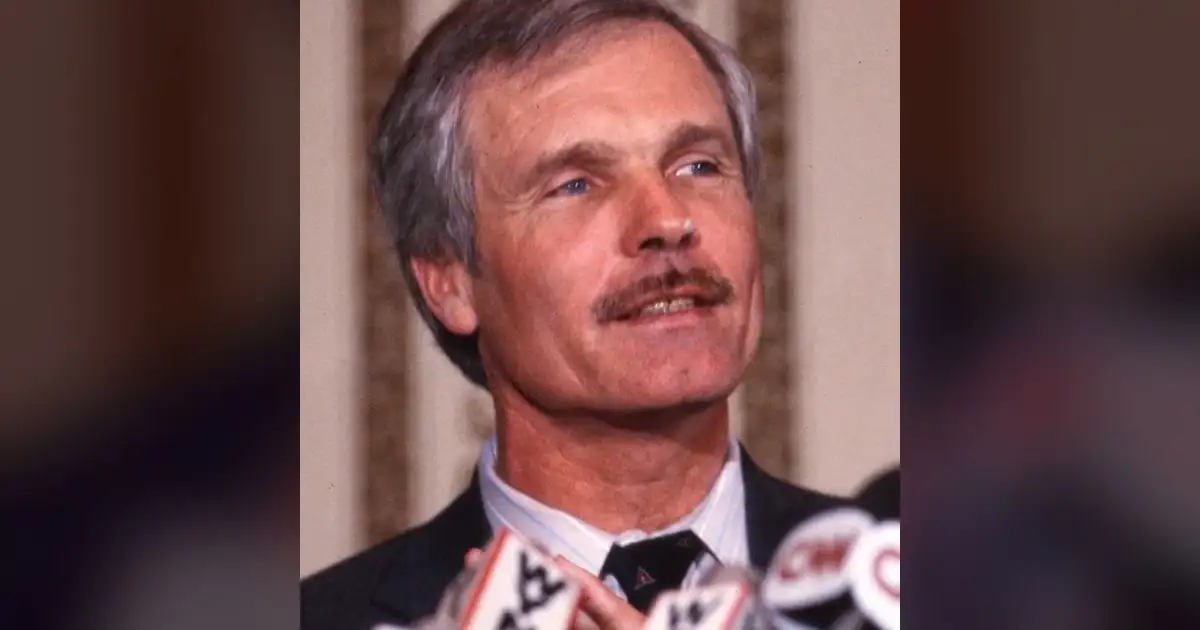

The world just lost Ted Turner, a titan whose very existence challenged the status quo, not just in media, but in how we define global responsibility. His passing at 87 isn’t merely the end of a life; it’s the closing chapter of an era he single-handedly authored, one marked by audacious vision, unyielding ambition, and a profound, often contradictory, impact on our planet.
The titan of cable news and environmentalism passed away at 87 years old. His cause of death is linked to Lewy Body Dementia (LBD). Turner publicly disclosed his battle with the progressive neurological disorder in 2018, bravely stepping into the spotlight to discuss a condition often shrouded in silence.
This revelation wasn’t just a personal update; it was a powerful act of advocacy. It thrust a complex disease into public consciousness, prompting crucial conversations about neurological health and aging leadership.
A Legacy Forged in Fire
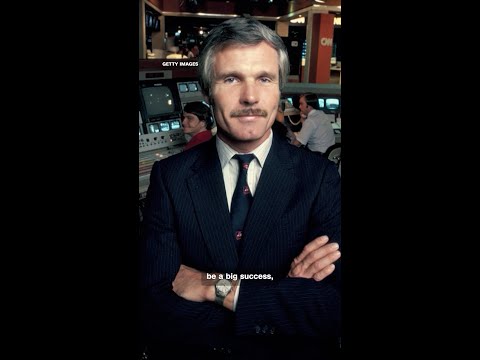
Turner didn’t just impact media; he fundamentally reshaped its very architecture. In 1980, against a chorus of skeptics who dismissed the notion of a 24-hour news cycle as an expensive folly, he launched CNN.
This wasn’t merely the creation of the world’s first round-the-clock news network. It unleashed a torrent of real-time information that fundamentally altered global consciousness, setting the stage for our always-on digital age. Imagine a world without instant updates, without live coverage of unfolding crises – Turner shattered that reality, forcing traditional broadcasters to adapt or be left behind.
His aggressive business tactics were legendary, often described as a ‘take no prisoners’ approach that built a sprawling media empire from scratch. He was the quintessential disruptor, relentlessly pushing technological and commercial boundaries. Turner’s audacious vision didn’t just change the game for broadcasters; he rewrote the entire playbook, demonstrating how niche programming and global reach could coalesce into unprecedented power.
Beyond the groundbreaking news venture, Turner founded the Turner Broadcasting System, a conglomerate that grew to include iconic channels like TBS, TNT, and Cartoon Network. These ventures cemented his status as a household name, not just for his business acumen, but for a larger-than-life personality that was as unpredictable as it was charismatic. He wasn’t just a CEO; he was a brand unto himself, a maverick who defied convention at every turn.
The Captain Planet Visionary
Yet, to pigeonhole Turner solely as a media baron misses a crucial, perhaps even more impactful, dimension of his legacy. He was a passionate, almost evangelical, environmentalist whose commitment to conservation was legendary.
Was he a benevolent capitalist, or a shrewd visionary playing the long game for planetary survival? Perhaps both.
Turner amassed an astonishing land portfolio, becoming one of the largest private landowners in North America, with holdings estimated at over two million acres across several states. These vast ranches, including significant portions of the American West, were not for profit or prestige, but dedicated sanctuaries for preserving wildlife and restoring fragile ecosystems. This commitment to safeguarding nature stood in stark, fascinating contrast to his often-cutthroat business image, revealing a man deeply conflicted yet profoundly dedicated to a future beyond quarterly earnings.
In a move that redefined modern philanthropy, Turner also founded the United Nations Foundation in 1998, pledging an unprecedented $1 billion to support UN causes. This wasn’t just a donation; it was a strategic investment designed to empower global institutions and tackle humanity’s most pressing challenges, from climate change to disease eradication. This monumental act didn’t just reshape global philanthropy; it set a new benchmark for how private wealth could be leveraged for public good on an international scale.
His foresight extended even to the existential threats facing humanity. In 2001, he co-founded the Nuclear Threat Initiative (NTI) with former U.S. Senator Sam Nunn. This organization works tirelessly to reduce nuclear, biological, and chemical dangers, advocating for policies and technologies that safeguard against weapons of mass destruction.
Turner’s insistence on addressing these ‘unthinkable’ threats underscores a critical understanding: true power isn’t just about building empires, but about safeguarding humanity itself. His impact on global security is, without hyperbole, profound.
LBD: A Battle Fought in Public
Turner’s decision to go public with his Lewy Body Dementia diagnosis in 2018 was nothing short of groundbreaking. In an era where public figures often guard their health meticulously, his transparency brought much-needed attention to this often-misunderstood neurological disease. His openness didn’t just spark public awareness; it ignited a global conversation, destigmatizing a condition that affects millions and inspiring countless individuals and families grappling with similar challenges.
A November 2025 feature in the prestigious Business & Philanthropy Quarterly highlighted his remarkable resilience, detailing his ongoing health journey with an unflinching gaze. The article emphasized how, even as LBD progressed, Turner’s foundational vision continued to drive his philanthropic and environmental initiatives, reflecting the enduring power of his initial convictions.
Beyond personal courage, his public struggle profoundly reshaped conversations about leadership in the 21st century. Experts in corporate governance, like Dr. Elaine Chen, a senior fellow at the Wharton School, lauded his transparency as a paradigm shift.
“Turner’s candor,” Dr. Chen stated in a recent Reuters interview, “offered a masterclass in responsible leadership, contrasting sharply with the historical secrecy that often surrounded the health of powerful figures. It forced boards to reconsider how they approach succession planning and ethical disclosure.”
This unprecedented approach didn’t just innovate discussions on succession planning; it influenced the very longevity and ethical frameworks of entrepreneurial ventures. Turner’s example demonstrated not only how to manage a public health battle with immense grace but also how to ensure the enduring vitality of one’s life’s work beyond personal capacity.
The Health Innovation Review in December 2025 reported a significant surge in funding for neurological research, citing a 15% increase in private and public investment over the previous year. High-profile cases like Turner’s were explicitly credited with spurring this renewed interest, particularly in areas like biomarker discovery and advanced diagnostics for LBD. This surge holds immense implications for the future of healthcare technology, promising breakthroughs that could one day mitigate the suffering caused by such debilitating conditions.
The Enduring Echo of a Giant
Turner was a builder, but crucially, he was also an architect of enduring institutions. His initiatives, particularly the United Nations Foundation and NTI, were meticulously structured for the long haul. Designed with robust governance models and independent operational frameworks, these organizations are engineered to ensure their continued impact far beyond Turner’s daily involvement, demonstrating his foresight in creating self-sustaining engines of change.
His monumental conservation efforts also continue to thrive, carefully managed by dedicated teams. The Environmental Business Journal reported in January 2026 that his private landholdings remain vital havens for endangered species and models for sustainable ranching practices. His legacy isn’t just etched into the annals of media history; it’s literally woven into the fabric of the American landscape he so passionately protected, a green reflection of a vision that transcended profit.
The immediate outpouring across digital platforms following his death vividly illustrates his complex, often polarizing, public image. While many offered genuine tributes to a visionary and philanthropist, others viewed mainstream obituaries with a degree of cynicism, recalling the sharp elbows and controversial statements that often accompanied his rise.
Indeed, his aggressive, sometimes ruthless, business past often risks being overshadowed by the sheer scale of his later philanthropy. This dynamic highlights a common, yet crucial, tension in how society chooses to remember powerful figures: do we reconcile the contradictions, or simply elevate the more palatable aspects of their story?
Ted Turner was, without question, a force of nature – a man who built empires with one hand and gave away fortunes with the other. His life was not merely a story of success, but a masterclass in contradiction, ambition, and unparalleled impact.
While his passing undoubtedly leaves a profound void in the landscapes of media, philanthropy, and global security, his institutions and audacious ideas are built to endure, challenging future generations to grapple with the complexities of power, purpose, and planetary stewardship. What will be the next Ted Turner, and how will their legacy be shaped by the precedents he so boldly set?
Photo: Library of Congress: P&P
Source: Google News