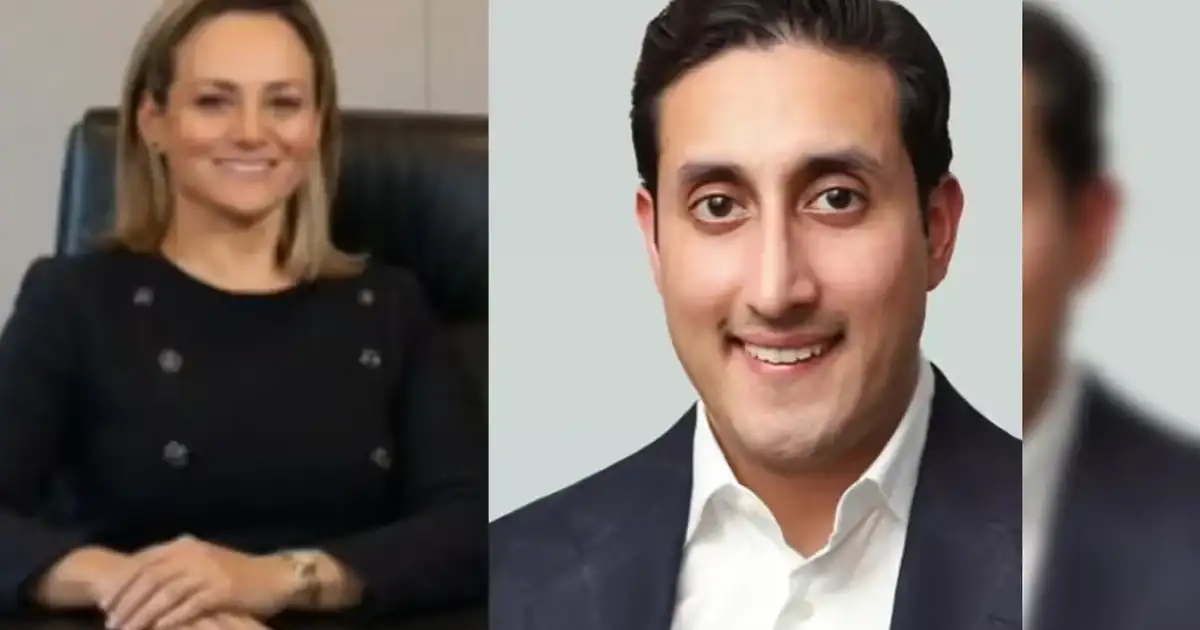

The JP Morgan ‘sex slave’ court case has erupted, peeling back the veneer of corporate respectability to reveal a shocking new layer of alleged depravity. New witnesses have come forward, claiming bank boss Lorna Hajdini was ‘completely naked’ and explicitly invited a male colleague to join her and another individual. This fresh testimony injects a volatile new twist into an already scandalous lawsuit, painting a stark, unflattering portrait of alleged corporate depravity at the highest echelons of finance.
Former banker Chirayu Rana refiled his explosive lawsuit against JP Morgan, alleging a predatory work environment where he was a victim of sexual coercion. The core of his accusation revolves around a ‘sex slave’ dynamic that he claims permeated his time at the prestigious financial institution. These latest revelations intensify the already searing scrutiny on Wall Street culture, forcing a reckoning with the uncomfortable truths whispered behind closed doors.

Crucially, two new witnesses have now emerged, their accounts bolstering Rana’s disturbing claims and directly contradicting the carefully constructed narrative pushed by Hajdini’s staunch defenders. Their testimony isn’t just corroborative; it’s a direct challenge to the institutional silence that often protects the powerful.
Wall Street’s Naked Truths Emerge
The new witnesses detail scenes that would shock even the most jaded observer of corporate intrigue. They allege seeing Lorna Hajdini completely naked, not in a private setting, but in a context that blurs the lines between professional and profoundly inappropriate. One witness claims Hajdini explicitly propositioned Rana, inviting him to join her in what was described as a “threesome pitch.” The direct quote, now central to the prosecution’s case, is chilling:
“She was completely naked and asked me to join them.”
Adding to the degradation, Hajdini allegedly declared, “I own you, Brownie.” This phrase, if true, speaks volumes about the alleged power imbalance, suggesting a deeply unsettling dynamic of ownership and control. It’s a stark reminder that in certain corporate corridors, the lines between professional authority and personal dominion can become dangerously blurred.
These allegations extend far beyond mere sexual misconduct; they are fundamentally about power—the raw, unchecked power wielded by those at the top. They expose a dark underbelly of corporate control, a world where the rules that govern ordinary citizens often seem not to apply. The financial elite, perpetually convinced of its own untouchability, operates with its own set of unspoken codes. This case, however, threatens to pull back that curtain, revealing a culture many fear is not just prevalent but deeply entrenched in corporate America. How many other such stories remain buried, victims of silence and intimidation?
The Corporate Machine Fights Back
In response to these grave accusations, Hajdini’s colleagues have predictably circled the wagons, rushing to defend the female bank boss. This is the classic corporate playbook: when a high-ranking executive faces scandal, the institution mobilizes its resources to protect its own, often at the expense of truth or justice. Online commentators, ever quick to dissect such maneuvers, have not held back.
“Colleagues vouching for her? This incel’s revenge porn lawsuit reeks of HR nightmare fuel.”
— Instagram user
This immediate polarization highlights the deep-seated cynicism that now pervades public discourse regarding corporate scandals. The defense’s primary aim, as old as the hills, is to discredit Rana, painting him as a disgruntled employee with an axe to grind. This tactic, designed to protect the powerful and deflect scrutiny, has historically been effective.
But the emergence of new witness testimony significantly complicates this well-worn defense. It adds concrete, disturbing details to Rana’s claims, making it exponentially harder to dismiss his allegations outright as mere fabrication. The stakes for JP Morgan are immense; a financial institution of its stature cannot afford this type of scandal. The potential damage to its reputation, its stock price, and its ability to attract top talent could be catastrophic. This isn’t just about one executive; it’s about the perceived integrity of an entire global financial behemoth. The corporate machine is fighting back, but this time, the gears might be grinding against a formidable and undeniable truth.
Internet’s Jury: Grift or Grievance?
The internet, as it invariably does, has seized upon this story, transforming it into a brutal and deeply divided online discourse. This digital arena reflects a profound cynicism about both sides, a pervasive distrust that permeates contemporary society. Many are openly skeptical of Rana’s motives, pointing to past controversies to undermine his credibility.
“Dude faked his dad’s death for paid leave? That’s not victimhood, that’s felony fanfic.”
— Reddit user
This accusation, whether substantiated or not, is gaining serious traction in the court of public opinion. Other online observers are quick to label Rana’s lawsuit a “classic grift,” citing his alleged refusal of a substantial $1 million settlement from JP Morgan. The speculation is rife:
“JP Morgan dangled $1M, he said no for clout—classic grift.”
— Online user
This refusal raises more than just eyebrows; it prompts a fundamental question: Why turn down a million dollars? Some argue it unequivocally demonstrates a genuine pursuit of justice, a refusal to be silenced by a payout. Others, however, view it as a calculated play for greater financial gain, public attention, or even viral fame. The “performance art for TikTok trials” theory, gaining currency among cynical commentators, suggests a meticulously calculated move for notoriety. In this digital age, the lines between genuine victimhood and opportunistic maneuvering blur with alarming speed, leaving the public to sift through a fog of conflicting narratives.
Conversely, a significant segment of the online community questions the glaring gender dynamics at play. They ask, with pointed cynicism:
“If roles reversed, he’d be canceled eternally. Selective MeToo much?”
— Cynical commentator
This critique highlights perceived double standards and the complexities of power dynamics in the #MeToo era. The internet’s jury remains fiercely divided, weighing alleged exploitation against potential opportunism, with both narratives revealing a profound, unsettling distrust in elite institutions and the mechanisms of justice itself.
The Ugly Side of Power and Money
This entire saga, with its lurid details and high-stakes accusations, exposes a fundamental, uncomfortable truth about Washington D.C. and Wall Street. These bastions of power, ostensibly separate, are often inextricably intertwined, operating on alarmingly similar principles. It is, at its core, about who has leverage, who can control the narrative, and whose word holds more inherent weight in the corridors of influence.
The alleged actions of Lorna Hajdini, if proven true, speak to an egregious abuse of power, a grotesque distortion of professional authority. The swift, coordinated defense by her colleagues, a predictable but no less disturbing maneuver, speaks to the insidious nature of institutional protection, where loyalty to the hierarchy often trumps ethical considerations. And the public reaction, a cacophony of skepticism and outrage, reflects a deep-seated, corrosive distrust of both the financial elite and the systems designed to hold them accountable.
This is not merely a personal dispute; it is a jarring window into the cesspool of unchecked power that festers within the financial elite. The “swamp” that so many decry extends far beyond the Beltway, reaching deep into the gleaming towers of corporate America. The average American taxpayer, far removed from these gilded cages, ultimately pays the price—not just for legal battles and corporate bailouts, but for the moral decay that erodes the very foundations of trust in our institutions. This case is but another symptom of a systemic illness.
The alleged details are shocking, but the implications for corporate accountability are even more so. This case will resonate far beyond the courthouse walls, forcing us to ask tough, uncomfortable questions: How truly transparent are these powerful institutions? Who, if anyone, truly holds them accountable? And what happens when the very structures meant to ensure ethical conduct instead become shields for the powerful? The answers, more often than not, are profoundly disturbing.
This saga is far from over. It will continue to unravel, peeling back layers of obfuscation and revealing the ugly side of unchecked authority and the corrosive influence of vast wealth. The public deserves to know the full truth, and more importantly, they deserve to see justice served, not merely for the individuals involved, but for the integrity of the system itself. This case stands as a stark, indelible reminder of who truly benefits when power is allowed to operate without genuine oversight, and who ultimately pays the price.
Source: Google News