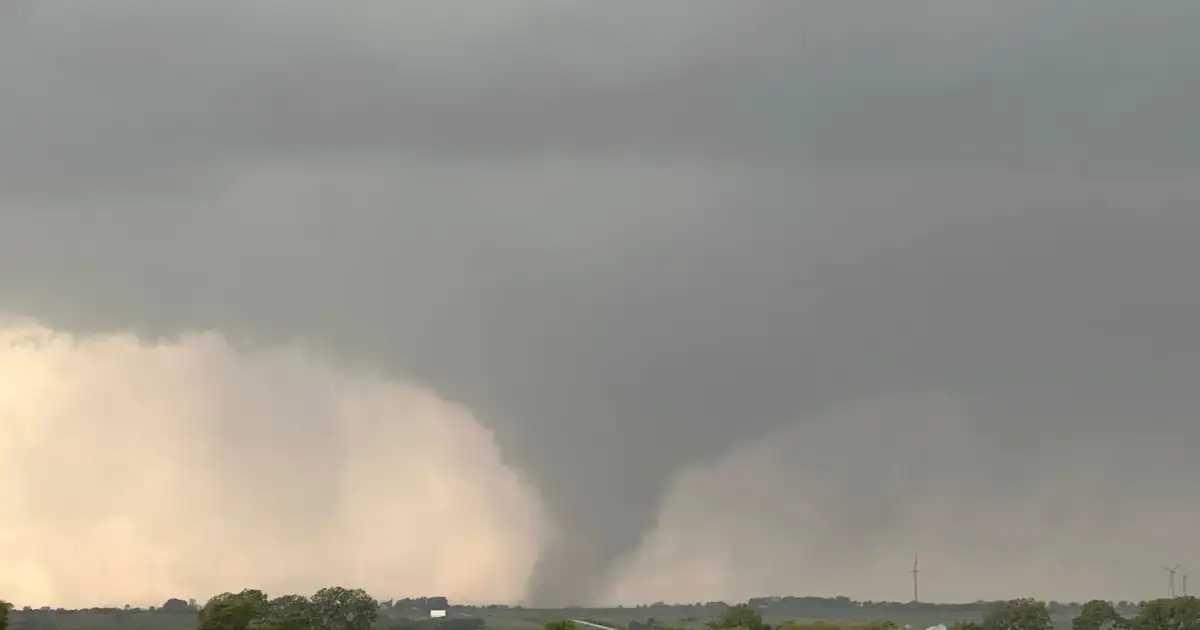

Mississippi just took a catastrophic blindside hit. An EF-3 tornado, a relentless force of nature, ripped through its heartland in the dead of night, leaving a trail of devastation that feels less like a weather event and more like a full-scale assault on communities already fighting in the red zone. With seventeen people injured, three clinging to life, and hundreds displaced, this isn’t just a grim statistic; it’s a gut punch to the soul of the state.
This EF-3 beast exploded onto the scene around 1:30 AM CDT on May 6, 2026. It carved a brutal path across Rankin, Scott, and Newton counties. The storm intensified rapidly despite warnings, catching sleeping residents completely off guard.

This was a blindside hit no one saw coming. The recovery effort now begins with picking up the pieces from this devastating play.
The Damage Report: A Crushing Blow
The numbers don’t lie, and they are grim. Seventeen people are injured, three fighting for their lives in critical condition. Dozens of homes are completely gone, wiped off the map as if they never existed.
Hundreds more are severely damaged, their structures twisted and torn. A lumber mill and vital farm facilities were flattened, a pancake block that will cost livelihoods and community infrastructure.
- 17 individuals injured, 3 in critical condition – a stark reminder of the human cost.
- Dozens of homes destroyed, hundreds damaged – entire neighborhoods erased.
- 15,000 customers lost power at its peak – plunged into darkness and uncertainty.
- Approximately 7,000 customers still without power – a lingering, frustrating blackout.
- 250-300 people displaced from their homes – their lives uprooted in an instant.
Emergency crews, the first responders in this brutal game, worked non-stop, transitioning from search-and-rescue to recovery. The Mississippi Emergency Management Agency (MEMA) coordinates the entire playbook, a complex strategy to bring order from chaos.
Shelters opened immediately in Forest and Morton, offering temporary housing and vital aid. But make no mistake, this is merely the opening drive.
“It sounded like a freight train coming through my living room,” recounted Martha Jenkins, her voice still raw with terror. Her Scott County home, once a sanctuary, lost its entire roof. “We barely made it to the closet before everything started shaking apart. I thought that was it.”
That’s the kind of primal terror no one forgets. It’s a memory burned into the minds of survivors, a scar that will last long after the debris is cleared. They lost everything but their lives, and in the face of such overwhelming destruction, that’s the only real victory to claim.
The Federal Aid Playbook: Time to Execute
Now, the clock is ticking, and the critical question isn’t just if federal aid will arrive, but how fast and how comprehensively it will cover these battered residents. Governor Tate Reeves is already on the horn, working the phones, pushing hard to secure federal backup. This isn’t just a request; it’s the crucial next play, a Hail Mary pass for the state’s recovery.
Governor Reeves will formally request a Presidential Disaster Declaration, and he needs to make it happen fast. This declaration is the key that unlocks the federal vault, allowing agencies like FEMA to step onto the field. They bring serious resources to the table, and Mississippi needs every single one of them to rebuild from this devastating hit.
FEMA’s Game Plan: More Than Just a Band-Aid
If that declaration gets approved – and it absolutely must – FEMA’s Individual Assistance program kicks in. This isn’t a blank check, nor is it a replacement for personal responsibility. But it is absolutely vital financial aid.
It helps with temporary housing, home repairs, and covers serious disaster-related needs – the kind of critical gaps insurance often misses. It’s the safety net when everything else has been ripped away.
The Small Business Administration (SBA) also has a crucial role to play, offering low-interest disaster loans. These loans are a lifeline for homeowners, renters, and businesses, covering repairs and property replacement. It’s another essential piece of the recovery puzzle, but these mechanisms can’t move at the speed of bureaucracy; they need to move at the speed of human suffering.
“Our teams have been working non-stop since the early hours,” Scott County Sheriff Mike Thompson stated, his voice reflecting the exhaustion and resolve of his deputies. “The coordination between state and local agencies has been exemplary, but the road to recovery will be long, arduous, and demand unwavering commitment.”
Sheriff Thompson’s assessment is brutally honest. This isn’t a quick fix, a simple two-minute drill.
Initial emergency aid like shelters and food is immediate, but full financial assistance takes time. Weeks, even months, can pass.
Bureaucracy, unfortunately, moves at its own glacial pace. That’s a brutal truth for people who have nothing left but the clothes on their backs.
Insurance vs. Federal Dollars: Know Your Defense
Federal aid is a supplement, not a replacement. It typically doesn’t cover losses already paid by insurance. This lays bare the absolute necessity of robust homeowner’s insurance.
It’s the first line of defense against Mother Nature’s fury. Federal aid is the backup plan, the relief pitcher called in when the starter gets shelled. Without that initial coverage, the road ahead is exponentially harder.
The estimated property damage is already in the tens of millions of dollars, and that number will undoubtedly climb as assessments continue. Agricultural losses are also staggering.
Farmers just took a massive hit to their fields and equipment, their livelihoods on the line. This isn’t just property damage; it’s an economic blow that will ripple through these rural communities for years.
Lessons from the Past: A Recurring Nightmare
Mississippi knows this drill all too well. It sits squarely in “Dixie Alley,” a region slammed by severe weather every spring, year after year.
Just three years ago, the town of Rolling Fork, Mississippi, was virtually erased by an EF-4 tornado, killing 17 people in March 2023. That was a catastrophic blow, a stark warning of these storms’ power.
That horrific event exposed the profound vulnerability of rural communities and highlighted the immense challenges of rebuilding. The state has invested in better warning systems since then, trying to outsmart Mother Nature. But she still throws curveballs, and this latest tornado is another stark, painful reminder that preparedness can only do so much against such raw power.
“Our hearts go out to all Mississippians affected by last night’s devastating storms,” Governor Tate Reeves said in a press conference. “We are mobilizing every available state resource to assist with recovery, and we will not rest until our communities are on the path to rebuilding stronger than before.”
The governor is pledging full state resources and calling on federal partners. The hope is to rebuild stronger, to turn this devastating loss into an opportunity.
But for many, the road is long, a grueling marathon. They face months, even years, of struggle.
Local economies, already fragile, will feel the pinch deeply. This isn’t just about brick and mortar; it’s about the economic lifeblood of entire towns.
Poverty rates in these areas are often high. Many folks were already struggling to make ends meet before this storm hit. This tornado just made a tough situation exponentially harder, pushing families to the brink.
It’s a gut-wrenching reality. The question isn’t just about money; it’s about dignity. It’s about getting people back on their feet, restoring their sense of security and future.
The Long Haul Ahead: No Time
Photo: Jennifer Smits
Source: Google News