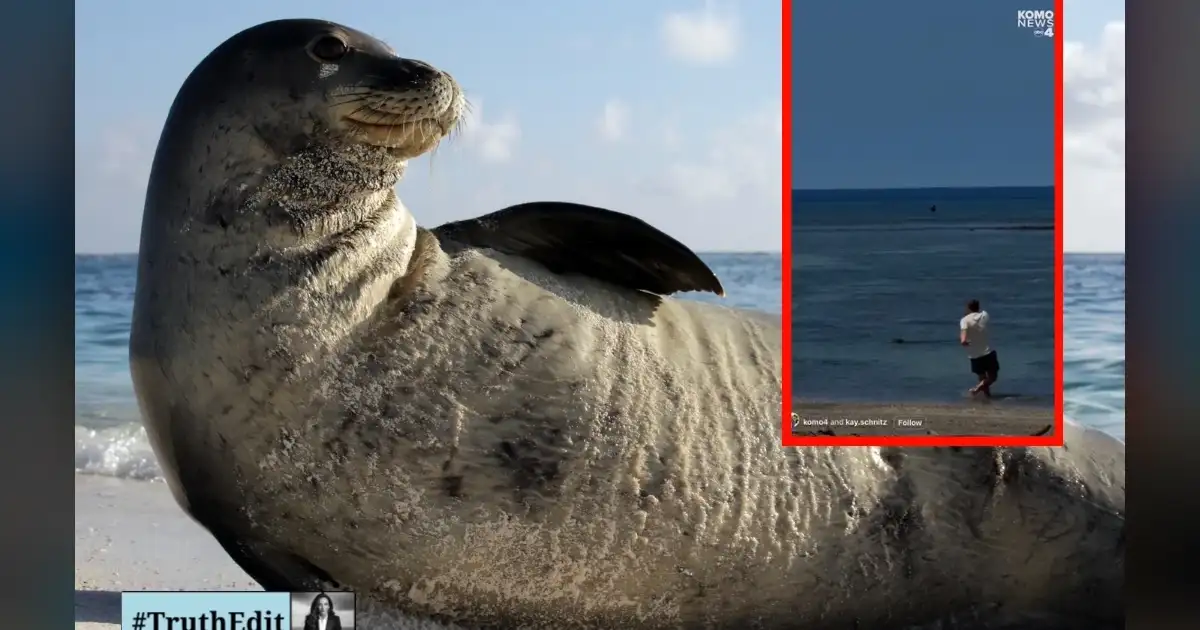

The image is sickening: a tourist, hands on a critically endangered Hawaiian monk seal, a creature whose very existence hangs by a thread. This isn’t just a misstep; it’s a brazen act of ecological vandalism that has ignited a firestorm of fury across the islands, exposing a dangerous contempt for Hawaii’s delicate ecosystems and its ironclad conservation laws.
This egregious interaction, now circulating widely online, involves a tourist touching one of the rarest marine mammals on Earth. The Hawaii Department of Land and Natural Resources (DLNR) doesn’t mince words: such acts are felonies, carrying potential penalties of up to 5 years in prison and a $10,000 fine. This isn’t a suggestion; it’s the law, reflecting the profound value placed on these irreplaceable animals.

Hawaii’s Environmental Battleground
This single act of arrogance isn’t an isolated incident; it’s a glaring symptom of a much deeper wound. Hawaii, a global biodiversity hotspot, is a constant battleground against environmental degradation.
As a science communicator, I see firsthand how our scientists and public health officials are stretched thin. They track daily threats that erode the very fabric of these islands. The relentless tide of tourism, while economically vital, often brings an unsustainable burden, pushing fragile ecosystems to their breaking point.
- Harmful Algal Blooms (HABs): These vibrant, yet deadly, blooms are not just an aesthetic blight; they’re ecological alarms. Fed by nutrient runoff from land sources – think wastewater, agricultural discharge, and unchecked urban development – they choke our coasts. The sheer volume of human activity, exacerbated by high tourist numbers, amplifies these inputs, turning pristine waters into toxic soups.
- Public Health Risks: The phycotoxins produced by HABs are insidious. They don’t just harm marine life; they bioaccumulate, moving up the food chain from plankton to fish, and eventually, to us. Humans exposed to these toxins can suffer severe skin irritation, respiratory issues, and even neurological symptoms. Public health advisories are no longer rare occurrences; they are a constant, unsettling drumbeat warning us away from our own shores.
- Coral Reef Degradation: Our coral reefs, the ‘rainforests of the sea’ and vital nurseries for countless species, are under siege. Many common sunscreens contain chemicals like oxybenzone and octinoxate – potent endocrine disruptors that bleach and kill coral. While Hawaii bravely banned these chemicals, enforcement is a relentless challenge. Every tourist who dips into our waters with these chemicals contributes to the slow, agonizing death of these irreplaceable ecosystems, which are critical for marine biodiversity and natural coastal protection.
- Mounting Waste Crisis: The sheer volume of waste generated by tourism is staggering. Our landfills are overflowing, and the insidious creep of plastics and non-biodegradable materials into our oceans is undeniable. Microplastics, tiny fragments of our discarded lives, now permeate our waters, entering the food web and ultimately threatening human health through the seafood we consume. This isn’t just an eyesore; it’s a systemic failure.
Each of these issues isn’t just eroding Hawaii’s breathtaking natural beauty; they are actively undermining the health and well-being of its residents and the very future of its unique biodiversity. The monk seal incident, therefore, isn’t just a headline; it’s a stark, visceral symbol of a much larger, ongoing ecological and cultural crisis that demands our immediate and unwavering attention.
The Clout-Chaser Mentality
The public reaction online has been, predictably, brutal. Locals are not just angry; they are absolutely livid, articulating a deep-seated frustration with what they term “malihini” arrogance – a destructive blend of tourist ignorance and entitlement.
As one Redditor powerfully articulated, “Another haole idiot risking extinction for likes.” This isn’t just about a single animal; it’s about the perceived commodification of an entire culture and ecosystem for fleeting digital validation.
The National Oceanic and Atmospheric Administration (NOAA) is currently investigating this egregious seal interaction. While past cases have resulted in civil penalties, typically ranging from $500 to $1,500, the consensus among residents is that these are nothing short of a “slap on the wrist.” For an act that could lead to a felony charge, such fines feel woefully inadequate, failing to deter the blatant disregard for protected species and local laws.
“We live with these seals daily; you’re desecrating our culture for the ‘gram.”
— A kama’aina (resident) on social media
The cynical undercurrent in public discourse even extends to speculation that the incident was staged – a desperate bid for viral attention. “Bet the seal’s a trained prop,” one X user quipped, while others labeled it “performance art for victim points.”
This profound distrust speaks volumes about the deep-seated frustration with a subset of tourist behavior. It seems driven by a relentless pursuit of online validation, often at the expense of genuine respect or understanding. It’s a disturbing trend where the natural world becomes merely a backdrop for a personal brand, devoid of its inherent value.
Reimagining Tourism: A Call to Action
While the tourist involved in this specific incident will undoubtedly face legal consequences once NOAA concludes its investigation, the critical question extends far beyond one individual. How can Hawaii genuinely protect its irreplaceable environment and unique culture from the relentless pressures it faces?
The cumulative impact of visitor actions imposes profound ecological burdens, threatening not just the land and sea, but also constituting a direct assault on the Hawaiian way of life – a culture deeply intertwined with ‘āina (land) and kai (sea). As scientists and public health officials, we are united in our demand for systemic change. We advocate not for an end to tourism, but for a radical shift towards genuinely sustainable models that prioritize ecological integrity and community well-being over sheer volume.
This demands comprehensive mitigation strategies. It means significant investment in advanced wastewater treatment facilities to halt nutrient runoff.
It requires visitors to arrive with not just a vacation itinerary, but a deep understanding of their environmental and cultural duties. Education, delivered proactively and consistently, is paramount – moving beyond mere bans to fostering a genuine sense of shared responsibility.
This incident is far more than a cautionary tale; it’s a blaring wake-up call. It’s time for every visitor to Hawaii to internalize the profound respect owed to this sacred land and its unique inhabitants.
It’s time for authorities to implement and enforce stronger penalties that truly reflect the gravity of these environmental crimes. The very health of Hawaii – its ecosystems, its people, its future – hinges on this collective transformation. We cannot afford to fail.
The question isn’t whether tourists can learn, but whether we, as a global community, are willing to enforce the lessons. The cycle of disrespect must end. Hawaii deserves nothing less than unwavering reverence and protection.
Source: Google News