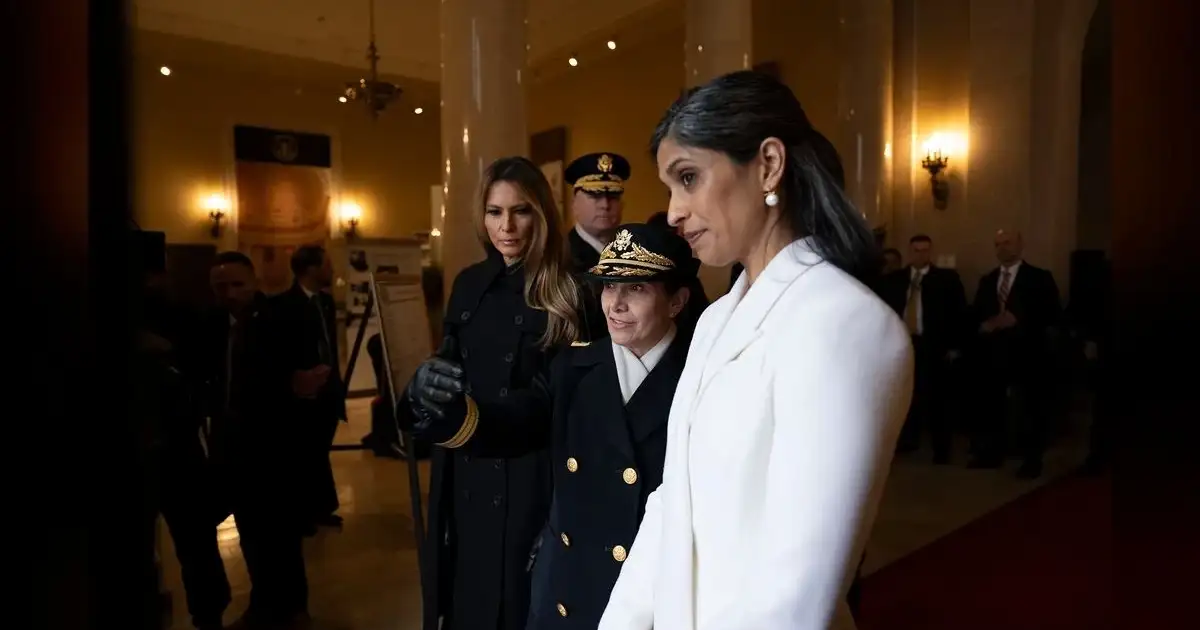

Vice President JD Vance just executed a political audible that’s sent shockwaves through Washington, revealing a deeply personal connection for his wife, Usha Vance, to the horrific San Diego mosque massacre. This isn’t just a political statement; it’s a game-changing play that fundamentally reshapes the field for the Trump administration’s number two.
The tragic event struck in late February 2026, when two teen gunmen opened fire at the Al-Farooq Islamic Center. Five innocent lives were lost, and many more were injured during evening prayers. It was a brutal attack, a direct hit on a sacred space that left the nation reeling.

Until now, Vance’s public game plan focused on broad condemnation and calls for unity. But on Monday, May 18, 2026, at a town hall in Columbus, Ohio, the VP unveiled a deeply personal truth.
He revealed Usha Vance’s maternal grandparents were founding members of the mosque back in the 1970s. Usha’s mother attended religious school there, and Usha herself spent considerable time visiting relatives in San Diego. This isn’t just a casual link; it’s a foundational family tie to the very heart of the tragedy.
A Personal Wound, A Political Blitz
For the Vances, this isn’t some abstract policy debate; it’s a gut-wrenching “personal wound,” as the Vice President himself declared.
The Al-Farooq Islamic Center was a place of comfort and community for Usha’s family for decades. To see it targeted by such senseless violence, it’s not abstract for us. It’s a personal wound, and our hearts ache for every family affected.
This revelation immediately changes the narrative, shifting the discussion from cold, calculated politics to raw, human grief. Vance’s team claims they held back to allow the community to mourn, to respect the sanctity of their loss. Now, they’re stepping forward, citing religious tolerance and healing as the driving force behind this disclosure. It’s a powerful move, designed to humanize a political figure often perceived as unyielding.
Supporters are already hailing this as a masterclass in empathy, a strategic play to connect with a broader electorate. They argue it shows Vance’s personal understanding of the Muslim American experience, painting him as a leader capable of transcending partisan divides and truly feeling the pain of diverse communities. It’s a potent message, especially for a politician eyeing the top spot.
But let’s be real: in politics, timing is everything, and this reveal is no accident. Commentators are already flagging this play for review, demanding to know: why now? Is it a calculated maneuver to broaden Vance’s appeal, to soften an image often associated with tough-on-immigration stances? This isn’t merely about shared grief; it’s about strategic positioning, about gaining crucial yardage on a crowded political field.
Even leaders within the Muslim American community have mixed reactions. Some welcome the solidarity, seeing it as a crucial step towards understanding. Imam Tariq Al-Hamad of the Al-Farooq Islamic Center acknowledged the historical ties, stating:
We appreciate Senator Vance and his family sharing their personal connection to our mosque. It reminds us that our community is diverse and our pain is shared. It is a powerful message of unity in a time of division.
Others, however, are looking for more than just shared sentiment. They demand concrete action, not just words. Policy changes, they insist, are paramount to addressing the rising tide of Islamophobia and protecting religious minorities. A personal story is compelling, but legislative muscle is what truly changes the game.
Vance’s New Playbook: Strategic Shifts and Future Drives
This personal connection will undoubtedly influence Vice President Vance’s political agenda, signaling a strategic shift that could redefine his public profile and his trajectory toward 2028.
Interfaith Dialogue: A New Offensive Strategy
Expect Vance to become a vocal advocate for interfaith dialogue, stepping into the huddle to champion unity. He will likely push for legislation promoting religious tolerance and understanding, including community-building initiatives designed to bridge divides across different faiths. This is a powerful offensive play, designed to score points on unity and demonstrate a capacity for nuanced leadership, appealing to a demographic often overlooked by his political allies.
Hate Crime Legislation: Strengthening the Defense
This tragedy hits home, literally, for the Vance family. Consequently, Vance will likely take a more prominent role in strengthening hate crime laws. He could push for increased funding for security measures, safeguarding religious institutions—including mosques—nationwide. This is a crucial defensive play, shoring up protections for vulnerable communities and signaling a commitment to justice that resonates far beyond his traditional base.
Immigration Rhetoric: A Tactical Adjustment
Vance has held firm on immigration in the past, often employing a hardline stance. However, this deeply personal story could necessitate a more nuanced approach. His rhetoric might emphasize welcoming legal immigrants while simultaneously stressing the imperative to protect all communities from violence, regardless of origin or faith. This isn’t a retreat, but a tactical adjustment, a strategic pivot to appeal to a wider audience without alienating his core supporters. It’s about finding the critical balance to maintain momentum.
Engaging Muslim American Groups: Building New Alliances
His office will undoubtedly initiate or expand engagement with Muslim American advocacy groups and community leaders. This outreach will seek direct input on policy, aiming to build new alliances and gain crucial trust. It’s a smart play, recognizing the power of direct communication and collaboration to forge new relationships and expand his political network, potentially opening doors that were previously closed.
2028 Ambitions: The Long Game for the White House
Let’s not forget the elephant in the room: 2028 presidential ambitions. For a potential contender, this revelation is pure gold. It broadens his appeal beyond his traditional base, demonstrating empathy and understanding across diverse communities – qualities absolutely crucial in a general election. This isn’t just a personal disclosure; it’s a calculated pitch for the White House, a strategic move to position himself as a unifier, a leader capable of transcending the culture wars. Vance is playing the long game, and this move puts him in a formidable field position.
The Ultimate Scoreboard: Impact and Intent
This isn’t just about personal grief; it’s about political capital, about leveraging a deeply personal family connection to a national tragedy. Vance is playing the long game here, positioning himself as a unifier, a leader who understands diverse pain, and a figure capable of bridging divides.
It’s a calculated move to expand his influence and reach, to add depth to his political persona. Is it genuine empathy? Perhaps. Is it a shrewd political maneuver designed to gain crucial yardage in the long game? Without a doubt.
In the ruthless arena of Washington, every personal story can become a powerful weapon. Vance just added a new, formidable asset to his arsenal, and the political scoreboard is about to reflect it. This is how you change the game.
Source: Google News