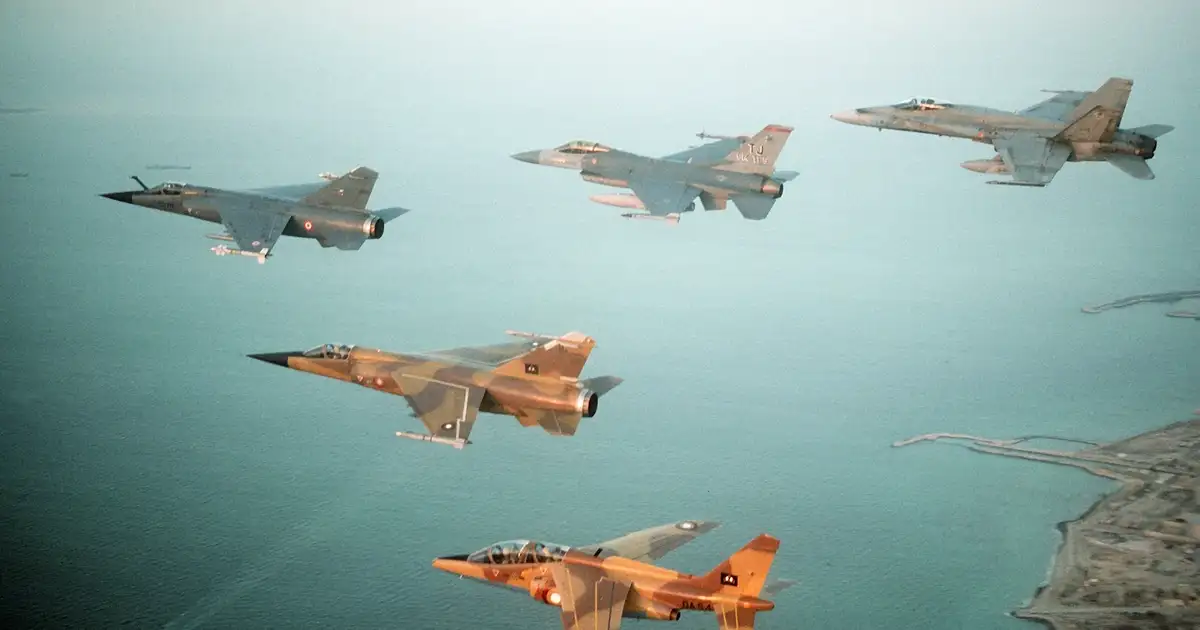

Washington D.C. didn’t just rattle on Sunday, June 4, 2023; it shuddered under the thunderous declaration of raw power. As F-16 fighter jets tore through the capital’s airspace, unleashing a terrifying sonic boom, the message was clear: this town operates on a different set of rules, where fear is a currency and the levers of control are held firmly by those in command. This wasn’t a mere training exercise or an unfortunate accident; it was a chilling, visceral reminder of who truly dictates the terms of alarm and security in the nation’s nerve center.
The incident plunged the nation’s capital into immediate pandemonium. Fighter jets, scrambled with urgent precision, sliced through the sky, their passage culminating in a deafening sonic boom that shattered the Sunday afternoon calm. Windows vibrated, nerves frayed, and a palpable wave of genuine terror rippled through residents. For hours, an unsettling fog of confusion and speculation hung heavy over the city, a testament to the government’s initial, telling silence.
The Roar Over the Swamp: A Capital Awakened
The noise itself was not merely loud; it was an assault. It ripped through what should have been a serene Sunday, transforming the capital into a jumpy, uncertain landscape for a brief, terrifying moment. Heads snapped skyward, eyes wide with questions. Had the ongoing US-Iran War, a conflict many in the Beltway often discuss with detached analysis, finally landed on their doorsteps? The absence of any immediate, coherent explanation from either the White House or the Pentagon only fueled the public’s anxiety, leaving a void that fear was all too eager to fill.
This was more than just a loud noise; it was a profound statement. An incredibly expensive, undeniably public declaration of an immediate, urgent response to some perceived threat. The critical question, the one whispered in hushed tones across the city, wasn’t just what the threat was, but why the immediate, official silence? Why the deliberate narrative vacuum?
Residents of the capital live under a perpetual shadow of political machinations and power plays. On this particular Sunday, that shadow took on a terrifyingly physical, undeniably loud form. It served as a stark, unforgettable reminder that D.C. is not merely a city of bureaucrats and think tanks; it is the command center of a global empire. And that empire, despite its rhetoric of protecting its citizens, possesses teeth sharp enough to cause widespread panic among its own populace, often without a word of explanation.
Behind the Boom: Unpacking the Official Narrative
When F-16 jets scramble over the capital, it is never, ever an accident. It signifies either a critical threat detected or a deliberate message being broadcast. Given the current geopolitical climate, with the US-Iran War raging in the Strait of Hormuz, the initial implications were chilling. Was an inbound threat intercepted? Or was this a calculated show of force, a flexing of muscles for an unseen audience?
The official explanation, when it finally trickled out, painted a picture of a far less dramatic, yet equally unsettling, scenario. According to NORAD, the jets were scrambled in response to a private plane, a Cessna Citation V with tail number N611VG, that had violated restricted airspace and become unresponsive. The Cessna, which had taken off from Elizabethton, Tennessee, and was en route to Long Island, New York, continued its erratic flight path before eventually crashing in Virginia, tragically killing all four occupants. This wasn’t an enemy missile; it was a civilian aircraft, its occupants incapacitated.
Yet, the initial, deafening lack of immediate, transparent communication from President Donald Trump’s administration is far more telling than the eventual, sanitized explanation. This White House, notoriously adept at controlling its own narrative, initially allowed a vacuum of information to fester, permitting speculation and fear to run rampant. It left ordinary Americans, particularly those directly impacted by the boom, to wonder what their government wasn’t telling them, fostering a deeper sense of distrust.
This sonic boom, regardless of its ultimate cause, serves as a stark, visceral reminder of the escalating tensions abroad and the ever-present readiness of the military apparatus. The war in the Strait of Hormuz might feel geographically distant to some, a mere headline in a newspaper, but a sonic boom over Washington D.C. makes the reality of global conflict and the machinery of national defense terrifyingly immediate. It forces everyone to confront the stakes, even when the threat is ultimately domestic and tragic.
The Shadow of Secrecy and Public Trust
The delay in providing a clear, concise explanation only deepens the public’s cynicism. Why allow widespread panic, fear, and speculation to grip a major metropolitan area when a simple, immediate statement could have mitigated much of it? The answer, for those of us who understand Washington, is rarely simple. It speaks to an instinct for control, a reluctance to appear anything less than perfectly in command, even at the cost of public reassurance. This incident, while resolved by an official statement, leaves a lingering scar on the fragile trust between the governed and their governors.
The Cost of Fear: Taxpayers on the Hook
Let’s talk brass tacks: the price tag. Scrambling F-16 fighter jets is not a trivial undertaking, financially or operationally. The cost of jet fuel alone, the maintenance requirements for these high-performance machines, the salaries of highly trained pilots on immediate standby — it all accumulates at an astonishing pace. Who, ultimately, pays for this sudden, terrifying display of air power, regardless of whether the threat was a rogue missile or an unresponsive private plane? The American taxpayer, of course. Every time the swamp decides to flex its formidable muscles, whether for legitimate defense or perceived posturing, it’s your wallet that takes the hit.
Was this necessary? Or was it a dramatic, perhaps even theatrical, overreaction designed to project an unshakeable image of strength and vigilance? Either way, the public deserves comprehensive answers. They deserve to know why their hard-earned tax dollars are being deployed in ways that induce terror in their own homes. They deserve the full, unvarnished story, not just the reverberating bang and a belated, minimalist explanation.
The defense industry, a perennial beneficiary of heightened alert, certainly isn’t complaining. More scrambles, more perceived threats, more “readiness” exercises — all translate directly into more funding. It’s a cynical, self-perpetuating cycle, but it is precisely how Washington operates. Fear, it turns out, is a highly marketable commodity, and it consistently sells lucrative contracts to the same entrenched players within the military-industrial complex.
This incident, tragic in its underlying cause, will undoubtedly be leveraged to justify increased defense spending. Expect the usual chorus of calls for new systems, more advanced jets, expanded surveillance capabilities, and larger budgets. The cycle of spending and fear feeds itself, an insatiable beast. The average American bears the financial burden, while the military-industrial complex continues to line its already bulging pockets, largely immune to public scrutiny.
What Happens Next: More Secrecy, More Spending, Lingering Doubts
Don’t hold your breath for a full, honest, and transparent accounting of every detail that triggered this event. Washington thrives on ambiguity, on the controlled release of information. The official line will likely remain vague, citing “national security concerns” or “operational protocols.” This is the perennial excuse, the convenient shield for keeping the public in the dark, a standard operating procedure in a town where information is power.
This incident, despite its tragic civilian origins, will undoubtedly be spun to suit political agendas. President Trump’s administration will likely frame it as a testament to their unwavering vigilance and unparalleled readiness, showcasing a robust defense capability. This narrative, emphasizing strength and decisive action, plays exceptionally well to a political base that values precisely those attributes, especially in the context of an ongoing war.
Meanwhile, the more uncomfortable details, the nuances of the response, and the true psychological and financial costs will likely remain buried. The precise chain of command, the decision-making process that led to the sonic boom, and the full extent of the public’s terror will be swept under the rug of official pronouncements. This is the enduring modus operandi of the swamp: create a spectacle, control the subsequent narrative, and then, invariably, make the public pay the price.
The average resident of D.C. will be left with the lingering memory of the earth-shaking boom and a persistent, unsettling question: What else are they not telling us? The answer, for anyone who truly understands the inner workings of this town, is almost always “a lot.”
This sonic boom wasn’t just noise; it was a loud, clear, and terrifying message from the establishment to the people. It screamed that they are in charge. They control the information, they harness the fear, and they manage your wallet. The terrifying roar that ripped across the capital is a stark, unforgettable reminder: in Washington, power always comes first, and the truth, more often than not, gets deliberately lost in the deafening noise.
Source: Google News