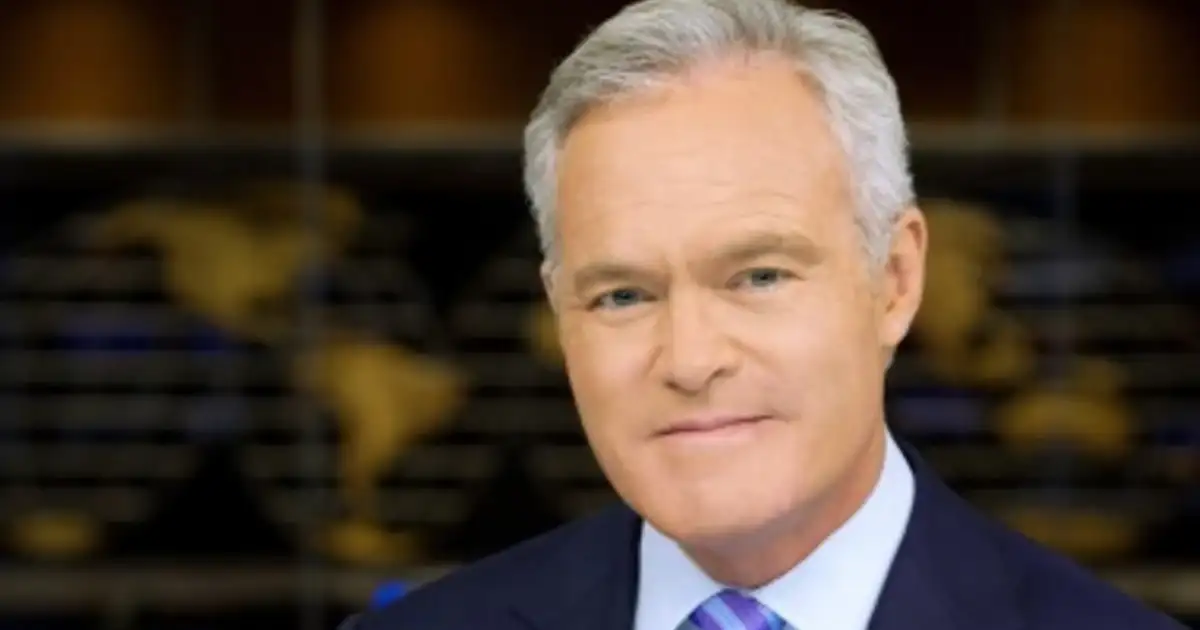

The axe has fallen at CBS, and its target, veteran 60 Minutes correspondent Scott Pelley, is now out. His departure, a direct consequence of a reportedly bitter blow-up with new network boss Bari Weiss, isn’t just a personnel change; it’s a brutal declaration of war on the old guard, signaling a ruthless, calculated shake-up at a struggling media giant.
Pelley, a formidable figure at 68, was reportedly shown the door late last week, the news ripping through media circles like wildfire. While CBS has maintained a public silence, the whispers from inside the Black Rock tower tell a far more dramatic tale. This isn’t just about a personality clash; it’s about the very soul of broadcast journalism, and Weiss, who seized the reins as President of CBS News in April 2026, has made her mission chillingly clear: fix the network’s hemorrhaging viewership, damn the traditions, and attract younger audiences at any cost.

Thorne’s Purge: The Old Guard Collides with New Power
For decades, Scott Pelley was the embodiment of the old guard – a gravitas-laden voice, a steady hand delivering the news, a respected fixture on the iconic 60 Minutes. His distinguished career, marked by a commitment to in-depth reporting and a certain unflappable demeanor, made him a journalistic institution. His abrupt departure isn’t merely an end to a long tenure; it’s a symbolic decapitation, a stark message to anyone clinging to the past.
Weiss’s arrival wasn’t just a change in leadership; it was an invasion. She was parachuted in with a mandate to modernize, to inject a raw, digital-first sensibility into a network perceived as ossified.
Such a seismic shift inevitably means clashing with established figures, those whose very identity is intertwined with the traditions Weiss is determined to dismantle.
The “bitter blow-up” wasn’t an anomaly; it was an inevitability. It was a head-on collision between two diametrically opposed visions for the future of news.
One side, represented by Pelley, championed the enduring values of broadcast journalism. The other, embodied by Weiss, demands immediate, often brutal, change to chase elusive ratings.
Pelley’s firing, therefore, is not a surprise to those who understand the cutthroat nature of corporate media. It is a powerful, unequivocal statement: She means business.
She is not afraid to make the kind of tough calls that leave careers shattered and reputations in tatters.
Her mandate is to save CBS News, and she will spare no individual career in pursuit of that objective. This isn’t about journalistic ethics; it’s about survival, pure and simple.
The Real Crisis: CBS News and the Shifting Sands of Media
Let’s be blunt: CBS News is in deep trouble. Viewership has plummeted, particularly among the coveted younger demographics.
This isn’t merely a CBS problem; it’s an existential crisis gripping the entire legacy media landscape.
The digital revolution, with its relentless pace and personalized feeds, has rendered traditional broadcast models increasingly irrelevant to a generation weaned on TikTok and streaming platforms.
Cable news channels, digital-native outlets, and social media platforms are siphoning off viewers at an alarming rate. The old models of appointment viewing, the stately pace of a Sunday night news magazine, are failing to resonate.
Networks like CBS are struggling, often clumsily, to adapt to a world where news breaks on X (formerly Twitter) and analysis is delivered in bite-sized videos.
Thorne’s task isn’t just immense; it’s Herculean. She must innovate with a speed and ruthlessness previously unseen, or watch the network sink further into irrelevance.
This means making unpopular decisions, alienating loyalists, and dismantling sacred cows.
The network desperately needs a jolt, a shock to the system to wake up its complacent corners. Pelley’s firing is precisely that jolt.
It sends an unmistakable message reverberating throughout the organization: adapt to Weiss’s new vision, or prepare for your own exit.
Loyalty, it seems, is a luxury CBS News can no longer afford.
Who Stands to Gain from the Fallout?
Pelley’s abrupt exit creates a massive, gaping void at 60 Minutes, a show synonymous with his presence. This isn’t just an open seat at the anchor desk; it’s an unprecedented opportunity for Weiss to fundamentally redefine the show, to stamp her authority on one of broadcast television’s most enduring institutions. Expect her to handpick a replacement, not based on experience alone, but on their ability to embody her vision for a modernized, youth-oriented news product.
She will almost certainly choose someone younger, someone whose style and sensibility are radically different from Pelley’s.
This new face will be tasked with appealing directly to the demographic CBS so desperately seeks. That demographic views traditional news with skepticism, if they view it at all.
This means a significant shift in tone, in content, and perhaps even in the very format of 60 Minutes.
We might see a greater emphasis on digital-first storytelling, more diverse voices, and a faster, more immediate pace designed to capture fleeting attention spans.
The network’s advertisers, the true arbiters of success in this brutal landscape, will undoubtedly profit from this move.
They demand eyeballs, fresh faces, and content that resonates with today’s audience, not yesterday’s.
This shake-up is, at its core, about financial viability, about the stark struggle for survival in a hyper-competitive market.
She is making calculated, cold-blooded decisions to boost the bottom line, betting that a younger, more dynamic face will ultimately translate into higher ratings and, crucially, higher ad revenues.
The Steep Price of “Revitalization”: What is Lost?
While Weiss’s actions might be strategically sound from a purely business perspective, this kind of shake-up comes at a steep, often unacknowledged, price.
It creates profound instability, fosters an atmosphere of fear, and can deeply demoralize other veteran journalists who have dedicated their lives to the network.
The message is chillingly clear: loyalty counts for little when ratings are low. Performance and immediate relevance are paramount, a cold, hard truth that defines the corporate media landscape.
The everyday taxpayer, the casual news consumer, might not feel the direct impact of Pelley’s firing.
But the quality, depth, and perspective of news profoundly impact everyone.
When networks prioritize youth and fleeting trends over experience, over institutional memory, and over the gravitas that figures like Pelley brought to the screen, something invaluable is undeniably lost.
It’s a trade-off: immediate audience appeal for long-term credibility.
The cost is trust. The cost is the erosion of institutional memory, the collective wisdom accumulated over decades of covering major events.
The cost is a certain gravitas, a sense of historical perspective that is increasingly rare in the frenetic 24/7 news cycle.
This isn’t just a business decision; it’s a power play, plain and simple.
Weiss has asserted her authority with an iron fist, demonstrating unequivocally that she will not tolerate dissent, nor will she allow tradition to stand in the way of her aggressive agenda.
The firing of Scott Pelley is far more than a personnel change; it is a stark, brutal reminder of the existential realities facing legacy media.
This isn’t about the noble pursuit of journalism; it is about market share, about survival in a landscape that devours the slow and the complacent.
Bari Weiss is playing hardball, betting the entire future of CBS News on the gamble that a fresh face and a ruthless approach can save it from the precipice of obsolescence.
But at what cost to the very fabric of reliable news, and who truly benefits when experience is deemed a liability?
Photo: Wikimedia Commons (query: Scott Pelley)
Source: Google News