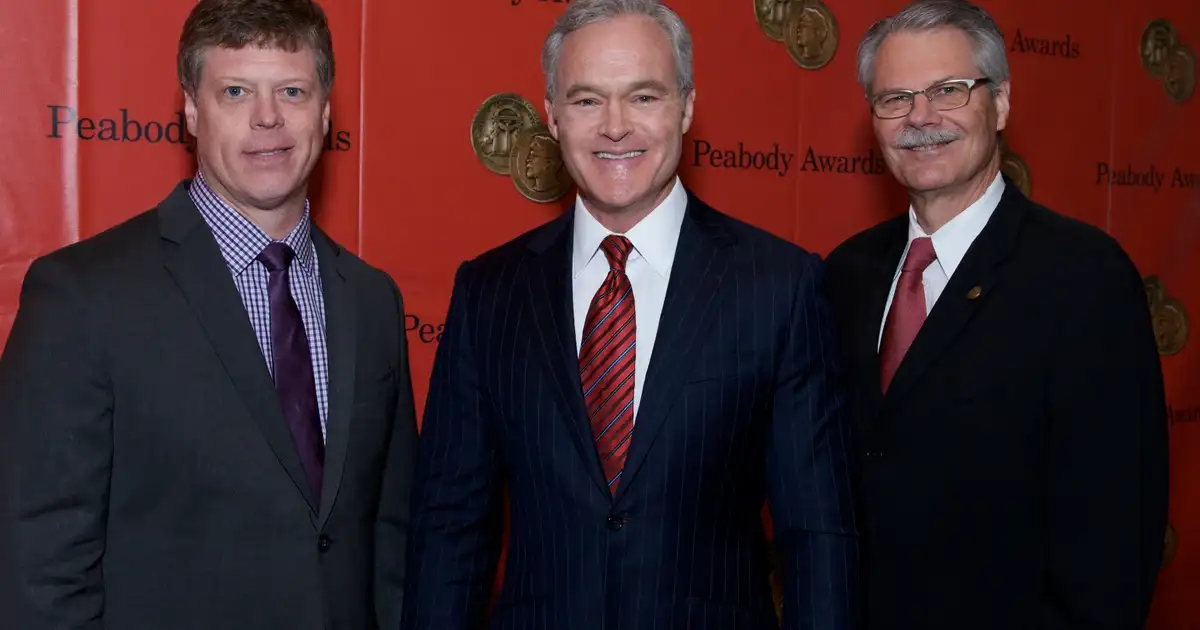

The firing of Scott Pelley from ‘60 Minutes’ isn’t just a personnel shuffle; it’s a seismic event that signals the end of an era for broadcast news and a stark warning about the future of investigative journalism. This isn’t merely about one legendary anchor losing his seat; it’s a brutal corporate calculation that has left the venerable program’s staff reeling and the industry questioning what, if anything, remains of its traditional form.
An emergency meeting convened on June 2nd, where the raw fear among staff was palpable. Veteran journalists, many with decades invested in the show’s unparalleled legacy, expressed widespread dismay, their voices heavy with the weight of uncertainty. Pelley’s sudden ouster sent shockwaves, not just through the corridors of CBS News, but across the entire media landscape, forcing a grim reckoning with the show’s very future.

Sources close to the matter informed Variety that the mood was unequivocally grim. Correspondents articulated a deep sense of loss, convinced that the institution they knew and revered has vanished for good. This sentiment is more than just personal grief; it is a critical indicator of much larger, systemic problems plaguing CBS News and its parent conglomerate, Paramount Global.
Paramount’s Unsentimental Calculus of Survival
To view Pelley’s departure as an isolated incident is to miss the forest for the trees. His removal is a symptom, a visible crack in the foundation of a media giant grappling with an existential crisis. Paramount Global is under relentless investor pressure, a common refrain in today’s volatile market.
The mandate is clear: slash costs and aggressively bolster its streaming service, Paramount+, to compete in a hyper-competitive digital arena.
Broadcast news divisions, with their legacy infrastructure and high-salaried talent, represent significant overhead. Anchors like Pelley, commanding multi-million dollar annual contracts, are precisely the kind of “expensive assets” that corporate strategists target for reduction. Eliminating such veteran figures frees up substantial budget, aligning perfectly with a broader industry trend.
Legacy media houses are systematically shedding their most costly on-air personalities. It’s a cold, hard business decision, devoid of sentiment, focused purely on the bottom line and future scalability.
The stark reality is that linear television viewership continues its precipitous decline. Even “60 Minutes,” long a ratings behemoth, faces an aging audience demographic, a ticking clock in the eyes of advertisers. While its viewership in Q1 2026 hovered around a respectable 7-8 million, this figure, though robust by current broadcast standards, represents a slight, yet persistent, decline.
The network’s imperative is unambiguous: capture younger eyeballs, and capture them now, even if it means alienating its traditional base.
For the corporate architects, the path forward is brutally clear: modernize, integrate seamlessly with streaming platforms, and ruthlessly cut expenses. This strategy, while perhaps financially sound in the short term, comes at a steep price. It means sacrificing invaluable institutional knowledge, disrupting decades-long traditions, and fundamentally reshaping the identity of iconic news brands.
A “60 Minutes” correspondent, speaking anonymously to Variety on June 3rd, articulated the pervasive anxiety: “It feels like the show as we know it no longer exists. We’re all looking over our shoulders, wondering who’s next.”
This statement is more than just a lament; it’s a profound declaration of an institution in peril. It underscores that the crisis extends far beyond one man’s job; it strikes at the very soul of an organization, confirming the staff’s very real and valid fears about their collective future.
The Erosion of a Legacy: What Price “Relevance”?
Pelley’s firing is not merely a changing of the guard; it marks a potential, and perhaps inevitable, end of an era. The “star anchor” model, once the bedrock of broadcast news, is rapidly becoming obsolete, supplanted by a corporate, brand-focused approach that prioritizes content pipelines over journalistic gravitas. This tectonic shift poses an existential threat to the future of in-depth, expensive investigative journalism.
“60 Minutes” forged its formidable reputation on serious, uncompromising reporting. It fearlessly tackled complex stories, held power accountable, and consistently invested in the costly, time-consuming investigations that became its hallmark. Can this legacy possibly endure under a new, leaner, and digitally-focused model?
Many insiders, watching the corporate maneuvers unfold, are deeply skeptical. The financial incentives simply aren’t there for the same level of resource allocation.
The new corporate mantra is “relevance,” often code for chasing fleeting trends and younger demographics on platforms like TikTok or YouTube. But what is the true cost of this pursuit of relevance? Will journalistic integrity be sacrificed on the altar of clicks and views?
Staff morale has already plummeted, a clear indicator of the internal turmoil. More critically, audience trust, painstakingly built over decades, could easily erode if the show’s core identity is diluted. Can a brand built on gravitas pivot to digital flash without losing its essence?
Another insider, quoted in The Hollywood Reporter on June 2nd, offered a blunt assessment: “This isn’t just about Scott. This is about a fundamental change in how CBS News views its most prestigious brand. It’s unsettling, and it signals a future where depth might be traded for digital agility.”
This “unsettling” feeling is not isolated; it permeates the entire division, reflecting a deep internal crisis that extends far beyond Pelley’s desk. It suggests a fundamental, and perhaps irreversible, re-evaluation of CBS News’ mission and its commitment to the kind of journalism that once defined it.
A Bellwether for Broadcast News: The Future is Now
The upheaval at “60 Minutes” is more than just an internal CBS affair; it is a critical bellwether, signaling a profound, industry-wide transformation for broadcast news. If a pillar of journalistic excellence like “60 Minutes” can be so violently shaken, then no news organization, no matter how storied, is safe from the relentless pressures of the digital age and corporate restructuring.
The implications extend far beyond media boardrooms. Ordinary citizens should pay close attention, for the quality and depth of news directly impacts public discourse, informed decision-making, and the health of democracy itself. Will serious, nuanced journalism become an inevitable casualty of corporate bean-counting and the insatiable demand for streaming content?
All signs point to a challenging road ahead.
Media conglomerates like Paramount Global wield immense power. Their financial decisions are not merely balance sheet adjustments; they fundamentally shape the information ecosystem we inhabit. They dictate what stories get reported, the resources allocated to investigations, and ultimately, the very quality of the news we consume.
This is a profound responsibility, and the current trend suggests a prioritization of profit over public service.
The drive to integrate news with streaming platforms is relentless and irreversible. This necessitates a strategic shift towards chasing younger demographics, often implying a move towards lighter, more shareable content. It inevitably means less focus on the expensive, in-depth, long-form reporting that “60 Minutes” was once synonymous with.
The economics of digital media simply do not reward the same investment in traditional investigative journalism.
CBS News, in a general statement to The New York Times on June 1st, spoke vaguely of
Photo: Wikimedia Commons (query: Scott Pelley)
Source: Google News