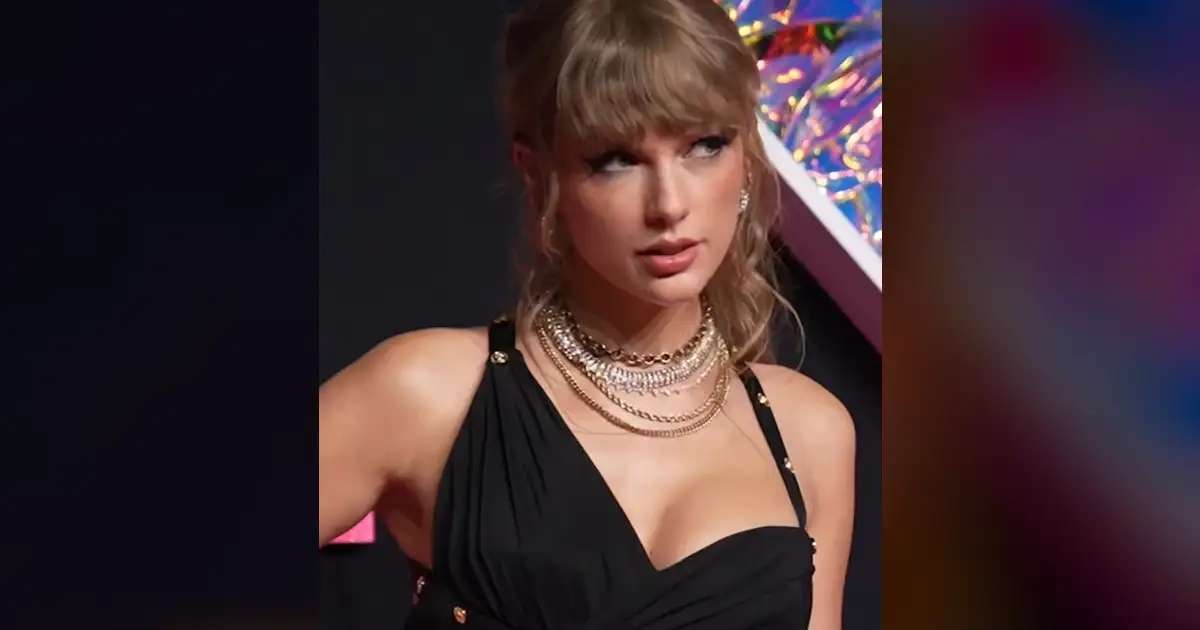

In the grand theatre of celebrity, where every invitation is a declaration and every omission a whisper heard ’round the globe, Taylor Swift has penned her most audacious social manifesto yet for her impending wedding to Travis Kelce. The decree is clear, unequivocal, and utterly Swiftian in its strategic brilliance: Prince William and Kate Middleton are unequivocally in, while Prince Harry and Meghan Markle are conspicuously out. This isn’t merely a guest list; it is a meticulously calibrated statement, a public edict for a celebration consecrated in peace, not scandal.
Swift, the undisputed monarch of modern culture, comprehends the intricate ballet of optics better than anyone alive. Her decision to extend an olive branch – or, rather, a gilded invitation – to the Prince and Princess of Wales, while pointedly overlooking the Duke and Duchess of Sussex, eloquently telegraphs who she perceives as bringing genuine gravitas versus unnecessary baggage to her monumental day. Whispers from her inner circle confirm this deliberate approach, aiming for an atmosphere of serene celebration, unmarred by the usual royal tempest.

The Royal Calculus: A Wedding Guest List as Social Stratagem
A guest list, for any high-profile nuptial, serves as a carefully curated document, a social blueprint revealing allegiances and aspirations. For someone of Taylor Swift’s unparalleled stature, it transcends mere etiquette; it becomes a precisely calibrated social stratagem. The invitation to William and Kate signals a desire for a touch of established royalty, a reverent nod to enduring institutions and the quiet power they represent.
It’s an alignment with a legacy, not a fleeting headline.
The Waleses’ presence would undoubtedly imbue the event with an air of traditional elegance, a sprinkle of old-world charm and gravitas that they inherently possess. They embody a certain stability, a dignified reserve that stands in stark contrast to the swirling controversies that so frequently trail the Sussexes. Their brand of celebrity is one of institutional duty, a quiet, almost anachronistic grace that Swift, ever the master of her own narrative, clearly finds appealing for her most personal public moment.
The omission of Harry and Meghan, therefore, isn’t a casual slight; it’s a meticulously calculated act of self-preservation. It deftly sidesteps the inevitable media circus, the relentless comparisons, and the potential for any overshadowing narratives that might hijack the focus. Swift is, in essence, protecting her moment from the very real possibility of becoming a secondary stage for a transatlantic royal drama.
Her wedding day is emphatically about her and Travis Kelce, not about inherited feuds or strained family dynamics. This is a shrewd play from a woman who has forged her career under intense public scrutiny, mastering her own story for decades. She controls the stage, always, and her wedding is no exception.
Curating Calm: Swift’s Unwavering Pursuit of Serenity
Taylor Swift’s career showcases her extraordinary ability to manage public perception. She has handled intense scrutiny, weathered personal attacks, and commanded global fame with remarkable resilience. Her desire for a “drama-free” wedding is entirely consistent with the meticulously constructed edifice of her brand.
Inviting the Waleses aligns with a sense of grandeur, timelessness, and a certain aspirational grace—qualities Swift consistently projects in her public persona and artistic output. Their celebrity is one of quiet, enduring presence, a stark contrast to the more volatile, confessional, and often controversial public narrative that has come to define the Sussexes.
The Sussexes, regrettably, often arrive with an inherent air of sensationalism. Their very presence tends to ignite a media frenzy, diverting attention to their personal lives, their strained family dynamics, and their ongoing grievances. Swift, who has spent a lifetime battling for control over her own narrative, has zero interest in ceding any ground on her wedding day.
Her wedding is not a platform for royal reconciliation, nor is it a public declaration of solidarity in any ongoing family saga. It is a deeply personal, sacred event, one she intends to keep singularly focused on love, celebration, and the profound joy of two lives intertwining. This is about boundaries, drawn with the precision of a surgeon’s scalpel, clear and uncompromising.
The Monarchy’s Modern Image: A Cultural Barometer
This guest list decision also offers a fascinating, almost anthropological, glimpse into the perceived standing of the royal factions within the broader cultural sphere. William and Kate are widely perceived as the future of the monarchy, the steady hands, the embodiment of royal duty, even in an increasingly cynical age. Their celebrity, while undeniably significant and global, remains largely tethered to their institutional roles.
They are recognizable figures, instantly iconic, but generally not disruptive. They exude a certain decorum, a quiet elegance that Swift clearly values for an event of such personal significance.
Harry and Meghan, conversely, have deliberately carved out a vastly different path. Their celebrity is more intimately intertwined with personal revelations, public grievances, and a narrative of self-exile. They occupy a distinct orbit, one that thrives on explosive headlines and deeply personal narratives, often at odds with the very institution they once represented.
Their brand is one of disruption, of breaking with tradition, of seeking personal freedom at the expense of royal protocol.
For an artist like Swift, who commands global attention entirely on her own terms, inviting the Waleses makes eminent sense. It adds a coveted layer of established prestige and traditional elegance without importing external drama or ideological conflict. It is, in essence, a strategic alliance of cultural titans: Swift, the architect of her own empire, aligning with the perceived stability and dignified lineage of the British Crown’s future.
This move subtly, yet powerfully, reinforces the perception that William and Kate are the preferred royal representatives for high-profile, dignified events—solidifying their position as the more stable, respected, and culturally palatable branch of the family tree.
Beyond the Headlines: Swift’s Personal Imperative
While the royal implications are undeniably fascinating, the beating heart of Swift’s decision remains profoundly personal. This is, after all, her wedding. After years of living under a microscope, her every move scrutinized, her every relationship dissected, she is absolutely entitled to curate an experience that reflects her singular vision of joy and peace.
She has meticulously cultivated her relationships, both professional and personal, with an almost architectural precision. Her bond with Travis Kelce is a public phenomenon, a whirlwind romance that has captivated millions, yet their private life together is something she guards fiercely. The wedding, in its ultimate expression, is the apotheosis of that private bond, a sacred space she intends to protect from intrusion.
To invite guests who might inadvertently—or perhaps, inevitably—shift the focus from the happy couple to ongoing royal sagas would be utterly counterproductive to her deepest desires for the day. Swift is not merely a planner; she is a grand strategist, a meticulous conductor of her own destiny. Every choice she makes, particularly one
Source: Google News