
The recent swift retaliatory strikes by the United States against Iranian-backed forces in eastern Syria serve as a potent reminder of the region’s enduring volatility and the complex, often clandestine, dynamics that govern it. These precision operations, launched in direct response to a drone attack that injured US troops, underscore America’s resolute commitment to safeguarding its personnel and interests amidst a landscape fraught with geopolitical tension.
The aggressive US response targeted facilities in eastern Syria utilized by groups with verifiable links to Iran’s Islamic Revolutionary Guard Corps (IRGC). This action was a direct and unequivocal answer to a drone strike on June 6, 2026, which resulted in injuries to four American service members. The incident highlights the persistent challenges of maintaining stability in a region where state and non-state actors frequently engage in a dangerous cycle of provocation and retaliation.

Strategic Recalibration: US Strikes Back Hard
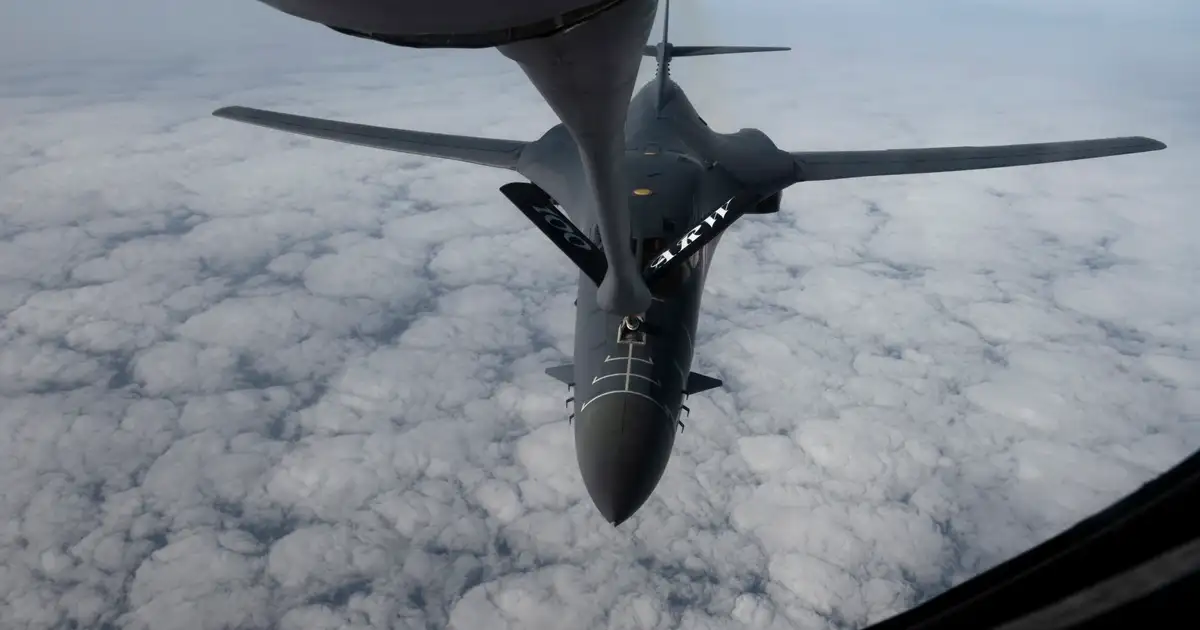
The United States military formally confirmed the strikes on June 7, 2026. Utilizing US Air Force assets, the operations successfully neutralized three distinct targets: a command and control center, an ammunition depot, and a logistics hub. All these facilities were unequivocally tied to Iran-backed militias and sustained significant damage, according to official statements.
The Pentagon characterized these as precision self-defense strikes, explicitly aimed at protecting US personnel and deterring future aggressions. While casualty figures for the militia groups have not been publicly disclosed, the strategic intent was clear: to degrade capabilities and send an unambiguous message. The drone attack itself employed a Shahed-136-style loitering munition, a type of unmanned aerial vehicle (UAV) frequently supplied by Iran to its regional proxies. The use of such advanced, yet deniable, weaponry by non-state actors further complicates the security calculus in an already fragile environment, demanding a calibrated yet firm response.
These strikes are not merely isolated incidents but represent a strategic recalibration, signaling that the US will not tolerate direct threats to its forces. The precision targeting suggests an intelligence-led operation designed to minimize collateral damage while maximizing impact on the operational capabilities of the targeted groups. It is a delicate balance, aiming to restore deterrence without igniting a broader conflagration.
Tehran’s Fury and the Echoes of Regional Fallout
As anticipated, Tehran swiftly condemned the US actions, characterizing them as a blatant violation of Syrian sovereignty and an act of aggression. Iran’s state media and diplomatic channels echoed these condemnations, framing the strikes as an infringement on international law. Such pronouncements are a familiar component of the diplomatic fallout in this protracted shadow war.
“The aggressive action by the American military in Syria is a clear violation of international law and Syrian sovereignty. The responsibility for the consequences of such provocative actions lies solely with the United States.”
— Iranian Foreign Ministry Spokesperson, Nasser Kanaani (June 8, 2026), as reported by Reuters
The Syrian government, for its part, claimed civilian casualties, a assertion the US has vehemently denied, citing rigorous efforts to avoid non-combatant harm during its operations. This divergence in accounts is a recurring motif in the narrative surrounding military engagements in the region, where information warfare often accompanies kinetic action. Approximately 900 US troops remain stationed in northeastern Syria, primarily tasked with counter-ISIS operations and supporting the Syrian Democratic Forces (SDF). Their presence, while officially focused on counter-terrorism, inevitably positions them at the nexus of broader regional power struggles.
This latest strike marks the third significant US retaliation against Iranian-backed groups in Syria or Iraq within the past year. This recurring pattern underscores a persistent cycle of tit-for-tat exchanges, where each action by one party elicits a reaction from the other, perpetuating a state of low-intensity conflict that perpetually risks escalation.
Navigating the Precipice: Wider War or Sustained Skirmishes?
The overarching question that invariably arises from such incidents is whether these strikes portend a wider, more direct conflict or if they merely represent another chapter in the ongoing shadow war. History, in this instance, offers a nuanced perspective. Both the United States and Iran have, for decades, demonstrated a strategic preference for limited responses, meticulously avoiding direct, full-scale military confrontation. This established pattern strongly suggests that a wider war, while always a latent risk, is not an immediate inevitability.
- Crucially, these strikes targeted Iranian-backed militias operating within Syrian territory, not Iranian soil directly. This distinction is vital; it maintains the conflict within the parameters of proxy warfare, carefully sidestepping a direct state-on-state confrontation that neither side genuinely desires.
- The US has consistently articulated its primary objectives in Syria: counter-terrorism against ISIS and the protection of its deployed forces. These stated goals are distinct from any ambition for regime change in Iran, a critical factor in managing escalation.
- Iran’s strategic doctrine frequently leverages proxy forces to project influence and deter perceived threats, precisely to avoid direct military engagement with major global powers. This reliance on deniable actors allows for a degree of plausible deniability and limits direct accountability.
- Furthermore, consistent international pressure from global powers continually advocates for de-escalation, urging both sides to exercise restraint and avoid actions that could trigger a broader regional conflict.
This conflict is a delicate, high-stakes dance, where both sides meticulously test limits while simultaneously managing the inherent risks of escalation. The deployment of US air power is a potent statement of capability and resolve, yet it remains an instrument of deterrence rather than a declaration of all-out war. The strategic calculus is one of calculated risk, where each move is weighed against its potential to either restore stability or plunge the region into deeper turmoil.
The Enduring Costs of Perpetual Conflict
The financial burden of maintaining a robust US military presence in the Middle East is staggering, running into billions of dollars annually. Each precision airstrike operation, from intelligence gathering and mission planning to fuel consumption and munitions expenditure, adds significantly to this considerable cost. However, the true price of this enduring conflict extends far beyond monetary figures.
The human cost is immeasurable. Civilian populations are perpetually caught in the crossfire, enduring displacement, loss of life, and the erosion of their social fabric. Humanitarian crises deepen, refugee flows swell, and the very foundations of civil society are undermined. Beyond the immediate region, the instability generated by these conflicts frequently disrupts global energy markets, leading to price volatility that impacts economies worldwide.
“These precision self-defense strikes were intended to disrupt and deter attacks by Iran-backed groups and protect US personnel. We will not hesitate to take necessary measures to defend our people and our interests.”
— Pentagon Spokesperson, Brig. Gen. Patrick Ryder (June 8, 2026), as reported by The Washington Post
The Middle East remains an intrinsically volatile region, a crucible where every strike begets consequences, and every act of retaliation sows new seeds of resentment. This cycle, deeply entrenched in historical grievances and contemporary power struggles, proves extraordinarily difficult to break. The US seeks to protect its forces, Iran aims to counter what it perceives as foreign occupation and project regional influence, and Syria, amidst its own internal strife, struggles to assert its sovereignty. These objectives, fundamentally divergent, ensure a perpetual clash.
The Unending Shadow War: A Test of Strategic Endurance
This latest exchange is not an anomaly but rather an integral part of a long-standing pattern—a protracted shadow war between the United States and Iran that frequently plays out on Syrian and Iraqi soil. Since 2018, the US has conducted numerous such strikes, each contributing to a complex tapestry of geopolitical maneuvering and military action. This conflict, fought through proxies and with targeted military interventions, carries profound implications: it risks regional destabilization, affects global energy markets, and consistently challenges established norms of international law and sovereignty.
As the international community grapples with the fallout, critical questions emerge: Is the current US strategy of calibrated retaliation sustainable in the long term? What are the viable alternatives to this cycle of action and reaction, particularly in an era of evolving drone technology and increasingly sophisticated proxy networks? The world watches intently, seeking to understand the next strategic move in this perilous, unending game. The delicate balance, maintained through a blend of deterrence and restraint, is under constant pressure. How long can this intricate equilibrium hold before the shadow war casts a far wider, more devastating light?
Source: Google News