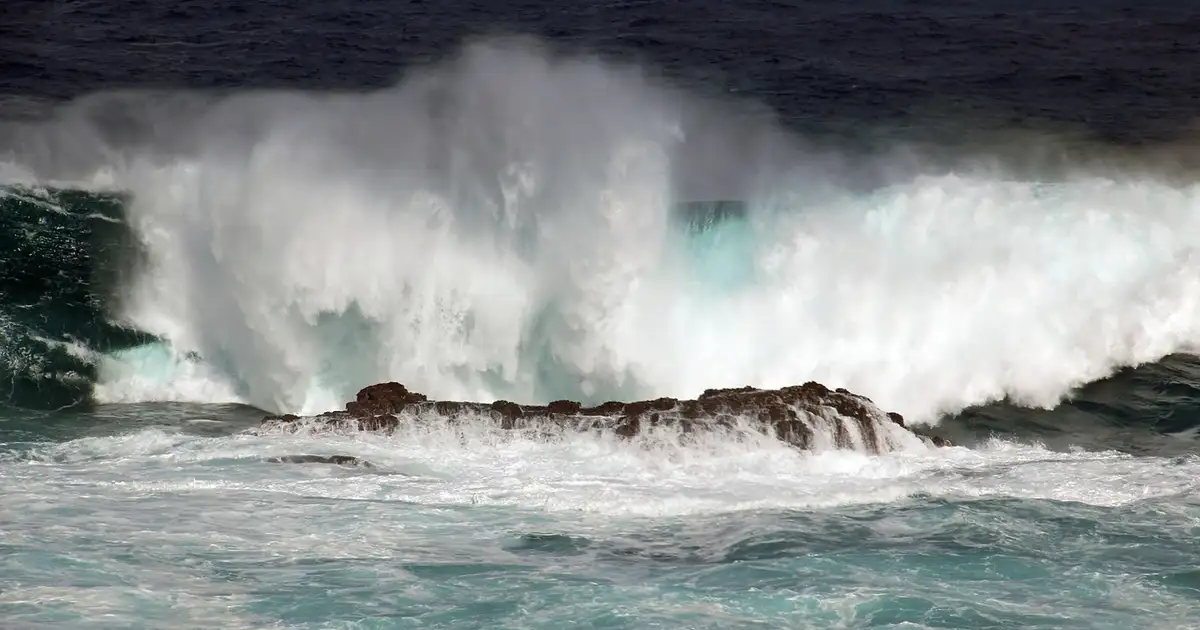

Two lives swallowed, a family torn apart, and a community left reeling: the Jensen tragedy in Laguna Beach is a brutal, gut-wrenching reminder of the ocean’s raw, unpredictable power. On the afternoon of June 9, 2026, a sudden, monstrous “rogue wave” struck a Pasadena family of four standing on a rocky outcrop at Treasure Island Beach, around 3:30 PM PDT.
The outcome is a grim tally: father Mark Jensen, 38, and his 5-year-old daughter, Lily Jensen, remain missing, presumed lost at sea. Mother Sarah Jensen, 36, and their 8-year-old son, Ethan Jensen, were rescued through the quick, heroic actions of lifeguards and bystanders, pulled from the churning, unforgiving water.

The Aftermath: A Search Scaled Back, Hope Fading
Sarah Jensen was unconscious when pulled ashore, suffering severe hypothermia and multiple abrasions. She is currently in critical but stable condition at Mission Hospital Laguna Beach, fighting for her life.
Ethan Jensen, treated for minor injuries and shock, is now with extended family, facing an unimaginable future. This is not just a story of survival; it underscores the sheer brutality of nature and the fragility of life.
Search operations launched immediately, a desperate scramble against the clock. The U.S. Coast Guard, Orange County Sheriff’s Department Harbor Patrol, and Laguna Beach Marine Safety deployed every available resource. They battled challenging ocean conditions—strong currents, dense fog—through June 10, pushing their limits. But the ocean rarely gives back what it takes.
As of June 11, 2026, the active search for Mark and Lily Jensen has been tragically scaled back. Coast Guard officials, with heavy hearts, confirmed the grim reality: the likelihood of survival diminishes significantly after more than 48 hours in the water. This somber announcement isn’t just news; it’s a gut punch that intensifies urgent calls for a complete overhaul of beach safety protocols.
“It was a rogue wave, easily twice the size of anything else that day. They were just enjoying the view, and then they were gone. It happened so fast, like a sudden blitz nobody saw coming.”
— David Chen, local surfer and witness to the Orange County Register
The Unseen Opponent: Rogue Waves and Ocean’s Brutal Power
This incident forces a critical question onto the field: given this tragedy, how safe are California’s popular beaches? What are authorities doing to prevent similar, devastating incidents? The answer is far from simple, as complex and treacherous as a perfectly executed defensive scheme designed to confuse an offense.
Rogue waves are the ocean’s wild cards, the ultimate unpredictable force. They are not merely large waves; they are often several times larger than the surrounding sea state, appearing from nowhere. Current technology cannot reliably forecast them, making them an invisible threat, a sudden, overwhelming blitz from the deep that can decimate unsuspecting visitors. They don’t just pose a danger; they represent an existential threat to anyone in their path.
California, a state synonymous with its stunning coastline, averages dozens of drowning fatalities annually. Many occur in coastal waters, victims of rip currents, unexpectedly large waves, or falls from rocky areas. This isn’t just a random occurrence; it’s a consistent, deadly pattern of danger that we, as a society, have failed to adequately address. We must tackle this problem head-on, with the same intensity and strategy we would bring to a championship game.
“Our hearts go out to the Jensen family. This is a tragic reminder of the ocean’s immense power, a force that demands absolute respect. We urge everyone to exercise extreme caution near the water, especially on rocky areas and during periods of elevated surf. Complacency is a luxury the ocean does not afford.”
— Captain Greg Houser, Laguna Beach Marine Safety
Failing the Safety Blitz: Are Current Measures Enough?
Laguna Beach is a major tourist magnet, drawing millions of visitors every year. While the economic impact of such a tragedy is a latent, unsettling concern, the immediate and paramount focus must remain on human lives. Are the current beach safety protocols truly up to snuff? Or are we simply going through the motions?
Local authorities do issue warnings about dangerous ocean conditions. Public service campaigns on rip current safety are common. Yet, incidents like the Jensen tragedy continue to happen with alarming regularity. This highlights a persistent, glaring challenge: ensuring public safety in dynamic, ever-changing coastal environments is a tough assignment, one where the stakes are life and death.
Beach safety advocates aren’t just calling for an audible; they are demanding a fundamental shift in strategy. They want more prominent, unmistakable warning signs. They propose potential physical barriers in high-risk areas, where the danger is clear and present. Enhanced public education campaigns about “sneaker waves”—those deceptively calm periods followed by a sudden, massive wave—are also on the table. Are we just running the same old, predictable plays, hoping for a different outcome?
This isn’t about blaming the victims. It’s about evaluating the game plan itself. Are current measures truly adequate for the growing number of visitors, many of whom are unfamiliar with the ocean’s true power? Are they ready for potentially changing ocean conditions, exacerbated by a shifting global climate? The data, tragically, suggests a resounding “no.” We are losing this game.
Calling an Audible on Coastal Protection: A New Playbook
This tragedy must force a comprehensive re-evaluation of beach safety protocols across all coastal communities. Local authorities cannot afford to sit on the sidelines any longer. Signage, public education, and even physical infrastructure must be upgraded, not incrementally, but dramatically. We need a completely new playbook for popular coastal destinations, one that prioritizes proactive protection over reactive warnings.
The “Beyond the Warning Sign” angle is critical here. Simply posting a sign is no longer enough. People ignore them; they get complacent, lulled by the beauty of the view. We need proactive, tangible measures. We must consider robust physical barriers in particularly hazardous spots, especially those rocky outcrops that invite unsuspecting visitors. We need real-time digital warnings, perhaps integrated with mobile apps, that scream danger directly into people’s pockets. This is about protecting the public from an unpredictable, often invisible force, not just advising them.
Climate scientists increasingly suggest that changing global weather patterns could lead to more extreme ocean conditions. Larger, more unpredictable waves might become the norm, not the exception. While direct links to specific incidents are complex, the trend is clear and alarming. We cannot afford to ignore potential changes to the playing field; the risks are simply too high to gamble on the status quo.
“We are continuing our search efforts with every available resource, but the conditions are challenging, and time is our greatest adversary. We will not give up hope, but we must also acknowledge the grim reality of the situation after this much time. Every minute that passes is a minute we lose in this desperate fight.”
— Petty Officer 1st Class Sarah Jenkins, U.S. Coast Guard
Personal Playbook: Respect the Water, or Pay the Price
Beyond official action, personal responsibility remains paramount. The ocean’s breathtaking beauty can mask an extreme, immediate danger. Visitors must internalize and respect marine environments. Even seemingly calm conditions can turn deadly in an instant. This is not a backyard pool; it is a wild, untamed wilderness.
Pay close attention to posted warnings. Heed local advisories as if your life depends on them—because it does. Avoid rocky areas during elevated surf conditions, no matter how tempting the view. These are not mere suggestions; they are life-saving rules. This means staying alert, making smart, conservative decisions, and never, ever taking unnecessary risks with an opponent as powerful as the ocean.
The Jensen family tragedy is a stark, agonizing reminder. It underscores the critical, absolute importance of caution and respect. It’s a blaring wake-up call for everyone who visits California’s iconic coastline. The ocean demands respect, and if it doesn’t get it, it will take it, one way or another.
The Final Drive
The scaling back of the search for Mark and Lily Jensen is a gut punch no family should ever have to endure, a moment of profound, irreversible loss. This incident isn’t just a local story confined to Laguna Beach; it’s a national headline that screams for immediate, decisive attention.
Authorities at all levels need to get off the sidelines, stop the incremental changes, and implement stronger, more proactive safety measures. The cost of inaction—measured in lives lost and families shattered—is simply too high. This is a game we cannot afford to lose, and the time for a new, aggressive strategy is now.
Photo: Hans Petersen
Source: Google News