
Phoenix, Arizona. The name now carries a grim, resonant weight. On July 24, 2026, 78-year-old Eleanor “Ellie” Vance was tragically killed by an undocumented driver.
This act immediately ripped through the nation’s political landscape. It transformed a personal tragedy into President Donald Trump’s latest cudgel against his predecessor and a rallying cry for an unyielding border.

This wasn’t merely a senseless death; it was an instant flashpoint, weaponized before the dust settled. It provided fresh ammunition for those demanding absolute border security, even under the watch of the very president who has promised to seal the border for nearly two years.
A Phoenix Tragedy Ignites a National Firestorm
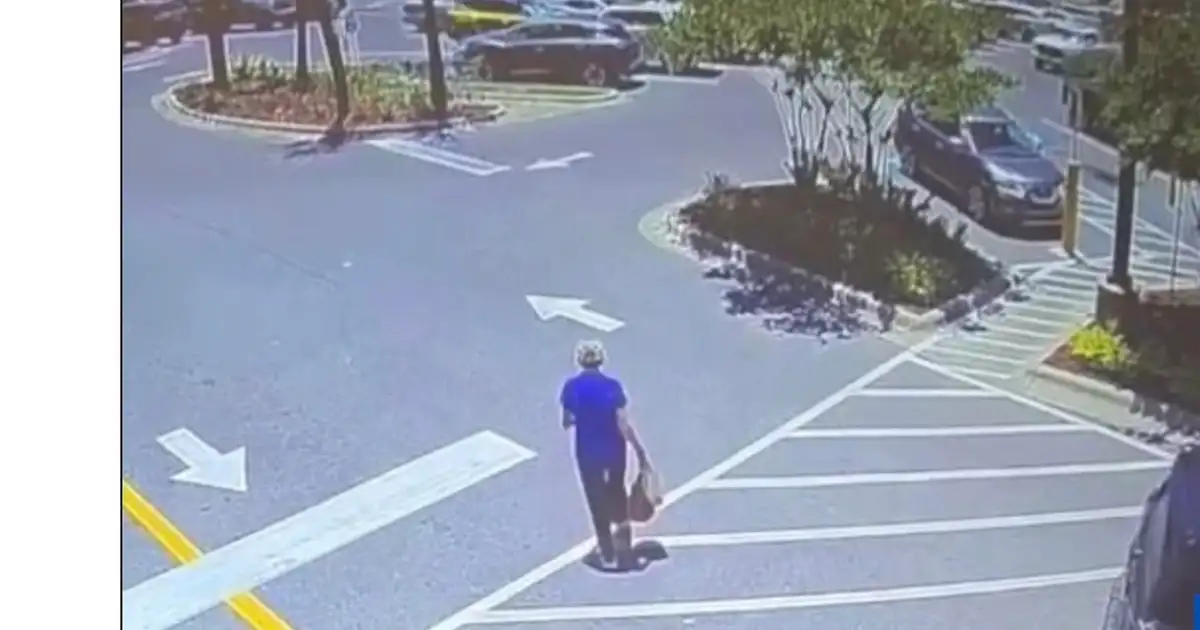
The horrific incident unfolded under the fading light of a summer evening, July 24, 2026. Ms. Vance, having just completed her grocery shopping, was walking back to her car.
Her life was abruptly and senselessly ended when 32-year-old Miguel “Mickey” Ramirez allegedly struck her, then callously fled the scene. Local law enforcement reports confirm these details.
The shock rippled through the community, quickly turning to outrage as details emerged.
Phoenix police moved swiftly, apprehending Ramirez and charging him with felony hit-and-run and vehicular manslaughter. The story took a sharp turn into the national spotlight on July 25, 2026.
Immigration and Customs Enforcement (ICE) confirmed Ramirez’s immigration status: he was an undocumented immigrant with a history. Deported in 2023, Ramirez had brazenly re-entered the U.S. illegally.
ICE has since placed a detainer on him, ensuring he faces immigration proceedings after his criminal case. The Vance family, in a July 27 statement, expressed profound grief for Eleanor, a “beloved grandma.”
Their loss was compounded by the immediate, brutal politicization of their tragedy, a lament soon drowned out by partisan rhetoric.
The Blame Game: A Familiar Script, A Stark Irony
This tragedy didn’t just break hearts; it shattered any lingering illusion of political restraint. Conservative media outlets and Republican figures wasted no time, seizing immediately on Ramirez’s immigration status and prior deportation.
The incident became a national talking point overnight, a grim tableau upon which to project entrenched political grievances. President Donald Trump, ever the master of the digital broadside, took to Truth Social.
He unleashed a familiar, unsparing attack, laying the blame for the nation’s border woes squarely at the feet of the previous administration. This occurred despite occupying the Oval Office himself for nearly two years.
“Another innocent American, a beautiful grandma, brutally killed by an illegal alien who should have never been in our country. This is Crooked Joe Biden’s open border disaster. We need to secure our border NOW and deport every single one of them. This is a disgrace!”
President Donald Trump, Truth Social, July 26, 2026
This statement, coming from the sitting President, is a classic maneuver. It’s a well-worn page from the political playbook.
It artfully shifts blame to his predecessor for a problem his own administration has been tasked with fixing since January 20, 2025. Senator Ted Cruz (R-TX) quickly joined the chorus.
He asserted with characteristic fervor that the tragedy was a “direct result of the Biden administration’s failure to enforce our immigration laws.”
“My heart breaks for Eleanor Vance and her family. This tragedy is a direct result of the Biden administration’s failure to enforce our immigration laws. How many more Americans must die before they secure the border?”
Senator Ted Cruz (R-TX), X, July 26, 2026
The irony here is thick enough to cut with a knife. Republicans are blasting a “Biden administration failure” while President Trump has occupied the Oval Office for over 18 months.
This is ample time to implement his promised border overhaul. Where, then, is the accountability for a problem that persists under his watch?
Immigration advocates, while extending profound sympathy to the Vance family, urged caution against the immediate rush to judgment. They argued vehemently against demonizing entire immigrant communities based on one criminal act.
They stressed that crimes should be prosecuted rigorously regardless of immigration status, a nuanced plea often lost in the political din.
Trump’s Border Battle: A Catalyst for Hardline Policies
The core political question is no longer whether the previous administration will change its policies; that ship sailed long ago. The urgent, pressing inquiry is how this incident will impact President Trump’s current border agenda.
What fresh, draconian measures will it unleash? Trump, after all, ran on an unwavering platform of securing the border, promising mass deportations and a completed wall.
This tragedy hands him fresh political leverage, a potent justification to push those policies even harder. It silences critics with the raw emotion of a grandmother’s death.
His administration has faced formidable challenges in fully implementing its aggressive immigration plans. Bureaucratic hurdles, entrenched federal regulations, and inter-agency friction have slowed the process.
Legal battles, waged by civil liberties groups and some states, resulted in court injunctions and protracted appeals. These delays tied up resources and enforcement.
This Phoenix tragedy, however, delivers a visceral, human-interest punch. It bypasses abstract policy debates entirely.
It lands directly in the emotional gut of the electorate, a potent tool to galvanize his base. It will frame the upcoming 2026 midterm elections as a referendum on national security.
Expect to see renewed, vociferous calls for significantly increased funding for Border Patrol and ICE. Demands for faster deportations and tougher, more punitive penalties for illegal re-entry will also rise.
The administration will undoubtedly highlight recidivism rates for deported individuals. These figures will underscore the perceived futility of current enforcement and the sheer difficulty of maintaining a truly closed border.
The estimated undocumented immigrant population in the U.S., hovering stubbornly around 11-12 million, remains a constant source of political friction. Events like Ellie Vance’s death transform that abstract number into a concrete, terrifying fear for many Americans.
This fear is easily exploited for political gain.
The Reality of Recidivism and Deliberate Enforcement Gaps
Miguel Ramirez’s 2023 deportation is not just a detail for policy wonks; it is the central, damning point for critics. It exposes what many decry as a fundamental breakdown in the system.
The question echoes: How can someone deported once simply walk back into the country with impunity? This is not an isolated incident.
ICE data consistently reveals high rates of re-entry after deportation. This remains a persistent challenge for any administration.
Policing thousands of miles of diverse border terrain and processing millions of entries annually is a logistical nightmare. This task strains resources and personnel to their breaking point.
Political rhetoric often simplifies this complex reality, painting a facile picture of a wide-open border. It suggests any criminal can cross at will.
The grittier truth reveals a perennially strained system, chronically underfunded agencies, and a relentless, often losing, cat-and-mouse game against re-entry attempts.
Crucially, the intense focus on Ramirez’s undocumented status deliberately overshadows other critical factors. These include general road safety issues, criminal behavior not intrinsically tied to immigration, and systemic failures allowing individuals to slip through.
In the current hyper-charged political climate, that vital distinction is often not merely lost, but actively suppressed.
This incident will undoubtedly reignite the fiery debate over “sanctuary policies.” The national conversation will expand beyond Arizona, which is not a sanctuary state, to scrutinize jurisdictions limiting cooperation with federal immigration authorities.
These jurisdictions will be cast as complicit in such tragedies. This tragedy, chillingly reminiscent of the Kate Steinle case in 2015, is destined to become a powerful, enduring symbol.
It will be wielded relentlessly to argue for a complete, uncompromising overhaul of immigration laws, all under the guise of protecting American citizens. The “so what” factor here is immense.
The death of a “beloved grandma” touches a raw, primal nerve. Combined with an alleged undocumented driver, it ignites deep-seated anxieties about safety, sovereignty, and the rule of law.
For President Trump, this incident presents both a stark opportunity and a profound challenge. He can, and will, use it to justify his hardline stance, demanding more walls, agents, and deportations.
A Harbinger for Policy and the Midterms
Yet, it also forces uncomfortable questions about why such incidents continue under his watch, two years into his border security promise. With the 2026 midterm elections looming, immigration will be front and center in countless campaigns.
Always a potent issue for the Republican base, voters in swing states will hear Eleanor Vance’s name invoked repeatedly. It will serve as a tragic example of the perceived cost of insufficient enforcement.
This narrative will be hammered home with relentless precision, designed to drive voters to the polls. The push for stricter, more draconian measures will intensify.
This includes more deportations, increased border security funding, and potentially aggressive federal intervention into state and local immigration enforcement. The public will demand action.
The political establishment, regardless of who is in power, struggles desperately with these incidents. They are devastating human tragedies, but invariably become political footballs, kicked back and forth in a desperate, often cynical, grab for votes and policy wins.
The question is not if policies will change, but how much more extreme they will become. This will be driven by fear and political expediency.
The human cost of this relentless political posturing is almost always borne by the grieving families. Meanwhile, the Washington machine grinds on, seemingly oblivious to the shattered lives in its wake.
Source: Google News