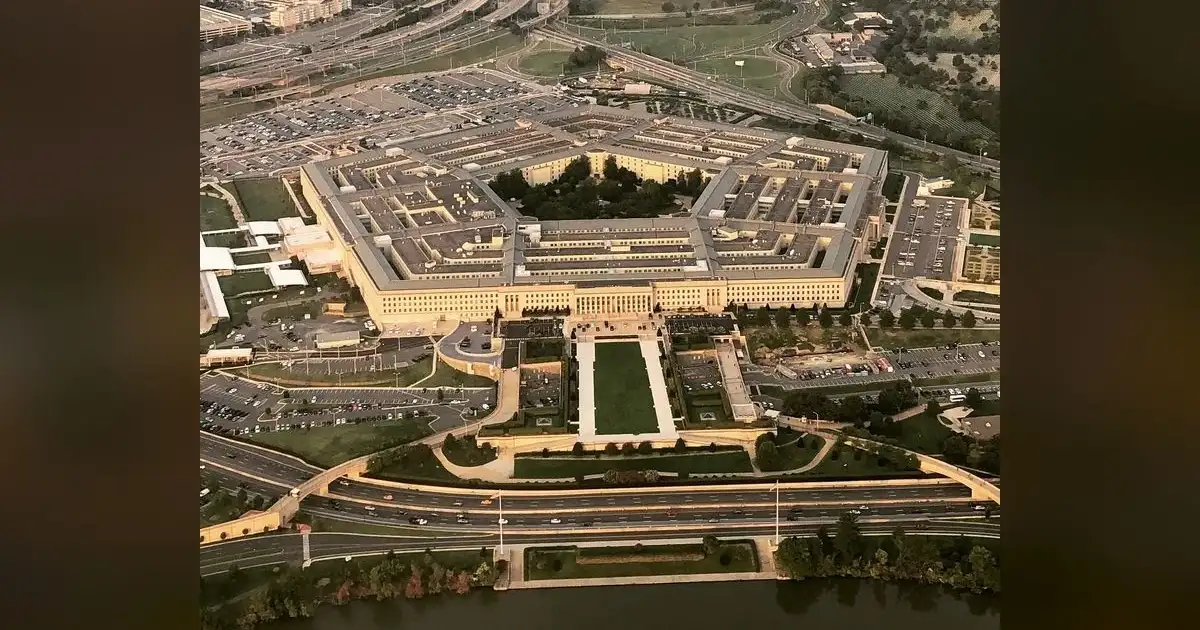

The Pentagon, the very nerve center of American defense, locked down on Tuesday, October 29th, 2024, not for a drill, but for a live hazardous materials incident that ripped through its core. Hazmat crews, the special teams of emergency response, swarmed the facility, confirming what every security analyst fears: the game is always on, and the opponent is relentless.
This isn’t just news; it’s a gut punch. It’s a stark reminder that even the most fortified bastions of national security are perpetually in the crosshairs. The response, a swift and overwhelming defensive blitz, showcased the readiness, but also underscored the ever-present vulnerability federal facilities face every single day.

The Defensive Playbook for Disaster
When the alarm blares, the clock doesn’t just start ticking; it accelerates into a full-blown two-minute drill. A hazardous materials incident at the Pentagon isn’t merely a local emergency; it’s a national security red alert, triggering a cascade of protocols designed to contain, neutralize, and protect.
The building immediately went into a full-scale lockdown. Access was sealed tighter than a goal-line stand. Personnel were directed to shelter in place or evacuate specific zones, a non-negotiable first line of defense honed through countless simulations and real-world threats. This isn’t just standard procedure; it’s a tactical necessity, a fundamental block-and-tackle maneuver in the security playbook.
Then came the cavalry: the specialized hazmat crews. These aren’t just your average first responders. They are the elite special teams, trained to operate in the most hostile environments. Clad in their unwieldy protective gear, they moved with the precision of a well-drilled unit, assessing the unknown threat, identifying potential dangerous substances, and executing neutralization protocols. Their training is rigorous, their mission critical, and their courage unquestionable. They are the unsung heroes playing on the line of scrimmage against an invisible enemy.
The Washington D.C. metropolitan area is no stranger to these security alerts. Federal facilities here are perpetual targets, a fact etched into the very fabric of our national defense strategy. We’ve seen suspicious packages, unknown substances, and false alarms before. Each incident, regardless of its ultimate outcome, demands a full-scale deployment, straining resources, testing the mettle of our readiness, and costing millions. It’s a costly, high-stakes game of defense, played out every single day.
The Constant Threat Assessment: Scouting the Opponent
Think of it like a football team’s defensive coordinator. They are always in the film room, relentlessly scouting the opponent. They analyze every possible play, every formation, every tendency. They prepare for every conceivable scenario, anticipating the blitz, the deep pass, the trick play.
Federal agencies operate with the same relentless vigilance. The intelligence community works non-stop, a vast network of scouts and analysts, tracking potential threats, intercepting signals, and trying to get ahead of the curve. But sometimes, the threat appears without warning, a surprise onside kick that catches everyone off guard.
A hazardous materials incident could be anything: a false alarm, an accidental spill, or something far more sinister, a deliberate act of terror designed to sow panic and disruption. The unknown is the biggest enemy, a phantom offense that can strike from anywhere, at any time. This is why the speed of response is paramount. Every second counts, every decision critical. Delay could mean disaster, which is why these hazmat crews are always on standby, the frontline defenders against invisible dangers.
The Pentagon is more than just a building; it’s a symbol of American power, resilience, and military might. Any breach, any credible threat, sends a ripple effect across the globe, raising uncomfortable questions about our vulnerability and forcing an immediate reassessment of security protocols. It’s a reminder that even the strongest defenses can be probed, and that the game of national security demands constant adaptation and evolution.
Beyond the Headlines: The Real Cost of the Game
These incidents don’t just happen in a vacuum. They consume massive resources, pulling emergency services from other duties, mobilizing specialized units, and initiating immediate, exhaustive investigations. The financial cost alone quickly climbs into the millions, a constant drain on budgets that could be allocated elsewhere.
But the cost isn’t just financial. There’s a profound human cost too. The stress on first responders is immense. They put their lives on the line, stepping into the unknown, facing unseen dangers with a courage that demands our utmost respect. They are the players who run through the wall, day in and day out, without the glory of a touchdown celebration.
Security experts consistently emphasize the critical need for constant vigilance, for multiple layers of defense, and for seamless inter-agency cooperation. This isn’t a solo effort; it’s a team game, requiring every player, every coach, every member of the support staff to be on the same page, executing the game plan flawlessly. The public often sees the headlines, hears about a lockdown, catches a glimpse of the hazmat crews, and then the story fades. But the work, the relentless grind of securing our nation, continues long after the immediate danger is cleared.
Every incident, whether a genuine threat or a false alarm, is a learning experience. It reveals gaps in the defensive scheme, highlights strengths in the execution, and forces adjustments to the security playbook. You have to adapt, or you get beat. Complacency is the ultimate opponent, and it’s always lurking, waiting for an opportunity to strike.
The New Normal: Are We Losing Our Edge?
We live in an era of constant alerts: terror threats, cyber attacks, and now, recurring hazardous materials incidents. Has it all become background noise? Have we, as a society, grown desensitized to the gravity of these events?
We absolutely cannot afford to be complacent. The stakes are simply too high. The Pentagon is not just any building; it houses the command center for our military, the strategic brain where critical decisions affecting global security are made. A successful attack there would be devastating, a catastrophic blow to our national psyche and operational capabilities. Even a false alarm causes significant disruption, sows fear, and tests our collective resilience. That, in itself, is part of the opponent’s game plan: to exhaust, to distract, to demoralize.
The deployment of hazmat crews is not merely a visual reminder; it’s a stark, undeniable signal of the seriousness of the situation. It tells you this isn’t a simple fire alarm or a minor plumbing leak. This is a potential chemical, biological, or radiological threat, a silent weapon with devastating potential. We rely on these professionals, our silent guardians, our defensive line, to work behind the scenes, protecting us from dangers we often don’t even know exist.
Gus Callahan’s Take: Always on Defense, No Off-Season
This Pentagon lockdown isn’t just news; it’s a blaring wake-up call, a reminder that the game is never over. The threats are relentless, multifaceted, and constantly evolving. They come in many forms, from the visible to the invisible, from the conventional to the catastrophic. Our federal facilities, our institutions, our very way of life, are under constant pressure, always on the defensive.
The dedicated men and women who protect them—the intelligence analysts, the security personnel, the first responders, the specialized hazmat crews—deserve our unwavering support. They are playing defense 24/7, 365 days a year. It’s a brutal schedule, demanding peak performance without the luxury of an off-season.
We must continue to invest in their training, ensuring they possess the most advanced skills. We must keep providing them with the best equipment, the cutting-edge technology they need to counter emerging threats. We must make sure they have every tool at their disposal, because the opponent isn’t taking a day off. They are always probing, always scouting, always looking for a weakness in our defensive line. And when they find one, they will exploit it with ruthless efficiency.
This incident, whatever its ultimate origin, proves one undeniable truth: we must always be ready. There is no off-season for national security. It’s a year-round grind, a constant battle of wits, resources, and resolve. The question isn’t if the next threat will come, but when. And when it does, we better be up to the challenge, because the championship of our security is always on the line.
Source: Google News