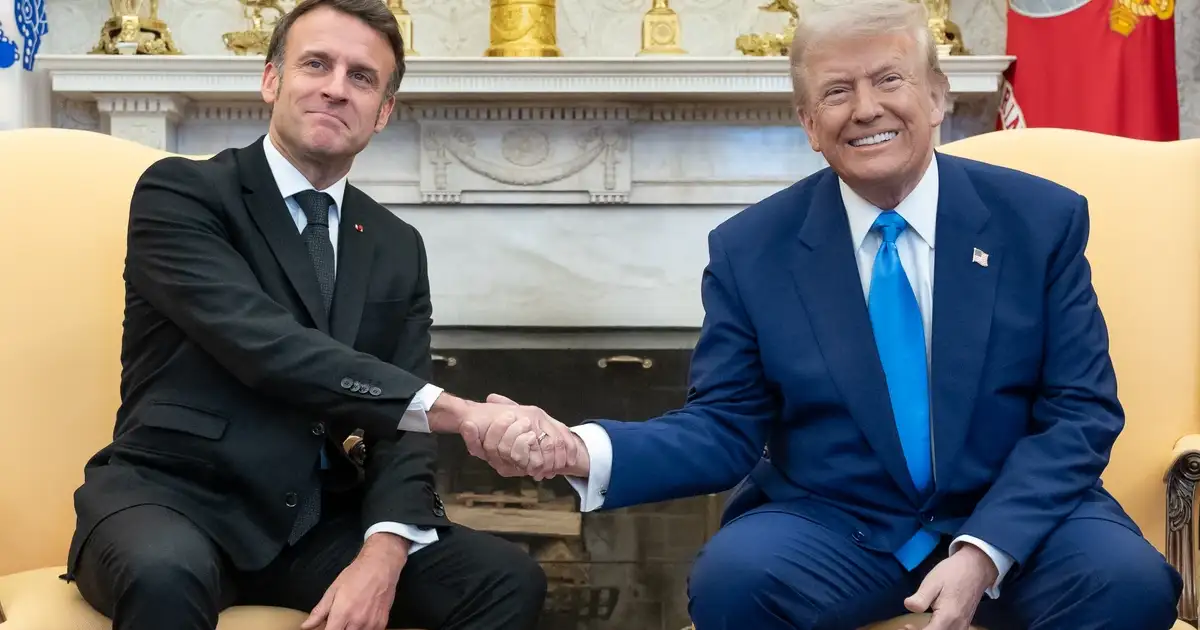

The opulent halls of the Palace of Versailles once again echo with the indelible image of a diplomatic encounter that transcended mere pleasantries, becoming a masterclass in raw power projection. It was July 13, 2017, when Donald Trump, then in his first term, executed an extended “alpha” handshake with French President Emmanuel Macron and delivered a pair of memorable kisses for First Lady Brigitte Macron. This vivid, almost cinematic display of presidential swagger, once a fleeting moment in the global news cycle, has now roared back into prominence, dominating headlines and social media feeds between June 16-18, 2026, as the 47th President of the United States once again commands the world stage.
The Unforgettable Echo of 2017 Diplomacy
The original meeting between President Trump and President Macron was far more than a routine bilateral. It was a visceral demonstration of non-verbal communication, a theatrical performance played out on the grandest international stage.

Trump’s now-infamous handshake with Macron wasn’t just firm; it was a 29-second test of wills. This bone-crushing grip was designed not merely to greet, but to dominate. It was a physical assertion of control, an unmistakable “alpha” maneuver that left no room for ambiguity.
Macron, a younger leader, visibly strained, his knuckles whitening, his jaw tightening, as he attempted to match Trump’s formidable intensity. This wasn’t a handshake; it was a silent negotiation, a gladiatorial contest played out in full view of the world’s cameras. The message was clear: Trump dictates the terms, even in the most fundamental of human interactions.
But the spectacle didn’t end there. Later, Trump turned his attention to Brigitte Macron. His comment about her “good physical shape” was delivered with a disarming directness, followed by two kisses on her cheek.
This interaction, a blend of personal charm and unconventional candor, immediately drew both fervent praise from his base and sharp criticism. Many found it inappropriate for a head of state. It was a moment that broke through the staid formalities of traditional diplomacy, cementing Trump’s unique, often disruptive, approach to international relations.
He was not merely a diplomat; he was a showman, a negotiator, and an undeniable physical presence. He understood the power of a carefully orchestrated gesture.
Why Now? The Resurgence of 2026
The critical question isn’t what transpired in 2017, but rather why this specific, almost cinematic, moment is resurfacing with such intense velocity in June 2026. President Trump is no longer a newcomer to the White House; he is the sitting 47th President of the United States, his return having fundamentally reshaped global dynamics and domestic political calculations. The re-circulation of these 2017 images is no mere nostalgic indulgence; it is a calculated, strategic move by various political actors, each with their own agenda.
For his loyalists, these clips unequivocally reinforce the image of a strong, decisive leader. He commands respect and refuses to be pushed around. They highlight a president unafraid to challenge established norms, projecting an aura of unwavering strength on the world stage.
It’s a potent reminder of the “America First” ethos. This visual narrative serves to galvanize his base, reminding them of the unique force they rallied behind.
Conversely, critics seize upon these images as a stark reminder of his unconventional, often controversial, style. They frame it as a dangerous disregard for traditional diplomatic etiquette, a sign of his perceived impulsiveness and lack of respect for international protocols.
The timing of this resurgence suggests a deliberate effort to shape current perceptions. It aims to fuel ongoing debates about Trump’s fitness for office and the potential ramifications of his foreign policy approach. It’s a weapon in the ongoing ideological war, designed to provoke and polarize.
And what of the media? Ever hungry for compelling narratives and engaging content, news outlets across the spectrum capitalize on these resurfaced clips. From CNN to The Guardian, they feed into the relentless 24/7 news cycle.
This sparks fresh conversations about Trump’s past and future foreign policy, his leadership style, and the very nature of American influence abroad. It’s a media feeding frenzy, where old footage gains new, urgent relevance in a dramatically altered political landscape.
Source: Google News