
The recent Ukrainian drone attack on the Ryazan oil refinery is more than just another strike; it represents a profound strategic pivot by Kyiv, directly targeting Russia’s economic vulnerabilities and sending an unequivocal message to Moscow about the evolving nature of this conflict.
In the early hours of June 17, 2026, Ukrainian long-range drones successfully penetrated Russian airspace to strike the crucial Ryazan oil refinery. Situated approximately 200 kilometers southeast of Moscow, this facility’s vulnerability highlights Kyiv’s growing capability to project power deep into Russian territory, challenging Moscow’s perceived security perimeter.

While Russian officials, including the regional governor, swiftly reported a fire that was “quickly put out” and claimed only “minor damage” to a crude distillation unit, a starkly different account emerged from Ukrainian military intelligence (GUR). Anonymous sources, speaking to Western media outlets, indicated a far more substantial impact, estimating a significant 15-20% disruption to the refinery’s overall operations. This discrepancy is not merely about facts; it underscores a critical information war, where each side seeks to control the narrative of effectiveness and vulnerability.
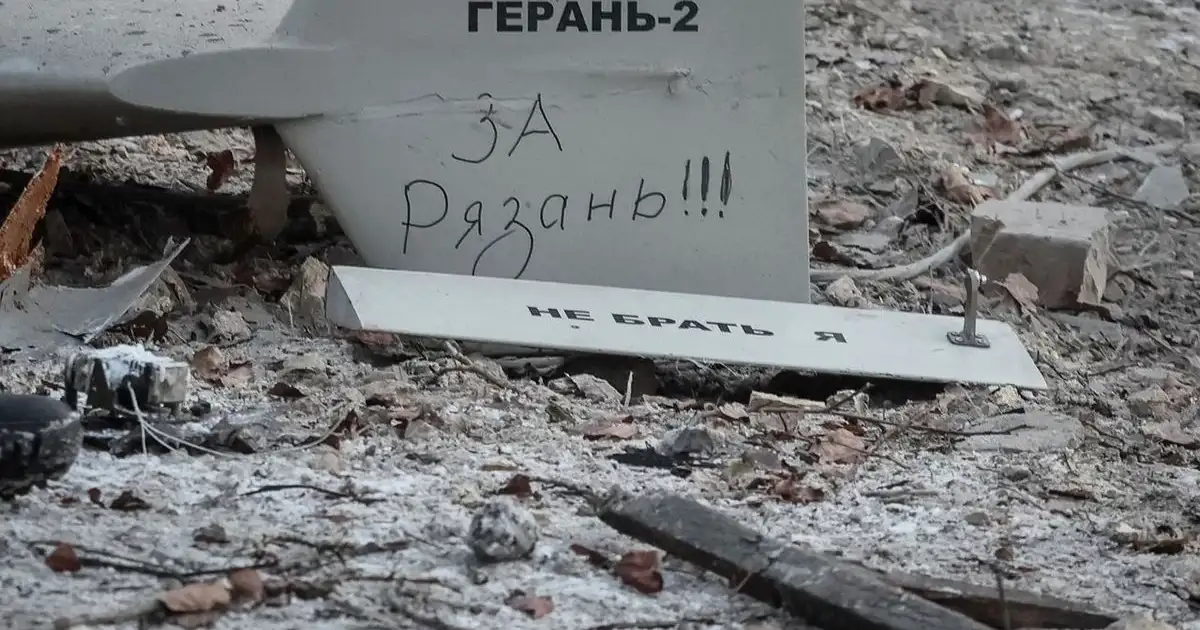
Russia’s Ministry of Defense asserted that its air defense systems successfully intercepted 12 Ukrainian drones across the Ryazan, Tula, and Kaluga regions. In a familiar tactic, Russia attributed any damage at Ryazan not to a direct hit, but to “falling debris” from intercepted drones – a narrative designed to minimize the perceived success of the attack and maintain an image of impenetrable defenses. Characteristically, Ukraine has refrained from officially claiming direct responsibility for the attack, a strategic ambiguity that is standard practice in sensitive, cross-border operations of this nature.
Kyiv’s Strategic Imperative
This attack is unequivocally not a random act; it is a meticulously calculated strategic maneuver by Kyiv. Ukraine’s objective is clear: to systematically disrupt the logistical backbone of Russia’s formidable war machine. Oil refineries are not merely industrial facilities; they are the indispensable arteries supplying fuel for tanks, jets, and the vast network of military logistics. Therefore, striking them directly impacts Russia’s fundamental capacity to wage war effectively.
Beyond immediate military disruption, the overarching goal is to intensify economic pressure on Russia. Given Moscow’s profound reliance on oil and gas revenues to finance its military endeavors, disrupting these critical operations is a direct blow to the Kremlin’s financial stability. Could this strategy ultimately render the economic cost of war unbearable for Russia, forcing a re-evaluation of its objectives?
These strikes are a stark demonstration of Ukrainian forces’ rapidly evolving capabilities. Their long-range drone technology is not just improving; it is fundamentally altering the operational landscape, enabling them to reach targets previously considered beyond their grasp, deep inside Russian territory. This burgeoning capability creates a profound strategic dilemma for Russia: it compels them to divert increasingly scarce air defense assets to protect distant economic targets, inevitably leaving other critical military or civilian areas potentially vulnerable. This is a classic example of asymmetric warfare in action.
The psychological impact on Russia cannot be overstated. Strikes occurring within relatively close proximity to Moscow inevitably sow unease and challenge the long-held perception of Russian domestic security. They powerfully communicate that no part of Russia is truly immune from the conflict, a reality that can significantly erode public confidence in the Kremlin’s foundational promise to protect its citizens and critical infrastructure.
“These deep strikes are about more than just physical damage,” one Western intelligence analyst noted. “They are about sending a clear signal. Ukraine can reach targets once thought untouchable.”
Russia’s Defensive Posture
Russia’s immediate response was predictably focused on downplaying the extent of the damage, instead emphasizing successful drone interceptions. This carefully constructed narrative serves to project an image of unwavering control and resilience, as any admission of significant damage would inevitably expose critical vulnerabilities and severely undermine the Kremlin’s carefully cultivated image of a robust and impenetrable defense.
The recurring claim of “falling debris” as the sole cause of damage is a well-worn tactic in Russia’s information warfare playbook. It is designed not only to minimize the perceived impact of a direct hit but also to deflect blame away from potential defensive failures, thereby meticulously managing public perception internally and maintaining a facade of operational competence.
Yet, the persistent reality on the ground tells a different story. Repeated, successful strikes on vital energy infrastructure demand a strategic reckoning. Russia confronts an acute dilemma: how can it effectively protect its vast, geographically dispersed, and economically crucial targets? While its air defense network is undoubtedly extensive, it is inherently impossible to cover every single facility simultaneously, creating exploitable gaps for determined adversaries.
Moscow’s response is almost certainly to retaliate, likely manifesting as more intense and possibly indiscriminate strikes on Ukrainian cities or a renewed focus on Ukraine’s own critical energy infrastructure. This escalating cycle of tit-for-tat attacks is inherently dangerous, pushing the conflict into increasingly unpredictable territory and risking further, profound destabilization of the entire region.
Economically, Russia’s deep reliance on oil exports represents a fundamental strategic vulnerability. Any sustained disruption to these operations has an immediate and direct impact on its national budget, thereby directly curtailing its capacity to fund the ongoing war effort. The Kremlin is now forced into an unenviable and complex balancing act: weighing the immense costs of enhancing its domestic defenses against the political imperative and potential blowback of further retaliation.
The Geopolitical Ramifications
This drone attack unequivocally adds another complex layer to the ongoing conflict, pushing the established boundaries of engagement into uncharted territory. Western allies, while steadfast in their support for Ukraine’s defense, are observing these developments with heightened scrutiny, acutely aware of the delicate balance between aiding an ally and the inherent risks of direct escalation with a nuclear-armed Russia. Direct strikes on Russian sovereign territory remain a profoundly sensitive issue, fraught with unpredictable consequences.
The very nature of modern warfare is undergoing a profound transformation. Long-range drone technology is not merely ‘changing the game’; it is fundamentally redefining it. This technological leap empowers smaller nations to project strategic power far beyond their conventional borders, enabling them to strike targets once thought secure. In this new paradigm, what becomes of traditional front lines, when the battlefield extends hundreds of kilometers into an adversary’s heartland?
The deliberate targeting of economic infrastructure represents a calculated strategic shift, moving beyond conventional military objectives. This strategy is explicitly designed to cripple an enemy’s capacity to sustain prolonged conflict, inflicting economic pain that reverberates through its entire war effort. It is a harsh, undeniably brutal, yet demonstrably effective tactic in the grim calculus of protracted warfare.
The international community finds itself navigating an increasingly complex and morally ambiguous situation. While calls for de-escalation are persistent and understandable, Ukraine views these strikes as an existential necessity – a vital component of its survival strategy against an invading force. Conversely, Russia unequivocally frames them as acts of unprovoked aggression. In this deeply polarized context, identifying and building common ground for a diplomatic resolution becomes an increasingly formidable, perhaps even insurmountable, challenge.
This strike serves as an undeniable confirmation of Ukraine’s unwavering resolve and its explicit willingness to carry the fight directly onto Russian territory. The conflict is no longer confined to Ukrainian soil; it has metastasized into a direct and tangible threat to Russian domestic stability and critical economic output. This new reality fundamentally alters the strategic calculus for all parties involved, from Kyiv and Moscow to their respective international allies.
The attack on the Ryazan refinery is not merely a harsh reality check; it is a profound declaration. Ukraine is not simply defending its borders; it is actively, systematically, and increasingly effectively degrading Russia’s fundamental capacity to wage war. This strategic evolution will undoubtedly compel Russia to adapt its strategies, but at what cost? The economic pressure from these deep strikes is undeniable, and the financial, logistical, and psychological costs of this war for Russia are now escalating at an alarming, perhaps unsustainable, rate. The question remains: how much more can Moscow endure before its strategic calculus irrevocably breaks?
Source: Google News