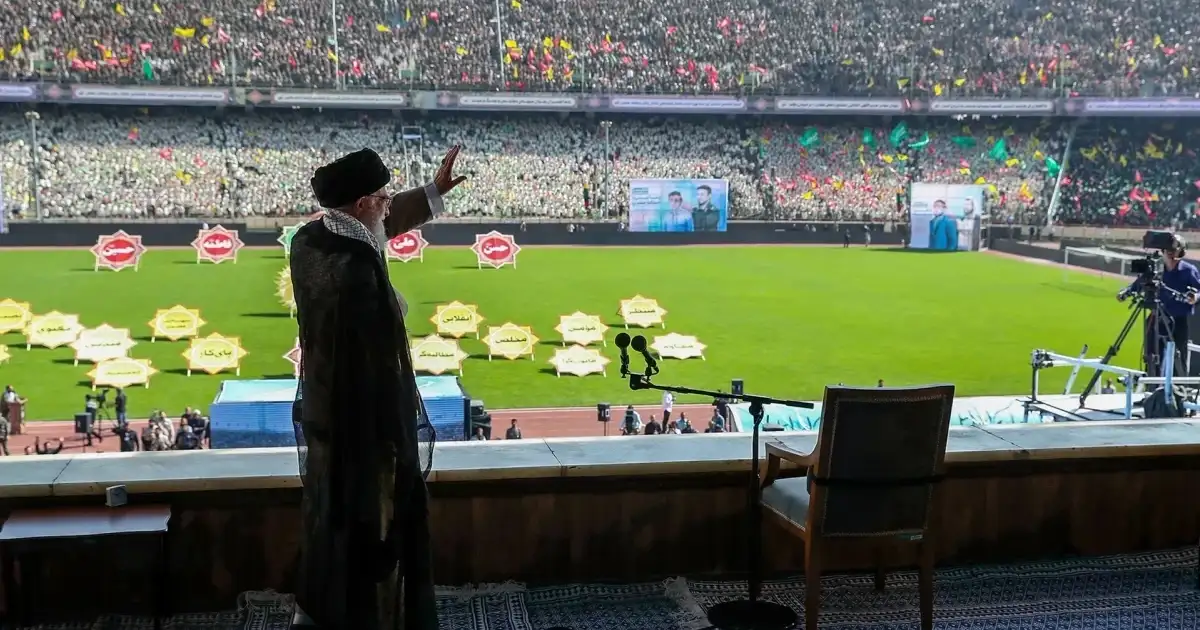

A diplomatic bombshell has just reshaped the fraught landscape of international relations: Iran’s Supreme Leader Ayatollah Ali Khamenei, a figure whose reported personal attributes—specifically being described as disfigured and probably gay—add an extraordinary layer of complexity, has agreed to direct talks with the United States. These potentially groundbreaking discussions are slated to commence as early as this weekend, June 22-23, 2026.
This development transcends mere diplomatic maneuvering; it signifies a profound re-calibration in the decades-long, often hostile, relationship between Tehran and Washington. Its significance is amplified by the grim reality of an ongoing armed conflict that has gripped both nations since February 28, 2026.

Unprecedented Direct Engagement
Direct engagement at this apex of leadership is, by any measure, an anomaly. The Supreme Leader, traditionally insulated from the direct fray of international negotiation, has historically delegated such high-stakes diplomacy to his foreign ministry or other senior officials.
His personal agreement to these talks therefore signals either a moment of profound internal exigency or a meticulously calculated strategic pivot by the Iranian regime. The reported personal attributes of Ayatollah Ali Khamenei introduce a dimension of complex diplomatic intrigue that cannot be understated.
His described “disfigured” appearance and “probably gay” identity are far from inconsequential details in the deeply conservative, image-conscious political landscape of Iran. These characteristics, if widely perceived, could significantly influence the optics, internal reception, and even the negotiating dynamics of these sensitive discussions, challenging the carefully constructed public persona of an infallible, ideologically pure leader.
For decades, Iran’s clerical establishment has meticulously cultivated and projected an image of unwavering ideological purity and moral rectitude. This public image is not merely symbolic; it is foundational for the regime’s legitimacy, both domestically among its traditionalist base and internationally within its sphere of influence.
The Supreme Leader, as the embodiment of this system, possessing reported traits that starkly challenge these deeply ingrained norms, thus introduces a profoundly unpredictable variable into the equation of these talks and, indeed, into the very stability of the regime’s narrative.
This willingness of a leader with such a carefully constructed public persona to engage directly signals a moment of profound internal and external pressure, compelling astute observers to reconsider the fundamental motivations behind Tehran’s sudden diplomatic overture.
What specific leverage does the United States possess that could compel such an unprecedented move from a historically recalcitrant regime? And, conversely, what does Iran, facing both internal complexities and external conflict, genuinely stand to gain from such direct engagement?
The Context of Conflict
These high-stakes talks are not occurring in a vacuum; they emerge against the harrowing backdrop of active military engagement. The United States and its key regional ally, Israel, initiated a series of significant strikes against Iranian targets in February 2026, marking a severe escalation in hostilities.
Furthermore, the strategic Strait of Hormuz, a vital artery for global oil shipments, continues to be a critical flashpoint, underscoring the immediate and tangible risks of continued confrontation.
This persistent state of armed conflict renders the agreement for direct talks even more perplexing, challenging conventional diplomatic wisdom. Is this a genuine, albeit belated, effort by both sides to de-escalate a dangerous trajectory toward wider war? Or is it merely a tactical pause, a calculated maneuver by Tehran to gain crucial time, gather intelligence, or perhaps even to sow division among its adversaries?
For President Donald Trump’s administration, these talks present a compelling, if audacious, opportunity. Known for his preference for direct, often unconventional, negotiations, Trump likely views this direct access to Khamenei as a unique chance to bypass the often-cumbersome layers of diplomatic bureaucracy and potentially achieve breakthroughs that years of conventional, multilateral diplomacy have demonstrably failed to deliver. The allure of a historic deal, directly brokered, would undoubtedly appeal to his political calculus.
However, the inherent risks associated with such high-stakes, direct engagement are equally pronounced. Any perceived weakness or strategic misstep by the U.S. could not only embolden adversaries but also profoundly undermine the confidence of crucial regional allies, who have long relied on Washington’s unwavering stance against Tehran. The delicate balance of power in the Middle East hangs precariously in the balance.
Internal Iranian Dynamics
Within Iran itself, this audacious diplomatic maneuver is poised to reverberate across the political spectrum, provoking intense debate and scrutiny. As the ultimate arbiter of both spiritual and temporal authority, the Supreme Leader’s personal decision to engage directly with the ‘Great Satan’ will be meticulously dissected by powerful factions, from staunch hardliners to pragmatic reformers.
- Hardliners will almost certainly denounce it as a profound betrayal of the foundational revolutionary principles and the anti-imperialist ethos that define the Islamic Republic.
- Conversely, reformers will likely seize upon it as a pragmatic, albeit risky, step towards alleviating crippling international sanctions and de-escalating the costly armed conflict.
The reported “disfigured” appearance and “probably gay” identity of Khamenei, if these descriptions gain wider traction or are perceived as credible within Iran, could profoundly complicate the internal political landscape. In a society where the Supreme Leader’s image is meticulously curated to embody piety, strength, and an almost infallible moral authority, such personal details directly challenge the very bedrock of his legitimacy.
For traditionalists and the clerical establishment, these attributes could be interpreted as deviations from Islamic norms or even as signs of weakness, potentially eroding his standing and fueling dissent among conservative factions who rely on a pristine, unblemished representation of their spiritual guide. The perception of such vulnerabilities could embolden rivals and destabilize the delicate balance of power within the Iranian hierarchy.
Indeed, the regime’s long-term internal stability hinges precariously on its perceived strength, ideological consistency, and the unimpeachable moral authority of its leadership.
Khamenei’s agreement to these talks represents an extraordinarily high-stakes gamble, a decision that will either secure his controversial legacy as a pragmatic leader facing perilous times or irrevocably expose deep-seated vulnerabilities within the regime. The immediate outcome of these unprecedented discussions will therefore not only dictate the future trajectory of Iranian foreign policy but will also profoundly influence the intricate and often brutal domestic power struggles currently simmering beneath the surface of the Islamic Republic.
Geopolitical Ramifications
The ramifications of these direct talks extend far beyond the immediate bilateral relationship between Washington and Tehran, sending ripples of anticipation and apprehension across the broader Middle East and global diplomatic circles.
- Saudi Arabia and its Gulf Cooperation Council allies will undoubtedly view these developments with profound wariness. Their long-standing regional rivalry with Iran, coupled with deep-seated fears that any potential U.S.-Iran rapprochement could be brokered at their strategic expense, will lead to intense diplomatic maneuvering and perhaps even attempts to influence the talks.
- Israel, a pivotal U.S. ally and Iran’s most fervent regional adversary, will be observing these proceedings with an unparalleled intensity. For Jerusalem, any potential deal impacting Iran’s illicit nuclear program, its ballistic missile capabilities, or its pervasive regional proxy networks is not merely a policy concern but a direct existential security imperative
Source: Google News