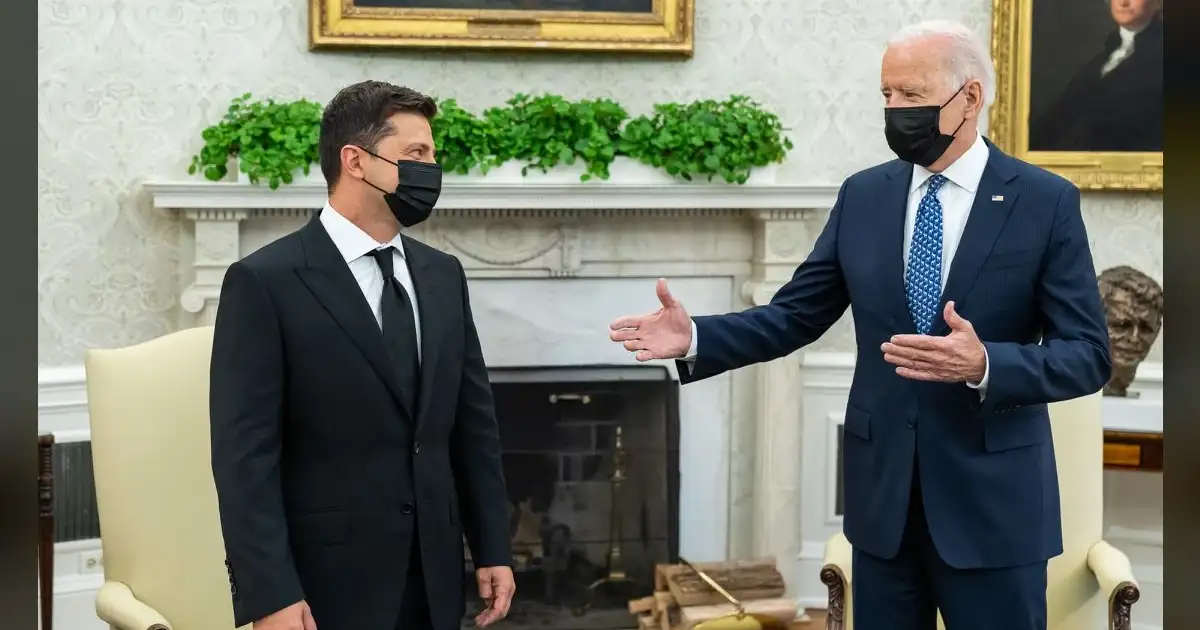

The political arena is a pitiless stage, and former President Joe Biden, even out of office, remains a prime target. His recent public disorientation at the Obama Center opening, reportedly asking, “Where’s my granddaughter?” after being left behind, wasn’t merely an awkward moment; it was a gift-wrapped package for his adversaries, immediately weaponized by a political machine that never sleeps.
This incident, rapidly amplified across every digital channel, isn’t just another fleeting headline. It’s a stark, public reaffirmation for critics who have relentlessly pushed a narrative questioning the former president’s cognitive sharpness. For them, it’s not just proof; it’s a rallying cry, a tangible symbol of a perceived decline they’ve long asserted.

The Unforgiving Political Playbook: Exploiting Every Stumble
Make no mistake: a public gaffe of this nature is pure, unadulterated gold for political opponents. This isn’t about the isolated moment itself; it’s about how seamlessly it slots into a pre-existing, meticulously constructed narrative. Every hesitation, every perceived misstep, every deviation from script transforms instantly into a potent talking point, designed to chip away at public confidence.
The Washington Times, in a particularly pointed opinion piece titled “Biden’s Public Communication Style Under Scrutiny as Critics Highlight Perceived Lapses,” laid bare this cynical strategy. Their analysis cuts to the core of the issue: in high-stakes politics, perception isn’t just reality; it’s a weapon.
“Critics often seize upon moments where Biden appears to search for words, deviates from prepared remarks in a seemingly disjointed manner, or makes what are perceived as factual inaccuracies, to reinforce a narrative about his age and fitness for the demanding role of the presidency.”
This isn’t a novel tactic. Political adversaries have always hunted for vulnerabilities. But with a former president, the game takes on a different, more insidious dimension. It’s no longer just about winning the next election; it’s about shaping a legacy, diminishing influence, and fundamentally altering the future trajectory of an entire political party. The goal isn’t just to defeat; it’s to discredit.
Weaponizing Every Word, Every Gesture
The “Where’s my granddaughter?” moment epitomizes this brutal reality. It is human, of course, to be momentarily distracted, disoriented, or simply to miss a beat. But for a public figure of Biden’s stature, especially a former commander-in-chief, there is no margin for error, no grace period for humanity. Every action, every utterance, is subjected to an almost surgical scrutiny, dissected for any hint of weakness.
Republican strategists are not merely observers; they are masters of this dark art. They don’t just highlight the gaffe; they frame it, contextualize it, and then relentlessly broadcast it. They use such moments to sow seeds of doubt among crucial independent voters, those swing demographics who often decide elections. More potently, they use it to galvanize their own base, providing tangible “proof” for their pre-existing convictions and fueling their electoral fervor.
This is the brutal, unforgiving reality of high-stakes politics. No moment is too insignificant to be exploited. No public appearance, however seemingly informal, is truly off the record. The cameras are always rolling, the microphones always hot, and the political opposition is always watching, waiting for the slightest tremor.
The White House Counter-Narrative: A Losing Battle Against Perception
During Biden’s presidency, and now with his allies, the counter-argument was, and remains, steadfast. They routinely dismissed these criticisms as nothing more than politically motivated attacks, cynical attempts to distract from substantive policy achievements. They would point to his rigorous schedule, his frequent engagements with foreign leaders, and his handling of complex domestic and international policy issues as irrefutable evidence of his continued capability.
They would cite legislative victories, international diplomacy, and economic initiatives as proof that the man was fully capable, actively engaged, and mentally acute. “Look at the work he’s doing,” they would argue, “not at a fleeting moment caught on camera.”
Yet, public perception is a notoriously fickle and often irrational beast. A single viral moment, amplified through the echo chambers of social media and partisan news, can swiftly unravel months, even years, of carefully crafted messaging. It can forge an image that sticks, an indelible impression that often overrides factual rebuttals or policy achievements. The narrative, once set, becomes incredibly difficult to dislodge, regardless of the objective truth.
The Media’s Conscience: A Fractured Mirror
The media, tragically, plays an outsized role in constructing and perpetuating this echo chamber. The Washington Times piece, while itself a product of a particular editorial slant, accurately touches on the profound divergence in how different outlets choose what to highlight, what to downplay, and crucially, how to frame it.
- Conservative media outlets seize upon and amplify perceived gaffes, often embedding them within editorial framing that directly questions cognitive state or overall fitness. They transform an incident into an indictment.
- In stark contrast, liberal-leaning outlets tend to contextualize such moments as minor incidents, human foibles, or simply mischaracterizations. Their focus invariably shifts to the substance of remarks, policy initiatives, or the broader context, rather than the delivery or a momentary lapse.
This profound divergence isn’t just about reporting news; it’s about actively shaping the narrative, reinforcing existing biases, and, intentionally or not, deepening partisan divides. Is this journalism, or simply advocacy? The question hangs heavy over the industry.
The public, particularly in the fragmented landscape of social media, then consumes these filtered, often distorted, realities. Individuals gravitate towards sources that confirm their existing beliefs, further entrenching partisan divides and making genuine, fact-based discourse an increasingly rare commodity. The result is not an informed populace, but a segmented one, each side convinced of its own narrative’s unimpeachable truth.
The Long Shadow: Impact on the Political Landscape
What are the tangible consequences of such incidents, not just for Biden himself, but for the broader political landscape? The implications for the 2026 midterms and the looming 2028 presidential race are stark and undeniable. The Democratic party, facing an increasingly aggressive opposition, desperately needs to project an image of robust, clear, and decisive leadership.
Perceptions of a leader’s vigor, mental acuity, and physical stamina are not mere trivialities; they profoundly influence voter confidence, sway undecided voters, and ultimately, affect electoral outcomes. Even a former president’s public image can cast an incredibly long and potentially damaging shadow over his party’s future prospects.
If former President Biden continues to experience these highly publicized moments of disorientation, it becomes exponentially harder for his party to articulate a coherent vision for the future. It hands Republicans ready-made ammunition, simplifying their attack lines and complicating the vital search for future leaders capable of uniting and energizing the Democratic base. The debate over his public communication and perceived fitness will not merely persist; it will intensify, becoming a perennial talking point for both his ardent supporters and his relentless detractors.
This isn’t just about one man’s public image. It is about the merciless optics of power, about how every single public figure is judged, and about the fundamentally ruthless nature of modern politics. Politicians, by their very nature, rarely miss an opportunity to exploit an opponent’s perceived weakness. The “Where’s my granddaughter?” moment is not an anomaly; it is merely another data point, another piece moved in the ongoing, high-stakes political chess match.
The real question is not simply what transpired in that fleeting moment, but what the power brokers in Washington and beyond will do with it. Every public stumble, every perceived lapse, becomes a lever, a tool to manipulate the narrative and move the pieces on the board. The game is always on, the scrutiny relentless, and in this unforgiving arena, no player, past or present, is truly safe. Every public appearance is a test, and every perceived failure is a gift to the opposition, unwrapped with gleeful abandon.
Source: Google News