
Vice President JD Vance Blasts Israeli Allies: “Wake Up and Smell Reality” on Trump’s Iran Deal
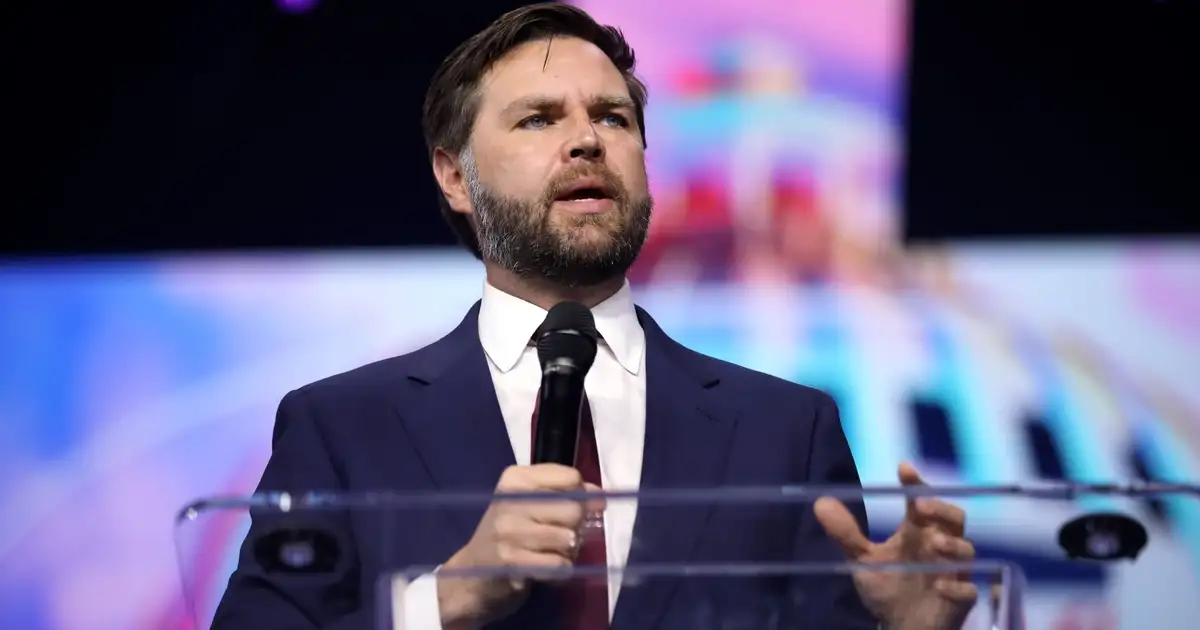
The gloves are off. Vice President JD Vance just delivered an unprecedented, scathing rebuke to Israeli allies and their American champions, telling them bluntly to “wake up and smell reality” regarding President Trump’s controversial new Iran deal. This isn’t merely a policy dispute; it signals a tectonic shift in Republican foreign policy, a stark reorientation that shatters decades of established alliances and diplomatic norms.
Vice President Vance unleashed these remarkably blunt comments on June 18, 2026. He first spoke during a high-profile foreign policy discussion, then amplified his message on a prominent cable news program. His targets were clear: Israeli officials and their most vocal American supporters, all of whom have vociferously criticized the new agreement with Tehran.

The deal, officially dubbed the US-Iran Hormuz deal, is a game-changer. It explicitly allows Iran to retain certain missile capabilities and significantly eases a raft of sanctions. From the Trump administration’s perspective, it immediately stabilized global oil prices, ending a brutal five-month spike in crude that had threatened to derail the global economy.
For Israel, however, this is no economic triumph. It is a dangerous, existential concession to a hostile regime, a Faustian bargain that trades immediate economic relief for long-term regional instability.
“America First” Doctrine: A New Global Order
This isn’t just Vance airing a personal grievance; it’s the unambiguous voice of the Republican Party’s ascendant “America First” faction, now firmly at the helm of U.S. foreign policy. Their mantra is simple, yet revolutionary: prioritize direct U.S. national interests above all else. This often means a ruthless re-evaluation of long-standing alliances, even those once considered sacrosanct, like the partnership with Israel.
This aggressive sentiment has become the undisputed guiding principle under President Trump’s leadership, challenging and ultimately dismantling decades of bipartisan consensus. Support for allies is no longer an inherent good but a transactional calculation, weighed against immediate American benefits. This marks a profound departure from traditional Republican foreign policy, which historically championed robust, unconditional alliances as cornerstones of global stability.
Vance’s remarks aren’t just a signal; they are a declaration of this new reality. They underscore a willingness, even an eagerness, to diverge sharply from allies’ security preferences when those preferences conflict with perceived American self-interest. This stance aligns perfectly with President Trump’s broader worldview, a philosophy that has consistently questioned the cost and value of long-held alliances, viewing them less as shared commitments and more as burdensome liabilities.
Vice President J.D. Vance (R-OH): “Some of our Israeli allies, and frankly some of their loudest supporters here in America, need to wake up and smell reality. This deal is done, and it serves American interests. Their constant criticisms, while perhaps understandable from their perspective, are not helping anyone right now. We put America first, and that means securing our economy and our strategic position, even if it rours a few feathers.”
A Public Rebuke: More Than Just a Disagreement
The sheer force of Vance’s language cannot be overstated. This was no subtle diplomatic hint or back-channel negotiation. This was a direct, public admonishment, a calculated broadside against a key ally. It reveals a far deeper ideological chasm than any past policy squabble, hinting at a fundamental split in the very definition of friendship and alliance.
For decades, traditional Republicans have championed strong, unwavering support for Israel as a moral imperative and a strategic necessity. Many within the old guard find Vance’s confrontational tone not just uncomfortable, but anathema to their core beliefs. They would undoubtedly prefer to bridge the gap, to emphasize shared security goals and common values rather than publicly chastise a partner.
Yet, Vance and his burgeoning cohort are not merely unconcerned with such niceties; they actively embrace this new, pragmatic approach. They see it as essential for American security and, crucially, for economic stability. The abrupt end to the global oil price spike, a direct consequence of the Hormuz deal, is their irrefutable proof, their trump card in any debate about the deal’s wisdom. For them, the ends justify the means, even if it means sacrificing diplomatic decorum.
Trump’s Unyielding Grip and the GOP’s Future
President Trump remains the undisputed, gravitational center of the Republican Party. His foreign policy vision isn’t just influential; it is the party’s definitive direction. A transactional view of alliances has become the new orthodoxy, no longer an outlier but the very fabric of GOP thought.
On social media, President Trump swiftly rose to defend his deal, hailing it as a “tremendous success.” He dismissed critics with characteristic bravado, declaring they simply don’t understand “the art of the deal.” This isn’t just confidence; it’s an unshakeable conviction, a clear signal that he will brook no dissent on matters he deems successful.
This approach forces allies into an uncomfortable position: accept American terms, or risk being sidelined. It ruthlessly prioritizes immediate U.S. economic interests and perceived strategic gains. The long-term security anxieties and geopolitical concerns of partners, once central to Washington’s calculations, now often take a backseat. This isn’t just a temporary phase; it is the new, cold reality for international relations with Washington D.C.
President Donald Trump (on social media, June 17, 2026): “My Iran deal is a tremendous success. Bringing peace and prosperity. Others complain, but they don’t understand the art of the deal! A total win for America!”
A Generational Chasm in Washington’s Foreign Policy
A profound generational shift is actively reshaping the Republican Party’s DNA. Younger conservative leaders, embodied by figures like Vice President Vance, are largely unburdened by the Cold War-era foreign policy doctrines that shaped their predecessors. The old consensus, built on multilateralism and enduring alliances, simply doesn’t resonate with them. This isn’t a minor adjustment; it signals a long-term, fundamental re-evaluation of America’s global engagement.
They are not merely questioning established norms; they are actively dismantling them, pushing for a more nationalist, even isolationist, worldview. This is a deliberate, calculated pivot away from the interventionist neoconservatism that once defined the party, favoring instead a purely transactional foreign policy. The world, for them, is a chessboard where pieces are moved solely for American advantage, not for some abstract notion of global order.
This generational schism will have profound and lasting effects. It will redefine America’s role on the world stage, irrevocably altering how alliances function and how international crises are managed. The old playbook, with its emphasis on shared values and collective security, is not just being updated; it is being discarded entirely, replaced by a new, more ruthless calculus.
Electoral Calculus: The Base Demands “America First”
The “America First” message isn’t just a policy platform; it’s a potent electoral weapon that resonates deeply with the Republican base. For ambitious politicians like Vance, this unapologetic stance is a significant electoral asset. Clashing publicly with traditional allies, far from being a liability, can actually boost their standing with voters, solidifying their credentials as true outsiders willing to challenge the establishment. This is a powerful advantage in future primaries and, increasingly, in general elections.
This makes any return to the old consensus an increasingly remote possibility. The political incentives are simply too strong, too intertwined with modern conservative identity. Appealing directly to the base, often through defiance of perceived globalist elites, has become paramount for these leaders. Foreign policy, once a domain of bipartisan statesmanship, is now just another battleground in the ongoing culture war, another front in domestic politics.
The implications are stark: future Republican leaders will almost certainly follow this path. They will prioritize perceived American interests with unwavering resolve, and they will challenge any alliance that does not demonstrably and immediately serve those interests. The era of unconditional support, even for the closest of partners, is officially over.
Unnamed Israeli Diplomatic Source (to CNBC): “Vice President Vance’s remarks are deeply disappointing and frankly, quite alarming. Israel’s security concerns regarding Iran are not a matter of ‘reality’ to be dismissed, but a matter of survival for our nation. We expect our allies, especially the United States, to understand that fundamental truth, not to lecture us on it.”
The True Cost of “Reality”: Who Will Pay the Price?
This fundamental reorientation of American foreign policy carries immense, potentially destabilizing consequences. It will undoubtedly strain the foundational U.S.-Israel strategic partnership to its breaking point, potentially forcing Israel to seek new alliances or adopt more unilateral, aggressive postures. It paves the way for more unilateral American actions, prioritizing immediate, tangible gains over the painstaking work of building long-term global stability.
The long-term effectiveness of the Trump-Iran deal itself remains furiously debated, its true implications for Middle East stability a terrifying unknown. Global oil prices, the specter of resurgent terrorism, and the escalation of proxy conflicts all hang precariously in the balance. Ordinary citizens, from Riyadh to Rome, will undoubtedly feel these impacts, whether through economic instability or heightened security threats.
This is not a temporary spat, nor a fleeting policy disagreement. This is a wholesale redefinition of the Republican Party’s foreign policy, a paradigm shift that will reverberate for decades. The old guard, with its diplomatic niceties and multilateral commitments, is being systematically replaced.
A colder, harder, and undeniably more transactional reality is now setting in for America’s allies. They must reckon with a Washington that increasingly looks inward, not outward. The question isn’t if the world will change, but how profoundly, and at what ultimate cost.
Photo: Wikimedia Commons (query: JD Vance)
Source: Google News