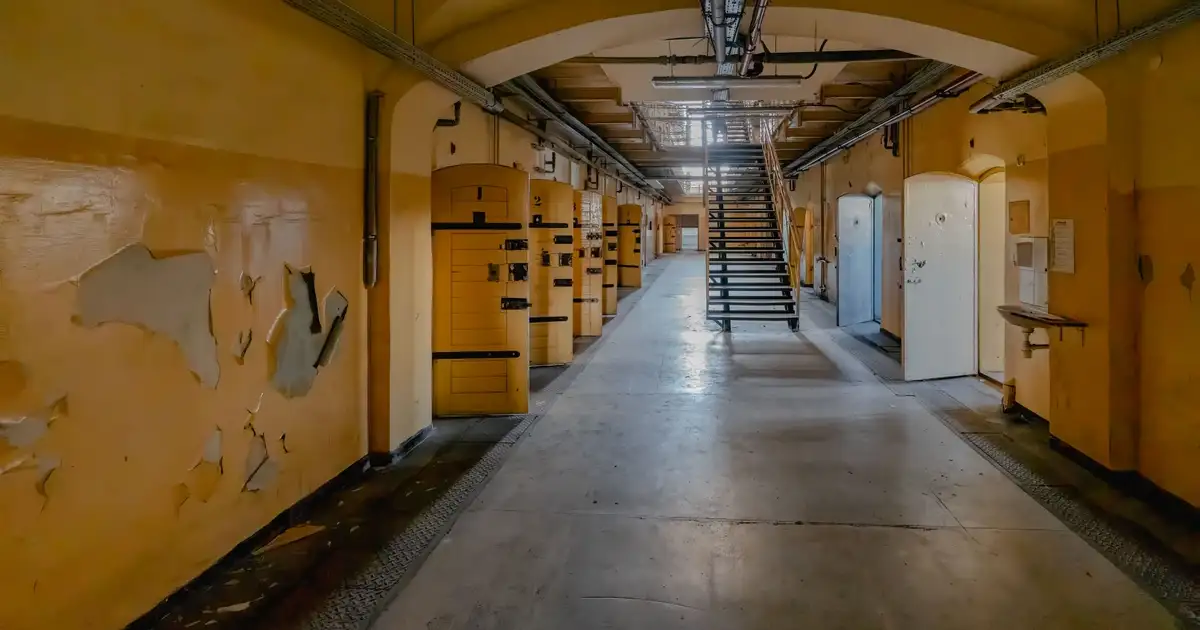

The steel gates of HMP Frankland clanged shut on October 23, 2023, but they couldn’t contain the brutal calculus of the prison yard. In a chilling display of inmate justice, three of the UK’s most dangerous prisoners stormed a cell, ending the life of notorious child killer Colin Pitchfork. This wasn’t a spontaneous riot; it was a meticulously planned, tactical execution – a stark reminder that some debts are paid in blood, even behind bars.
Colin Pitchfork, a name synonymous with heinous depravity for his double child murders in the 1980s, was stabbed to death in what authorities are calling a “calculated hit.” The orchestrators of this violent act – Stephen Boorman, Paul Newman, and Naeem Quadir – each received whole life terms for the murder, ensuring they will never again walk free. This incident at the high-security Durham facility wasn’t merely a statistic; it was a seismic tremor through the very foundations of correctional control.

Make no mistake: this wasn’t some spur-of-the-moment brawl fueled by a petty dispute over a TV channel. This was a deliberate, cold-blooded assassination within a supposedly impenetrable fortress. The target? A child killer, a pariah even among the most hardened criminals, marked for death by a code far older and often more potent than any official rulebook.
The Unwritten Rules of the Yard: A Brutal Moral Compass
Step inside prison walls, and you quickly learn that a different kind of justice, raw and unforgiving, often dictates survival. Some crimes, you see, are simply beyond the pale. Child murder sits not just at the top of that list, but in a category all its own, triggering a primal retribution that even the state’s most secure facilities struggle to contain.
The official system handed Pitchfork a sentence – life behind bars. The inmates, however, delivered another, a final judgment that resonates with a terrifying universal truth of correctional facilities worldwide.
This isn’t unique to the UK; America’s own sprawling prison complexes grapple with these same brutal realities. The “code of the street” doesn’t magically vanish at the cell block door; it merely intensifies, its tenets enforced with a chilling efficiency that often bypasses the guards.
Inmates, particularly in high-security environments like Frankland, often become their own police force, enforcing a twisted, yet undeniably effective, moral compass. This incident screams a clear message: some lines cannot be crossed, even for those already serving time for unforgivable acts.
When the state fails to deliver what a segment of the incarcerated population deems “true justice,” they often step in to fill that void. It’s a dangerous game of control, and often, the inmates hold the upper hand in defining the rules.
“Prison is a dangerous place, a microcosm of society’s darkest corners. Some acts earn you an indelible target on your back. Child killers are always, unequivocally, at the top of that hit list. It’s a universal truth of the incarcerated world, a grim reality that transcends national borders.” – Dr. Aris Thorne, Criminologist and former Correctional Consultant.
This isn’t about condoning violence; it’s about dissecting the harsh, undeniable hierarchy of the incarcerated world. It’s a world where official rules often take a backseat to an older, more visceral form of order. The murder of Colin Pitchfork wasn’t just an isolated act; it was a tactical maneuver, a declaration of power and a grim enforcement of a code that runs deeper than any iron bar or steel door.
Cracks in the System’s Armor: A Tactical Breakdown
The real question isn’t just why this happened – the motive is tragically clear. It’s how three dangerous prisoners could, with apparent ease, storm a cell, overpower a notorious inmate, and commit murder within a supposedly secure, high-risk environment. This incident isn’t just a failure; it’s a glaring, tactical breakdown in prison security, a breach that should send shivers down the spine of every correctional administrator.
How did Boorman, Newman, and Quadir acquire the improvised weapons – likely shanks – needed to carry out such a brutal attack? Where were the guards? What were the blind spots in surveillance?
This isn’t just a UK problem; it’s a blaring red flag for every correctional system, including America’s own sprawling network of penitentiaries. Our prisons grapple with similar, systemic challenges every single day: chronic overcrowding, severe understaffing, and the pervasive, insidious influence of gangs that often run parallel economies and justice systems within the walls.
An incident of this magnitude, this level of calculated violence, could easily erupt in any state or federal penitentiary across the United States.
Security protocols are designed, theoretically, to prevent precisely this kind of targeted violence. They are the tactical blueprints meant to maintain order and protect all inmates, even those deemed irredeemable. When these protocols fail so spectacularly, the consequences are not just deadly; they signal a system losing control, a state ceding its authority to the very individuals it seeks to contain.
Taxpayers fund these massive facilities with the dual aims of rehabilitation and public safety. Yet, far too often, they become breeding grounds for more violence, incubators of a brutal underworld.
This UK case highlights that critical failure, exposing the illusion of control. We need to ask tough, uncomfortable questions: Are high-risk prisoners truly segregated effectively?
Is staff adequately trained, properly equipped, and numerous enough to manage the volatile dynamics of such populations? Or are we simply warehousing problems, hoping they don’t explode?
Whole Life Terms: Justice or Just Perpetual Lockup?
The three murderers received whole life terms. This means they will die in prison, never again seeing the outside world.
For many, this is the only fitting end for those who commit such brutal acts, a final, unyielding measure of justice. But what does it truly achieve beyond retribution?
While it undeniably removes them from society, it also adds to the immense, escalating cost of housing inmates for decades, a burden borne by the very taxpayers whose safety the system ostensibly protects.
This isn’t about rehabilitation anymore; it’s about perpetual punishment, a grim, unending cycle. The system failed to prevent Pitchfork’s initial, horrific crimes against children, and then, inexcusably, failed to prevent a second murder inside its supposedly secure walls.
Now, it must pay to keep three more murderers locked up forever, a financial and moral paradox. The state’s fundamental ability to protect its most vulnerable, even those deemed irredeemable, is called into question when such events unfold.
The public clamors for justice for child killers, a righteous demand. But when that justice is delivered by other inmates, through violence and a breach of security, it exposes a deeper, more troubling flaw.
It’s a sign that the system itself is struggling, or perhaps even failing, to maintain order, to uphold its own laws within its own domains. This isn’t a victory for justice; it’s a stark, brutal reminder of the realities that fester behind bars, forcing us to confront the true cost – both human and financial – of our correctional systems.
America must pay close, tactical attention to this UK incident at HMP Frankland. Our own prisons are not immune to such violence; indeed, many already face similar, if not worse, challenges.
The unwritten rules of the yard will always challenge the official rulebook, demanding a level of control and strategic oversight that far too many systems currently lack. The murder of a child killer by other inmates is more than a grim spectacle; it’s a flashing red light, highlighting the constant, brutal battle for control inside prison walls.
It’s a stark reminder of the harsh, unforgiving world behind bars, and it forces every nation, including the United States, to look hard and honestly at its own correctional failures and the tactical compromises it makes every single day.
Source: Google News