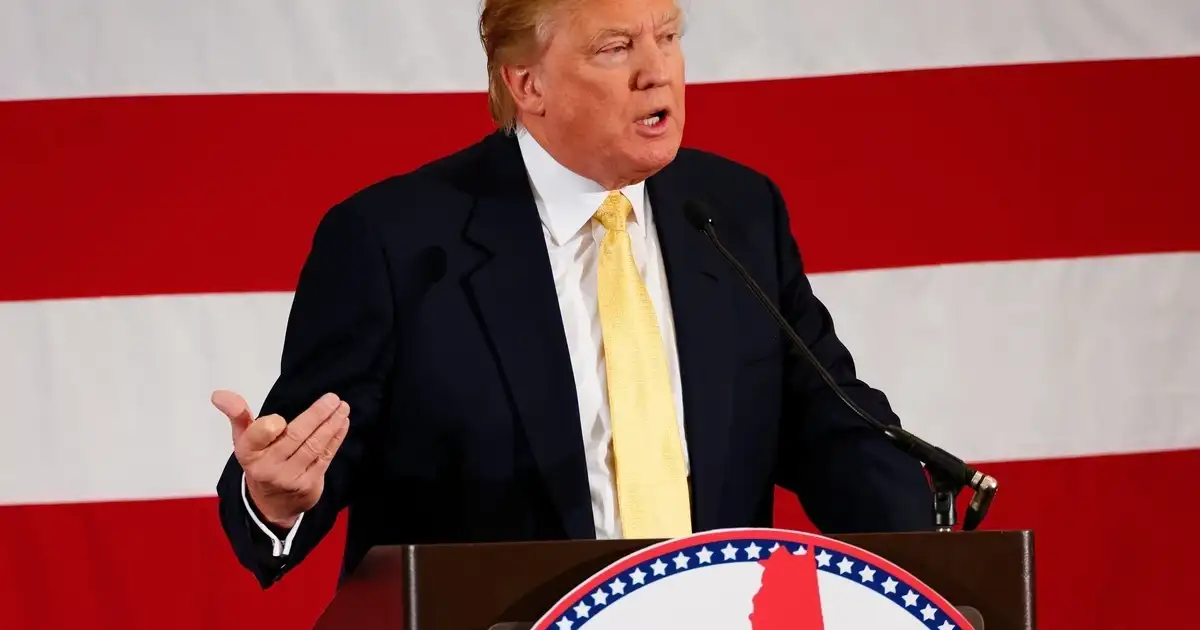

In the high-stakes arena where sports collide with political theater, President Donald Trump wasted precisely zero time seizing a moment of national jubilation. Today, a contentious red card against USA soccer captain Christian Pulisic was dramatically overturned, a decision that not only clears the path for America’s talisman to play in the World Cup Semi-Final against Brazil but also handed Trump a ready-made narrative of victory.
The controversy ignited on Friday, July 2nd, 2026, a date now etched into the annals of USMNT lore. With the USA clinging to a precarious 2-1 lead in the dying moments of their Quarter-Final clash against arch-rivals Mexico, captain Pulisic received a straight red card in the 88th minute. Referee Roberto Garcia’s decision for a challenge on Mexican midfielder Edson Alvarez was immediate, brutal, and threatened to derail America’s deepest World Cup run in decades.

The initial VAR review, meant to ensure fairness, only compounded the outrage, confirming the red card and setting the stage for Pulisic to miss the crucial semi-final. Despite the setback, the USA valiantly held on to secure their 2-1 victory, advancing to face footballing giants Brazil. Yet, the victory was bittersweet, overshadowed by the looming absence of their star.
US Soccer, recognizing the gravity of the situation and the perceived injustice, wasted no time, immediately lodging an urgent appeal with FIFA’s Disciplinary Committee.
FIFA’s Shock Reversal and Trump’s Play
Then came Sunday, July 4th – a day typically reserved for fireworks and national celebration, but this year marked by an unexpected explosion of relief for American soccer fans. FIFA’s Disciplinary Committee, in a rare and swift move, overturned the red card, declaring it a “clear and obvious error.” Their official statement deemed Pulisic’s tackle robust, yes, but emphatically not a straight red card offense. This seismic reversal instantly cleared the team’s leading scorer, the man dubbed ‘Captain America,’ for the monumental clash against Brazil on Tuesday, July 6th.
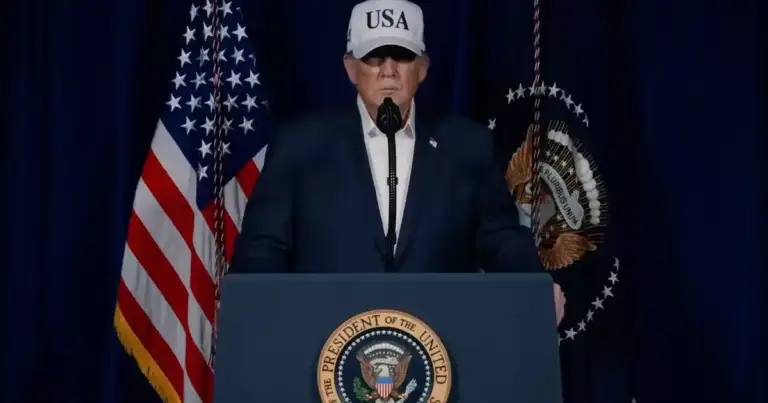
Predictably, President Trump wasted no time capitalizing on the unfolding drama. Early Monday, July 5th, he took to his preferred platform, Truth Social, to deliver his unequivocal verdict. Trump hailed the decision as a “HUGE win for American fairness,” a pronouncement that instantly elevated a sporting administrative decision into a national triumph.
“They tried to sideline our Captain, but justice prevailed. USA! USA! USA! This is what happens when you stand up for what’s right. Big game coming, and our guys will be ready!”
Trump’s comments didn’t just amplify the story; they immediately warped it into a potent political weapon. He didn’t just tie sporting drama to national pride; he forged an unbreakable link, crafting a narrative of vindication for America itself. This is classic Trump, a masterclass in political alchemy, perpetually finding a way to connect any event, no matter how trivial or profound, to his personal brand, transforming it into a definitive ‘win’ for his base and his movement. It’s a cynical, yet undeniably effective, strategy.
The Political Scorecard
Let’s be clear: this isn’t merely about soccer. This is a masterclass in political opportunism, a stark demonstration of Trump’s unerring playbook in action. He didn’t just seize on the Pulisic decision; he weaponized it, instantly turning a contentious sports ruling into a resounding national victory. This maneuver plays directly, flawlessly, to his core base, who unfailingly perceive him as their unwavering champion against perceived injustices, whether real or manufactured.
The USMNT’s improbable success on the world stage is, by its very nature, a powerful symbol of national aspiration and an easy public relations win for any president. But Trump, ever the astute political operator, takes it further, far further than mere congratulatory platitudes. He doesn’t just celebrate the team; he frames the overturning of a red card as a geopolitical battle won, a triumph of ‘justice prevailed’ rhetoric that aligns seamlessly, perfectly, with his ‘America First’ doctrine. It’s a narrative that suggests America is constantly under siege, and only he can deliver righteous vindication.
Consider the millions of Americans, eyes glued to their screens, deeply invested in every pass, every tackle, every goal of the World Cup. They see Pulisic not just as a player, but as a genuine national hero, a symbol of American grit. Now, through a few carefully crafted Truth Social posts, Trump masterfully links himself to that heroic narrative, positioning himself as the ultimate protector of American fairness, the unwavering champion who ‘stands up for our Captain.’
Is this genuine patriotism? Or is it a calculated accumulation of political capital, a transactional engagement that has little to do with simply cheering on the team and everything to do with solidifying his base?
The incident itself, and Pulisic’s role within it, underscores his indispensability. He had already scored the opening goal against Mexico, coolly netting a penalty in the 35th minute, and remained a constant, electrifying threat throughout the match. His red card, delivered at the 88:12 mark, was for a player who, by then, had already registered 1 goal, 2 shots on target, and 3 key passes, maintaining an impressive 88% pass accuracy.
These aren’t just statistics; they paint a vivid picture of a player carrying the hopes of a nation. Trump, with his uncanny ability to read a room – or an entire country – understands this inherent value, this emotional resonance, perfectly. He knows that saving Pulisic isn’t just about soccer; it’s about saving a national hero.
Blurring the Lines: Sports and State
This entire saga, from the red card to the reversal to Trump’s immediate intervention, is a masterclass in blurring the sacrosanct lines between sports and politics. It is a meticulously calculated move, designed to inextricably associate the President with popular national success, allowing him to project an image of decisive strength and unwavering resolve. More critically, it reinforces his enduring narrative of fighting tirelessly against perceived wrongs and global conspiracies.
In this framing, FIFA’s administrative decision isn’t just a rule interpretation; it transforms into a triumph for ‘American values’ on the world stage. This is precisely how modern power operates: every event, every news cycle, every fleeting moment of national attention, becomes a carefully orchestrated opportunity to score political points, regardless of its original context.
While US Soccer Federation officials undoubtedly breathed a collective sigh of relief and fans erupted in ecstatic celebration, viewing Pulisic as absolutely critical for the looming clash against Brazil, the narrative is far from universally positive. The Mexican team and their fervent supporters, undoubtedly nursing the sting of defeat and the perceived injustice, are likely seething, questioning FIFA’s consistency and impartiality. But these nuanced perspectives, these inconvenient truths, are irrelevant to Trump. He surgically excises all complexity, focusing solely on the ‘win’ for America, framing it not just as a victory, but as a definitive national triumph, a symbol of American exceptionalism.
Politically, on the surface, this grandstanding costs the everyday taxpayer nothing directly. Yet, the insidious price tag is far higher, manifesting in ways that erode the very fabric of public discourse. It doesn’t just cheapen public discourse; it weaponizes it, transforming every shared cultural event into a partisan battleground.
It makes it increasingly difficult, if not impossible, to simply enjoy sports for their inherent drama and spectacle. Instead, everything becomes a political statement, a proxy war in the endless culture clash. This, regrettably, is the cynical, corrosive truth of modern Washington, where no stone is left unturned in the pursuit of political leverage.
Trump’s history of engaging with high-profile sports figures and commenting on major sporting events is extensive, almost legendary. His chosen medium, often social media, ensures maximum reach and unfiltered messaging. The Pulisic situation isn’t ‘just another example’; it’s a quintessential illustration of a consistent, deeply ingrained feature of his public persona, a finely tuned political instrument.
He doesn’t merely ‘tap into national sentiment’; he actively cultivates it, manipulates it, and then exploits it to his profound political advantage, reinforcing his image as a populist champion who fights for the common American, even on the soccer pitch.
The Real Game Ahead
The implications for the USMNT are undeniably massive, a genuine game-changer. Pulisic isn’t just a player; he is their undisputed star, their emotional core, and his presence fundamentally alters the tactical dynamic against a formidable opponent
Source: Google News