
Former President Donald Trump just dropped a political bombshell wrapped in red, white, and blue, delivering an Independence Day speech followed by the biggest fireworks display in U.S. history.
This wasn’t just a celebration; it was a power play, a high-stakes demonstration of force on the National Mall that leaves everyone asking who funded this spectacle.

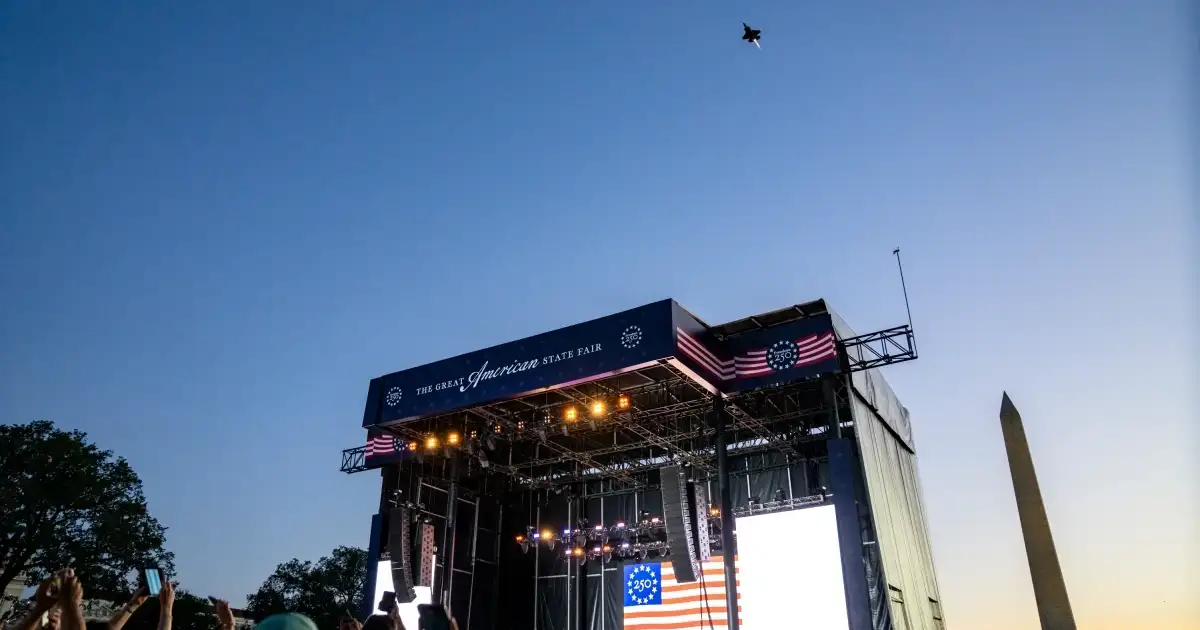
The event, “America’s Grand Salute,” lit up Washington D.C. on July 4, 2026. Tens of thousands of people packed the National Mall.
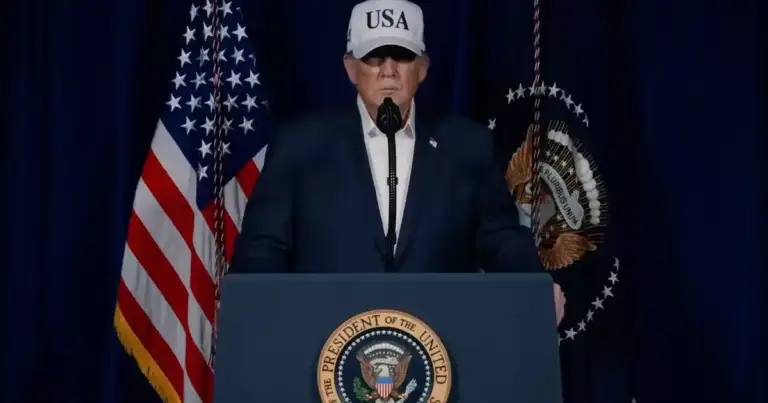
Trump spoke for 45 minutes, starting at 7:00 PM EST. He stood with World War II veterans and Gold Star families.
His speech hit hard on national pride and American exceptionalism. The climax came at 9:00 PM EST with a 30-minute fireworks show.
Over 100,000 pyrotechnic shells exploded, launched from the Potomac River. This set a new national record for scale and duration.
The Bill for the Boom: Who Paid?
This record-setting Independence Day bash wasn’t cheap. The total cost for “America’s Grand Salute” soared to an estimated $15-20 million.
The fireworks alone cost between $8 million and $12 million. So, who picked up the tab for this monumental display?
The money came mostly from private donations. A non-profit organization, the America First Patriots Fund (AFP Fund), handled the financing.
This fund was created specifically for events like this. It kept the federal government from directly footing the bill for the spectacle.
Federal agencies did incur costs. The National Park Service and Secret Service handled security and logistics. These were standard expenses for a large public gathering.
They were not direct funding for the fireworks or the stage. The AFP Fund ensured the flash and bang came from private pockets.
But here’s the kicker: transparency is a huge issue. Critics demand to know the specific donors to the AFP Fund.
Who is bankrolling these massive national displays? What influence do these donors wield? The public deserves answers.
This private funding model sets a dangerous precedent. It could shift future national celebration costs from taxpayers. However, it also opens the door to private agendas.
D.C. businesses saw a surge in activity. Hotels, restaurants, and transportation services all benefited. Still, city resources were strained.
Local police, sanitation, and traffic management worked overtime. They did this without direct reimbursement for a privately funded event.
Patriotism or Political Playbook?
Trump’s event drew fire from all sides. Was it a unifying celebration of American spirit? Or was it a thinly veiled campaign rally?
Supporters saw a powerful display of patriotism. They cheered Trump for honoring veterans and Gold Star families. They loved his message of national strength.
The fireworks were universally praised as breathtaking. For many, it was a pure celebration of American identity.
Former President Trump declared from the stage:
“On this sacred day, we celebrate the enduring spirit of America, the courage of our heroes, and the unbreakable will of a free people. We stand here today, united under one flag, to declare that the best days of our nation are not behind us, but gloriously ahead!”
Critics, however, saw a partisan show. Democratic Senator Patty Murray of Washington put it plainly:
“While the fireworks were undeniably spectacular, we must ask ourselves if a national holiday should be used for what felt like a campaign event, diverting resources and attention from the true spirit of unity.”
Concerns piled up about the event’s cost. The potential for political divisiveness was clear. Using national symbols for a campaign-style event raised eyebrows.
Retired General Mark Hertling, a CNN Analyst, offered a balanced view. He said:
“The inclusion of World War II veterans and Gold Star families was a poignant and appropriate gesture on Independence Day. It reminds us of the profound sacrifices made for our freedoms, regardless of political affiliation.”
This was a classic Trump move. He took a national holiday and made it his own, blending traditional celebration with undeniable political messaging.
The Explosive Aftermath
The sheer scale of “America’s Grand Salute” was undeniable. Estimates put the crowd size between 75,000 and 100,000 people.
Over 2,000 law enforcement personnel were deployed. This included Secret Service and D.C. Metropolitan Police.
D.C. Mayor Muriel Bowser acknowledged the logistical challenges. She stated:
“Our city departments worked tirelessly to ensure a safe and memorable Fourth of July for everyone. We welcome visitors, and we’re proud to host national celebrations, but the logistical demands of events of this scale are significant.”
Environmental groups quickly raised red flags. They worried about the particulate matter and chemical residue from 100,000 shells. They pushed for more sustainable alternatives.
This event solidified Trump’s continued ability to draw massive crowds. He commands national attention even out of office. This has serious implications for the 2028 presidential race.
The celebration highlighted America’s persistent political divide. One side saw unity and patriotism; the other, opportunism and partisan gain. It’s the same old playbook, just with bigger fireworks.
This wasn’t just a party; it was a statement. It was a privately funded, publicly visible flexing of political muscle. The price tag for the show was high, but the cost of the influence it bought might be even higher.
Source: Google News